Kövesse a Linqi Ultrasonic híreit, iparági trendeket és műszaki ismereteket
100 articles
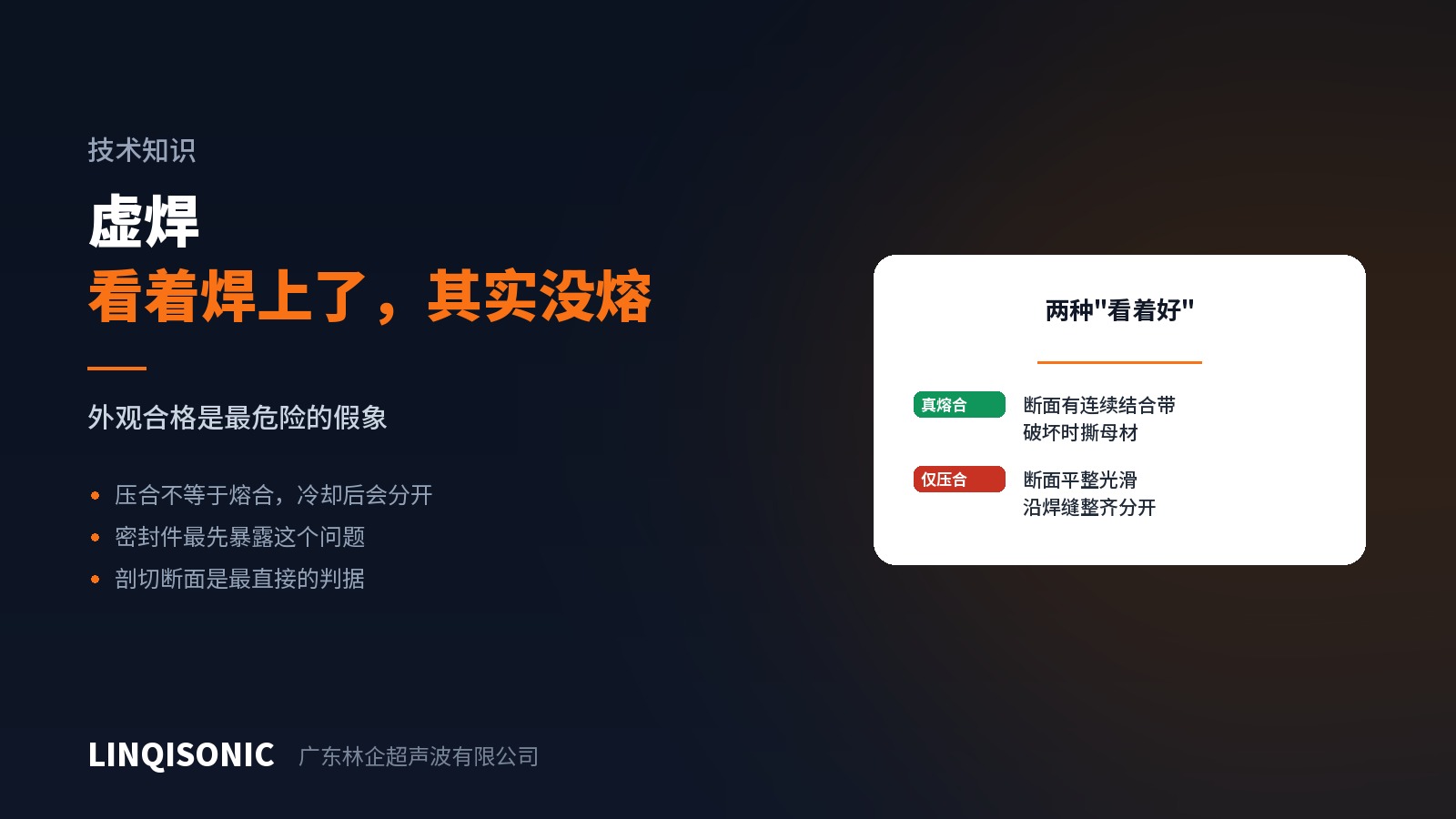
Pressed together is not fused. A cold weld looks perfect and may survive a casual pull test, yet no molecular bond formed. How to detect and avoid it.
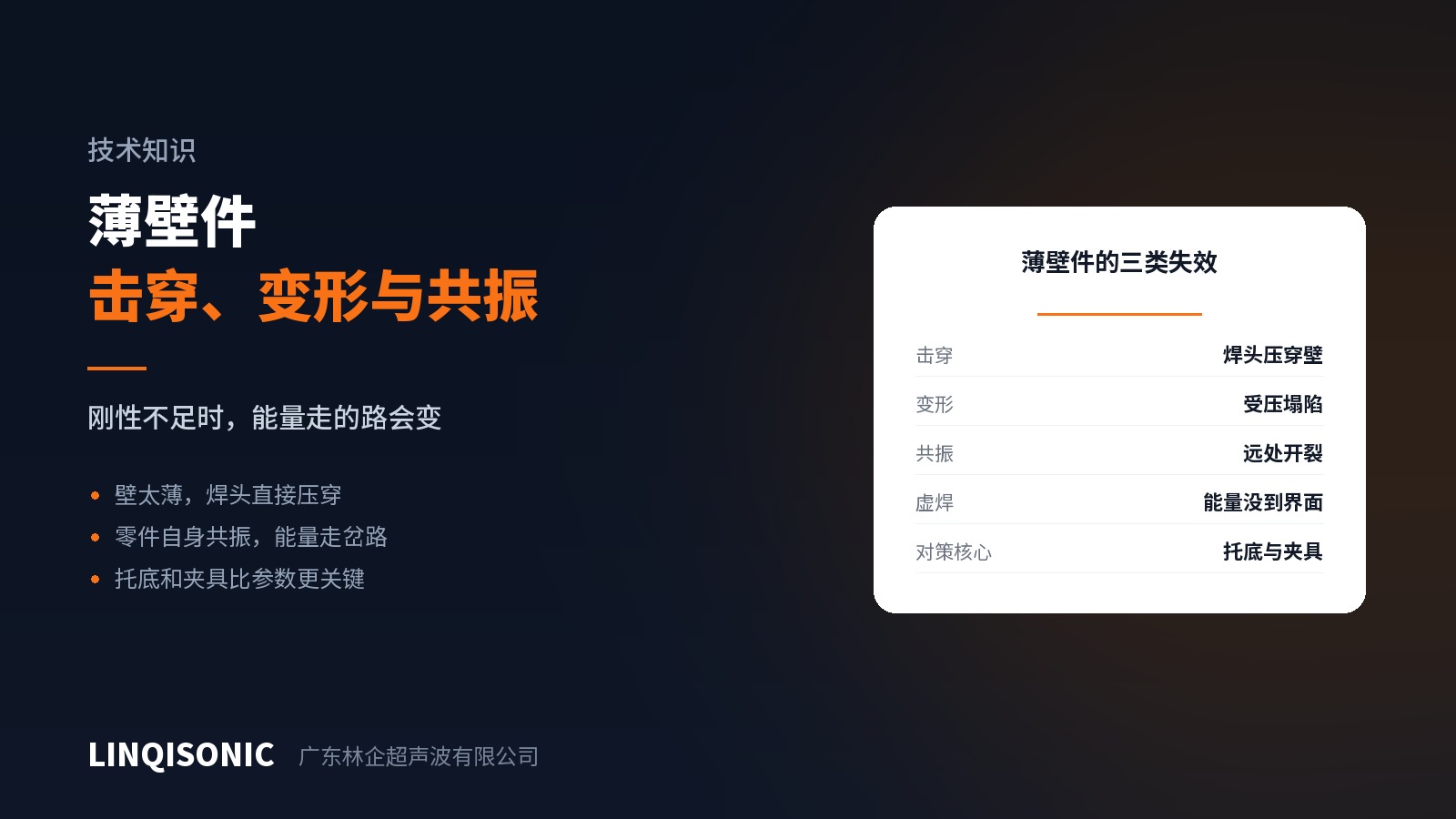
Thin walls lack stiffness, so energy takes unintended paths: punch-through, collapse, or cracking far from the joint from the part resonating on its own.
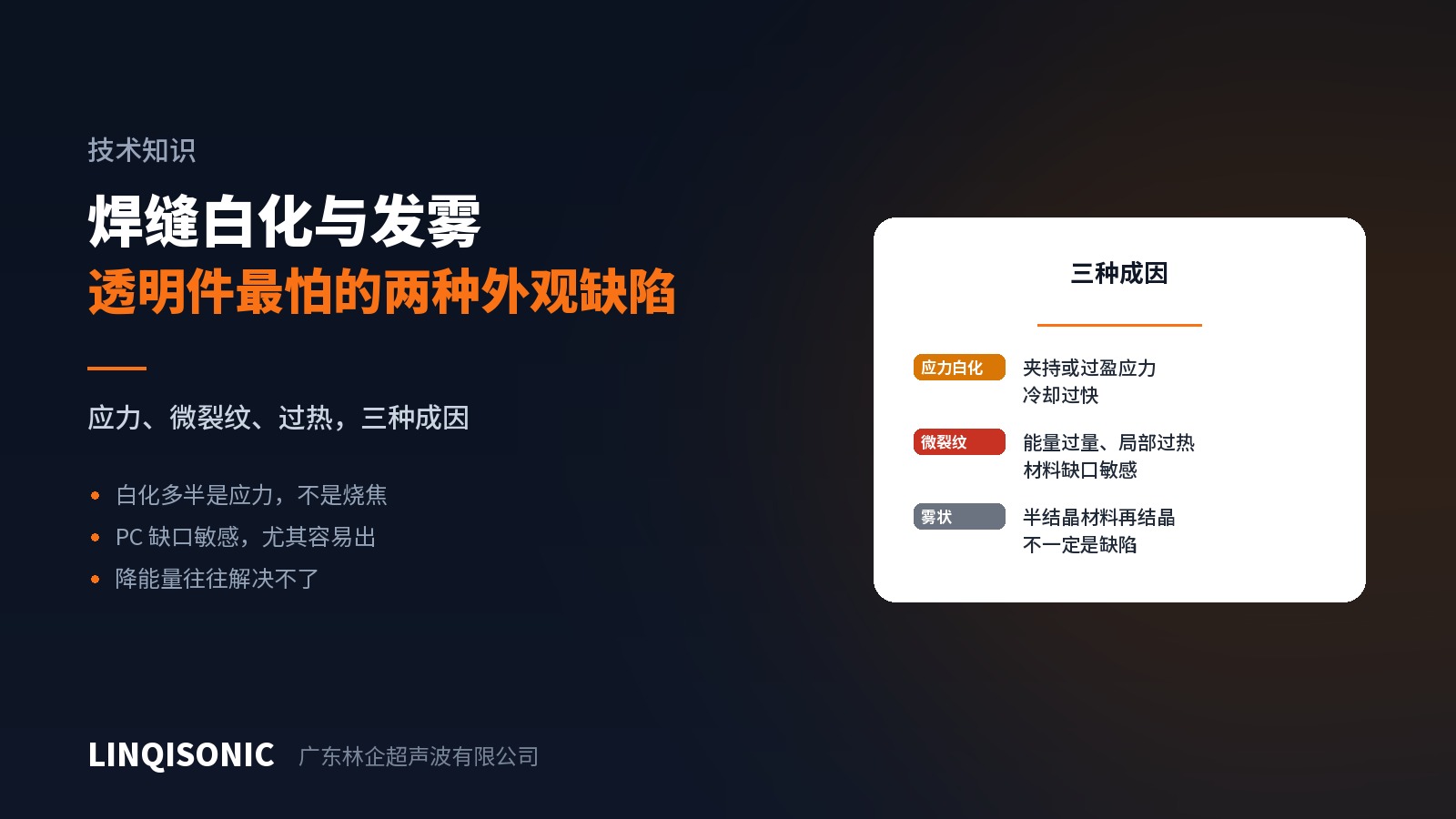
Whitening and haze are most visible on clear parts. Three distinct causes — stress whitening, micro-cracking from overheating, and re-crystallisation haze.
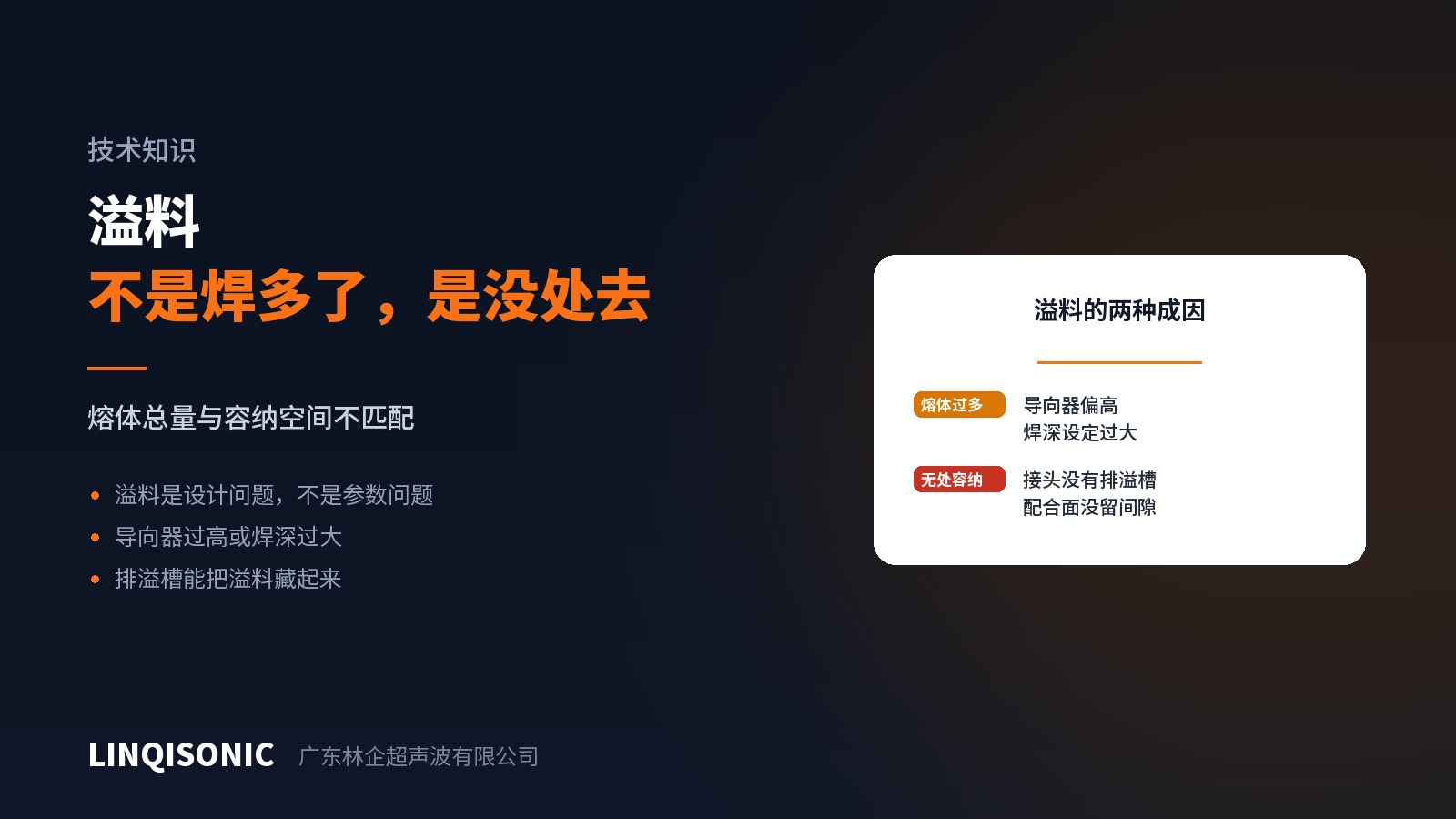
Flash means more melt than the joint can contain. Usually a joint design problem rather than a parameter one — director too tall, weld too deep, or no flash trap.
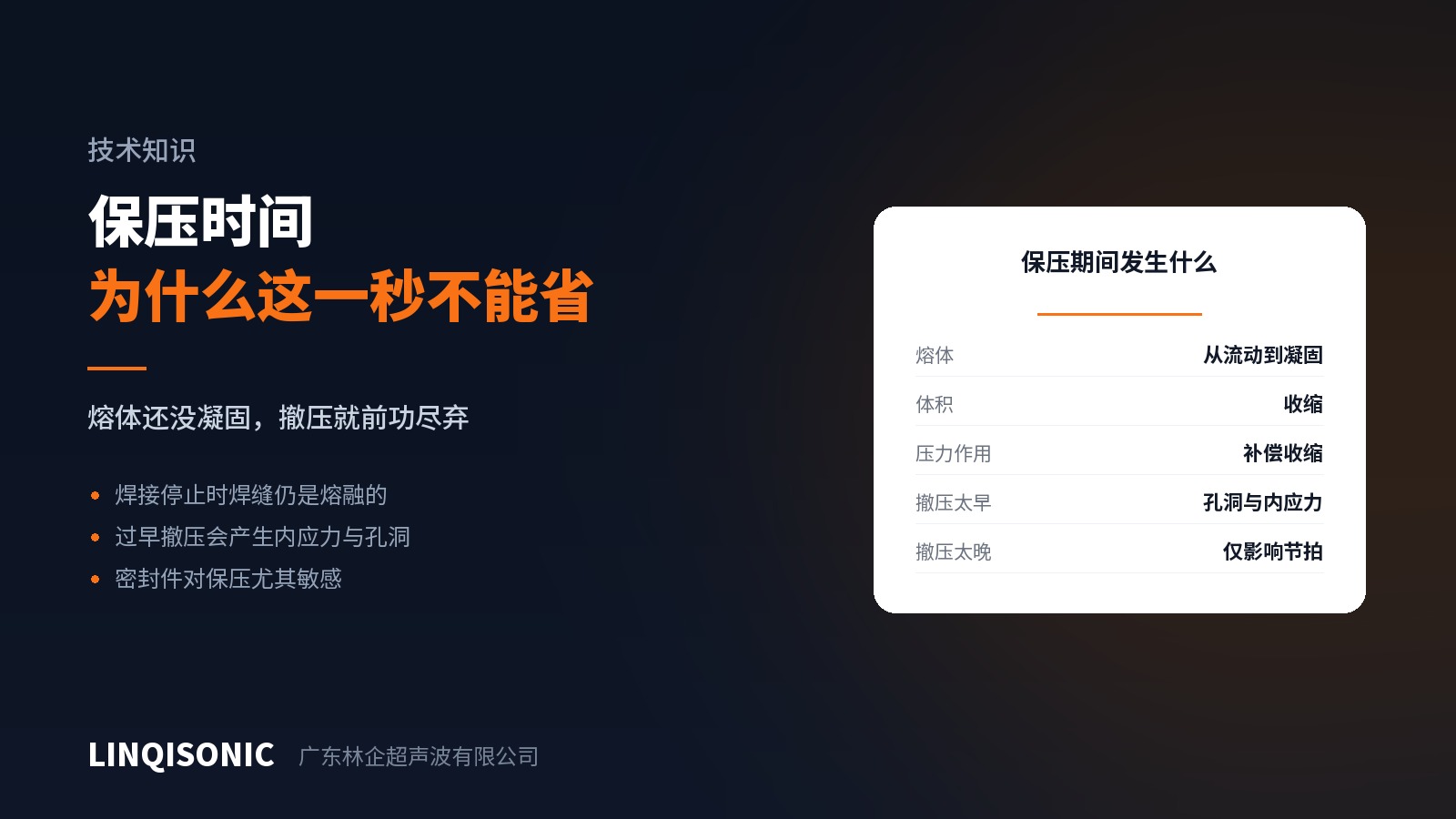
When ultrasound stops the joint is still molten. Force during hold compensates for shrinkage as it solidifies. Releasing early leaves voids and locked-in stress.
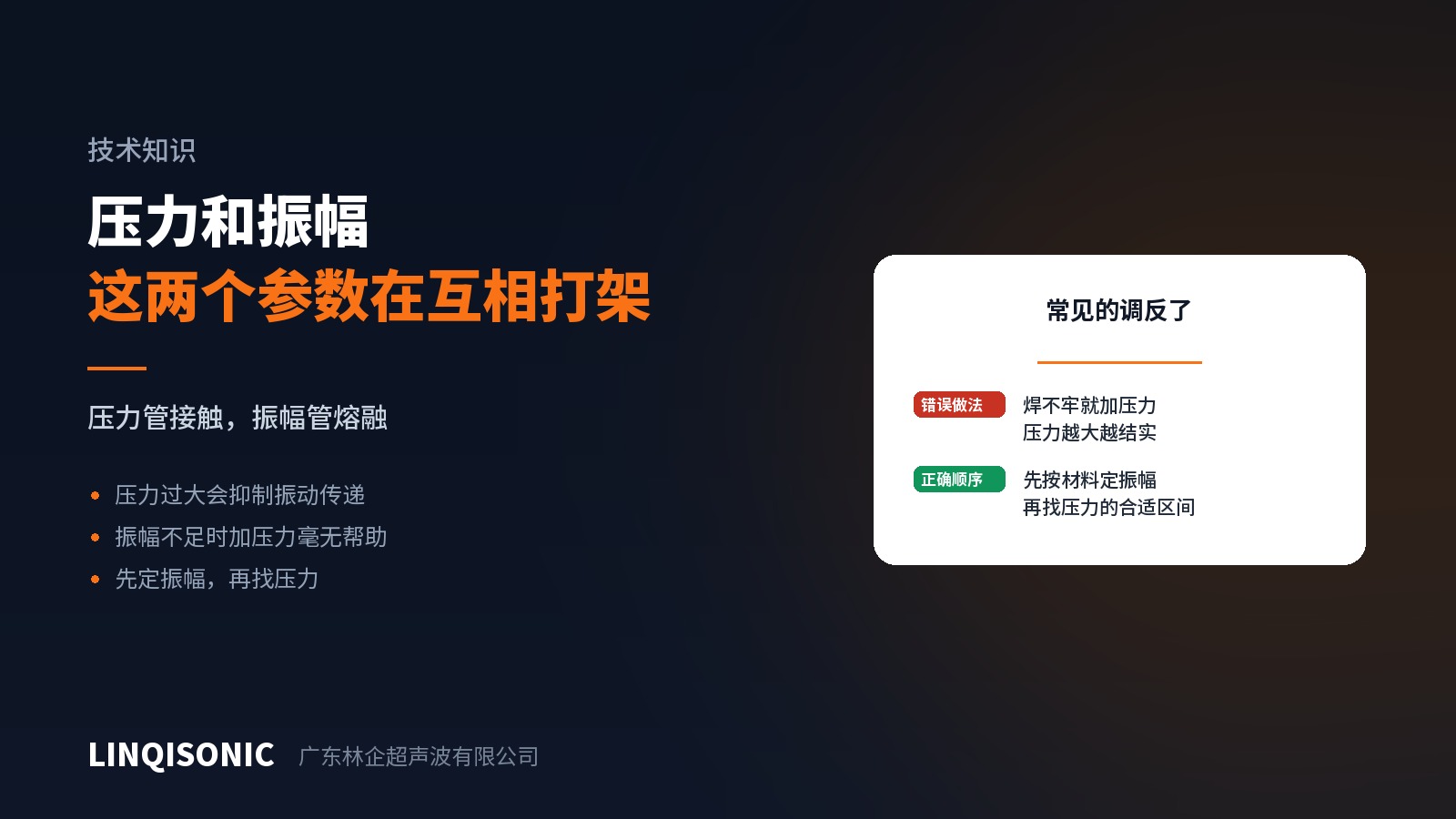
Force keeps the faces in contact; amplitude generates the friction that melts them. Too much force suppresses the vibration itself. Set amplitude first, then find the force.
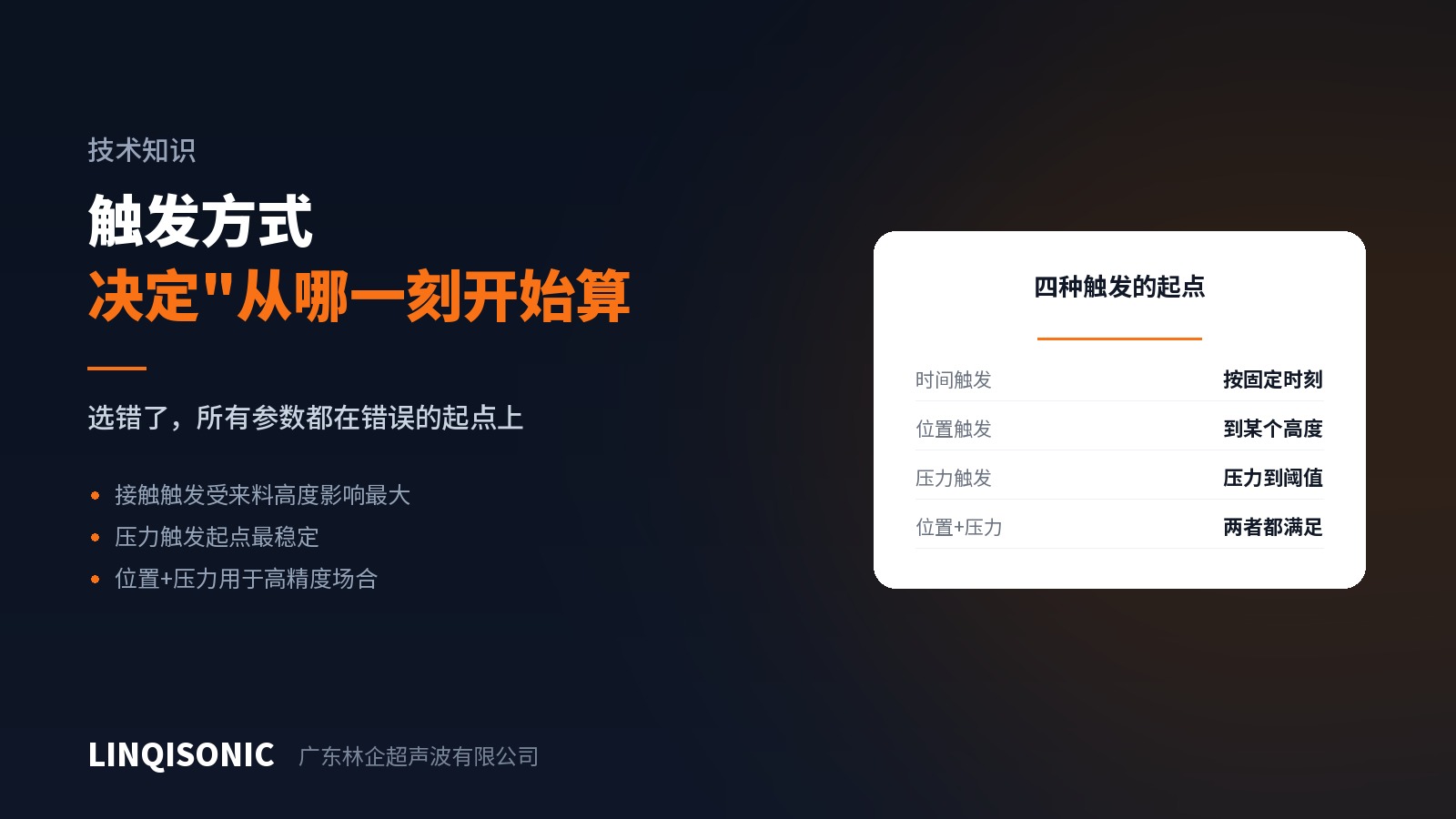
The trigger decides when ultrasound starts. An unstable start point puts every parameter on a drifting datum. Time, position, force and combined triggers compared.
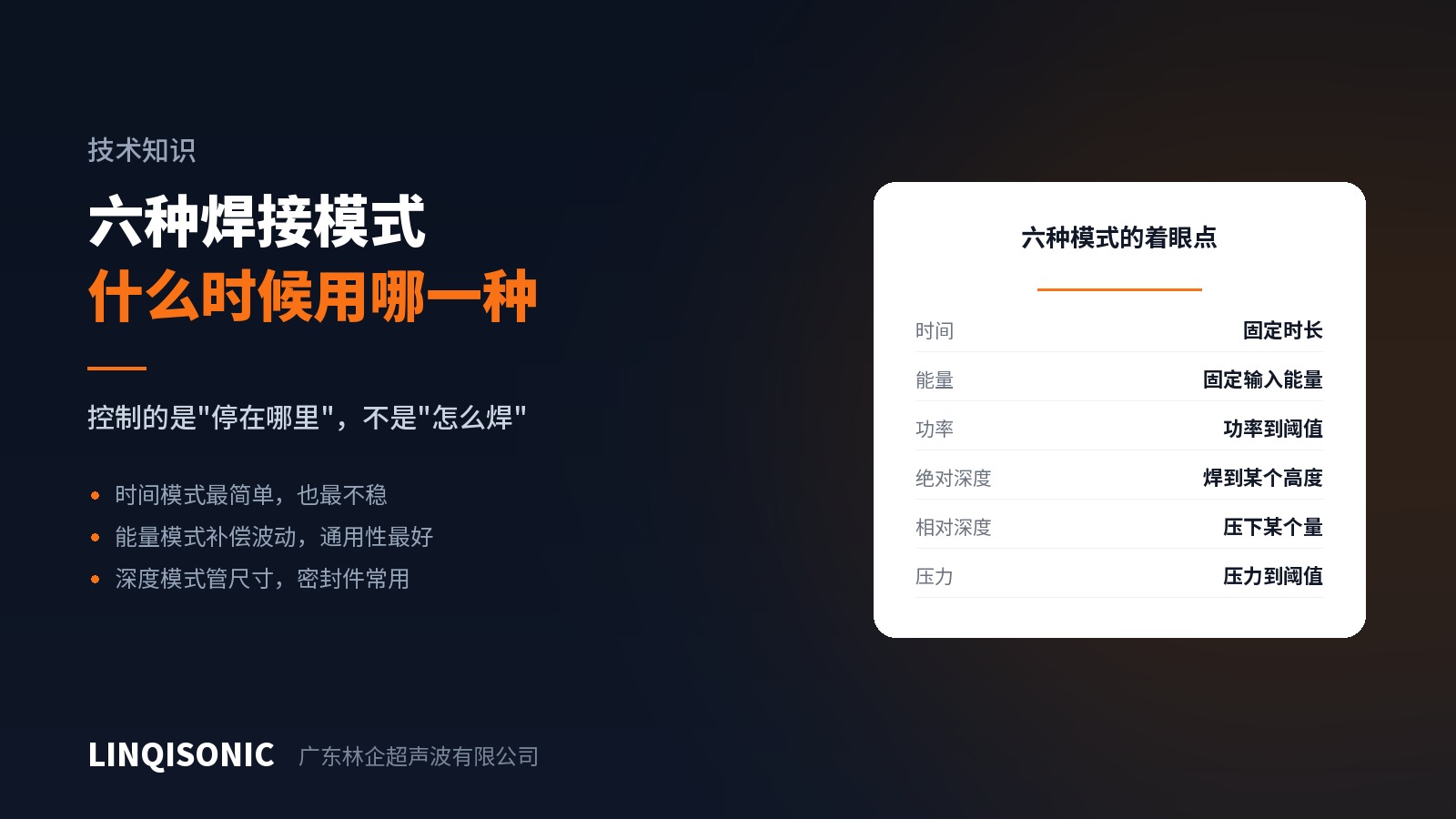
The weld mode decides what stops the weld. Time is simplest but compensates for nothing; energy is the general-purpose choice; depth modes control the finished dimension.
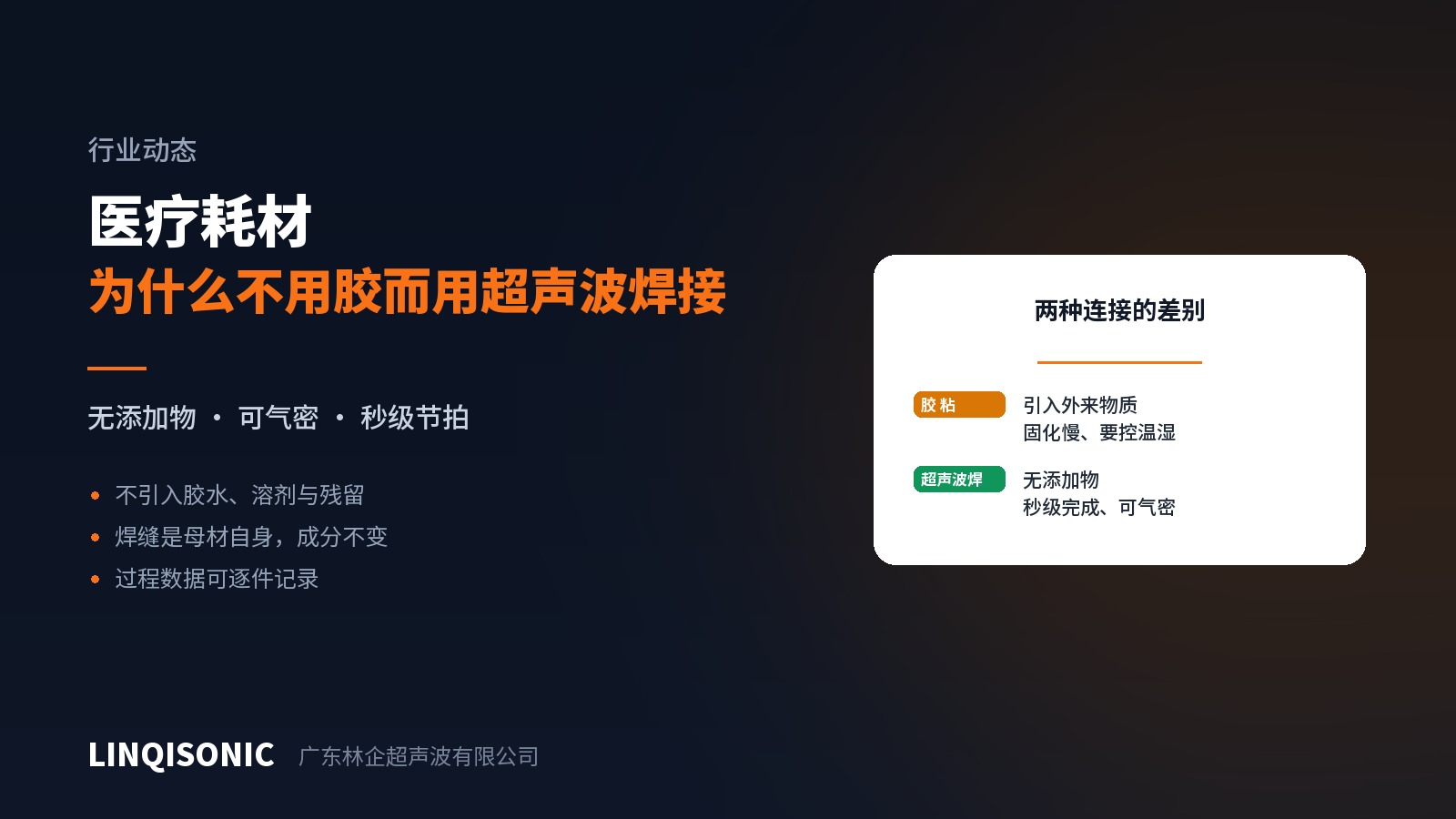
Adhesive introduces a foreign substance, with residue, biocompatibility and cure control to manage. An ultrasonic weld is the parent material itself.