Kövesse a Linqi Ultrasonic híreit, iparági trendeket és műszaki ismereteket
100 articles
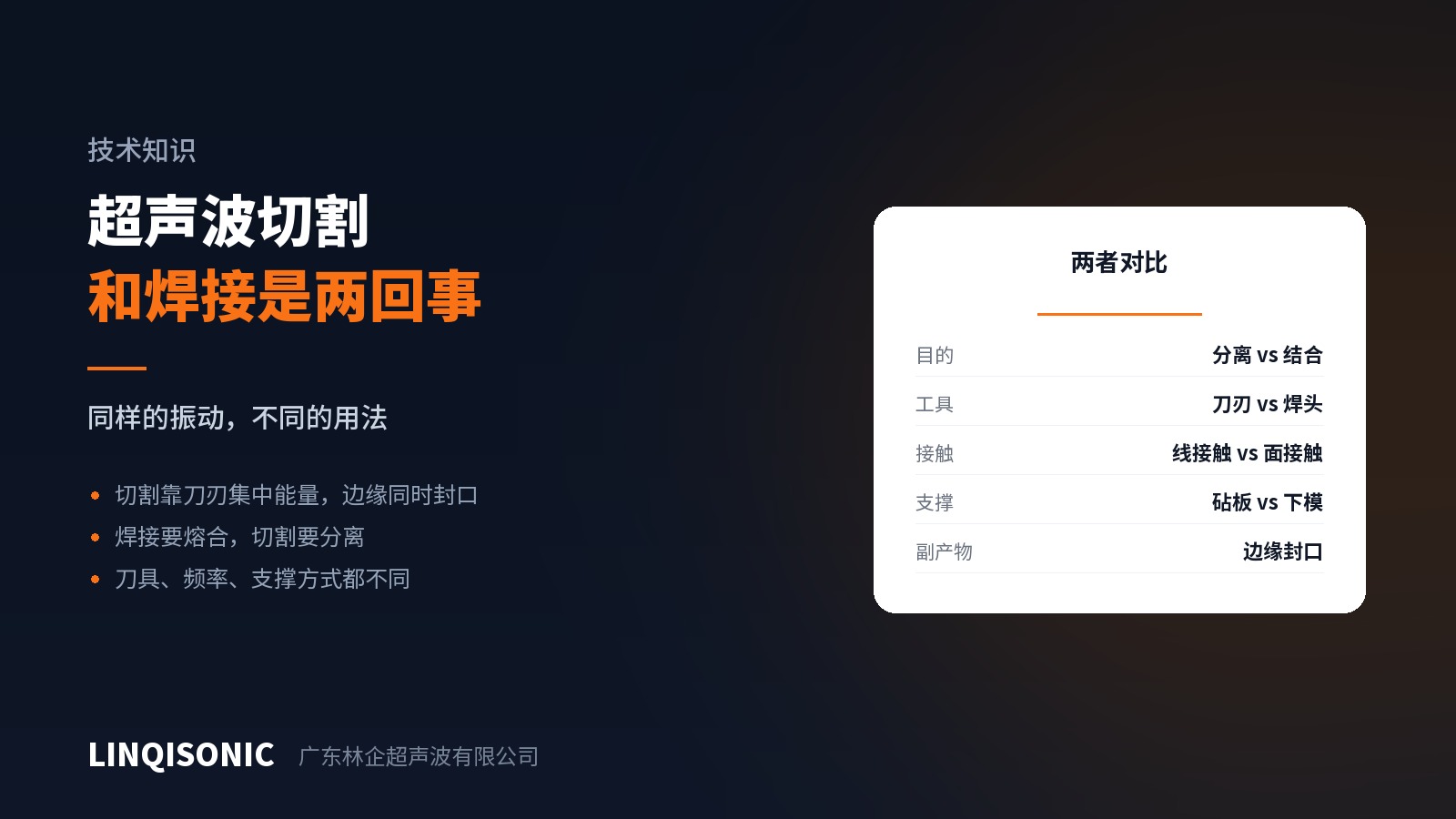
Both use ultrasonic vibration to opposite ends: welding joins, cutting separates. Tool geometry, energy distribution and support all differ.
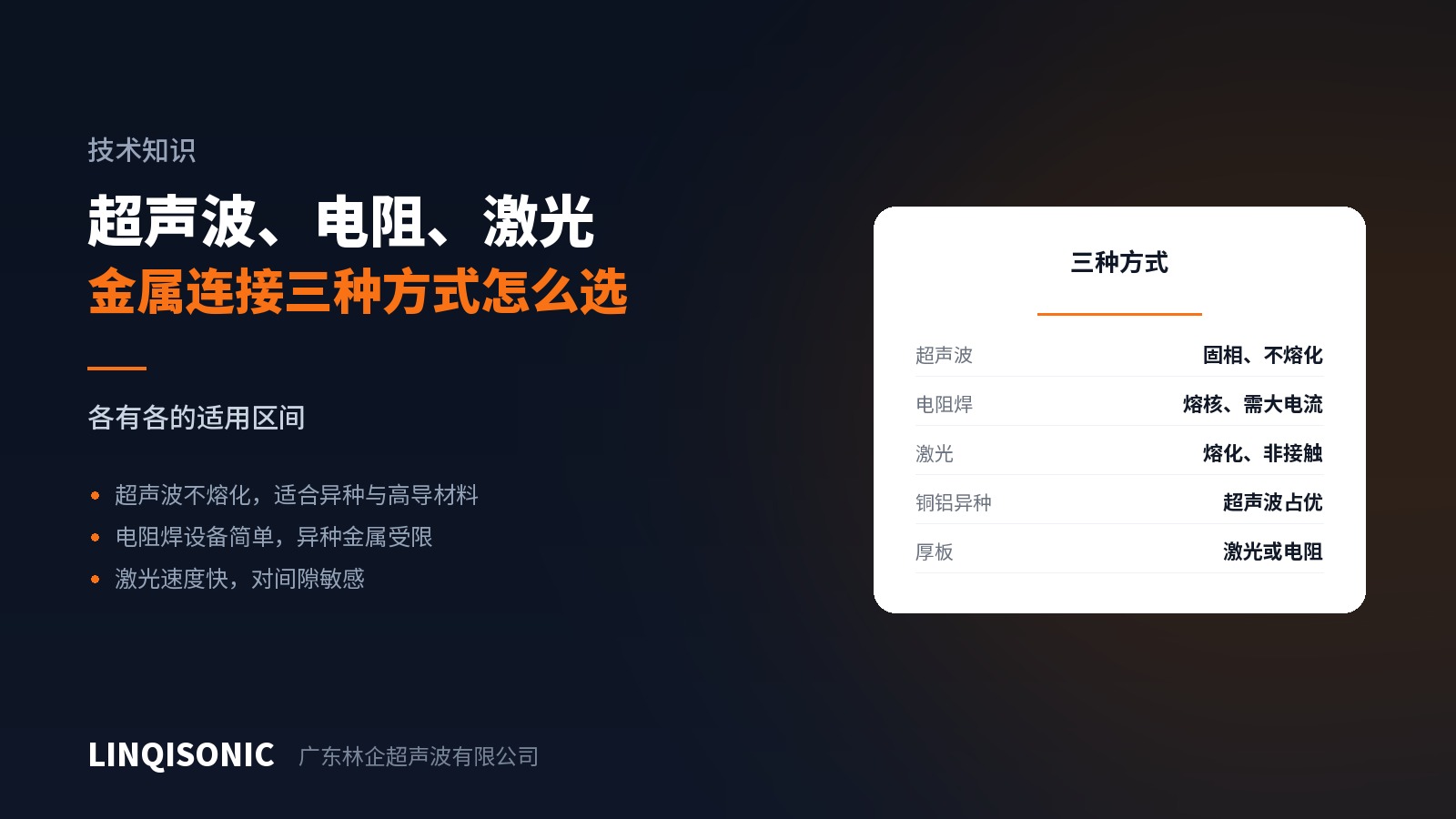
Three common methods, three ranges of application. Ultrasonic is solid-state and suits dissimilar and highly conductive metals; resistance is simple; laser is fast.
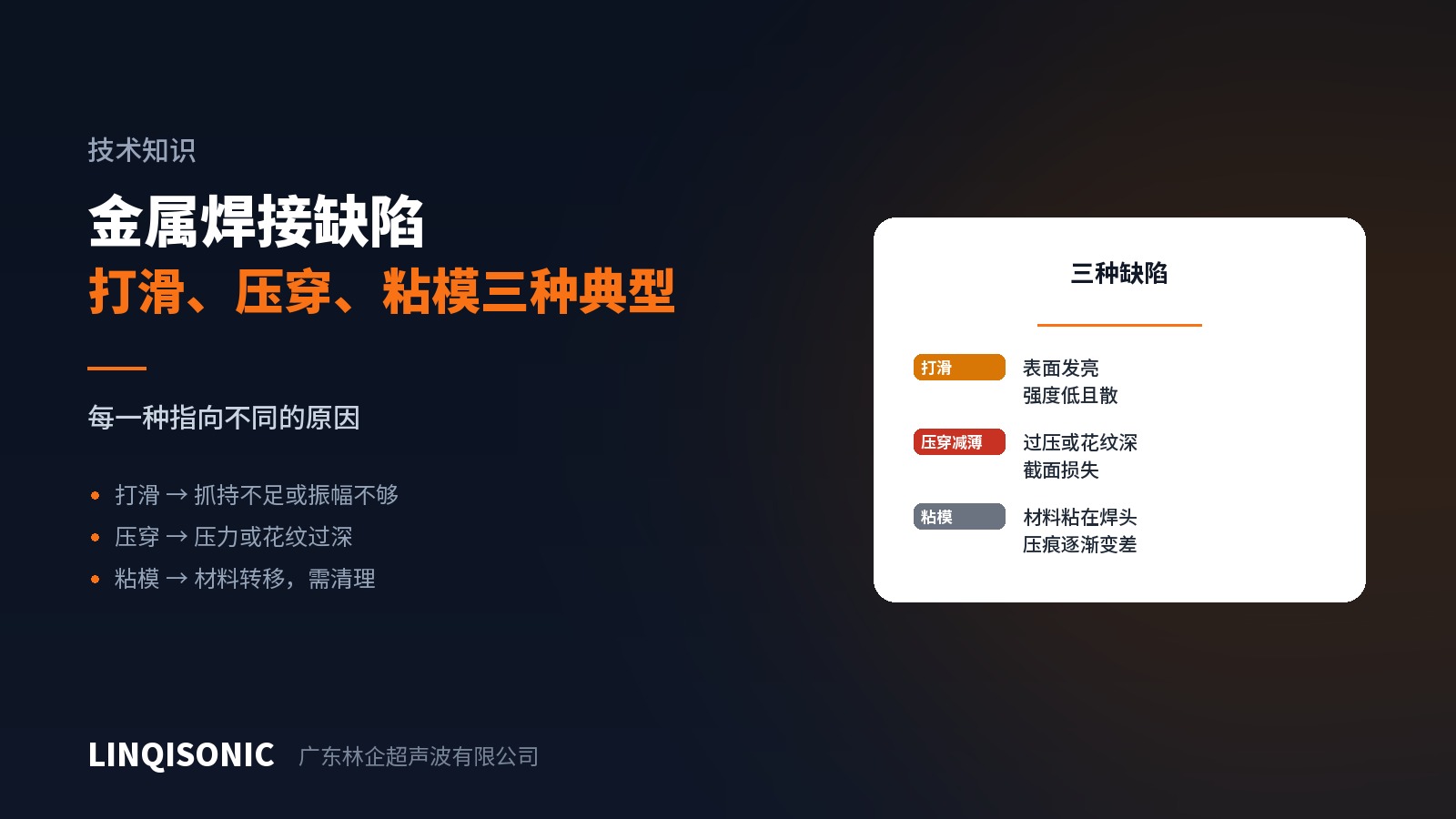
Slipping, crush-through and material pick-up are the three defects most often seen. Each looks different and points to a different cause.
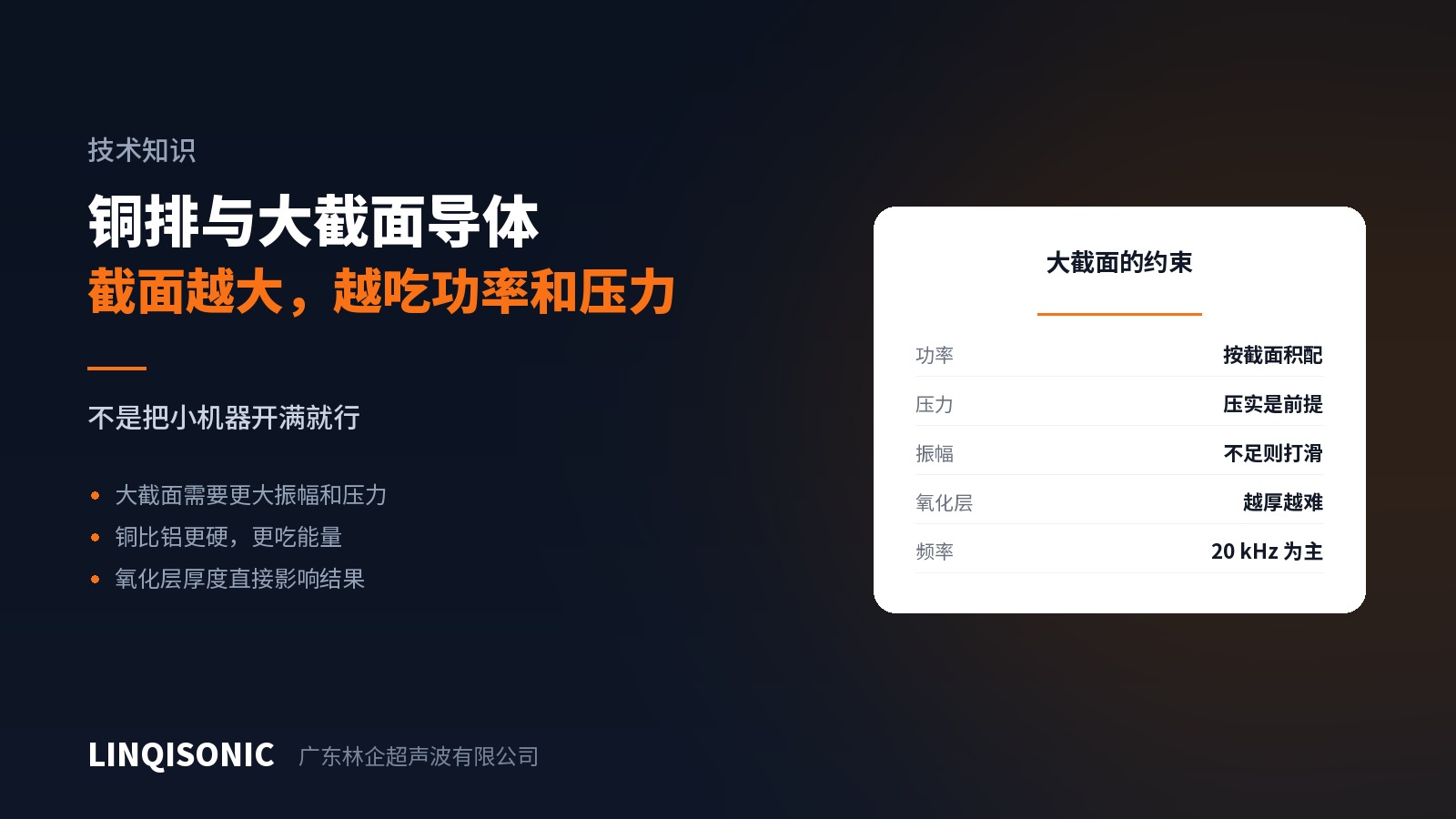
Busbars and heavy cable in new energy and storage demand far more power, force and amplitude than ordinary harness work. Selection constraints, copper versus aluminium, oxide.
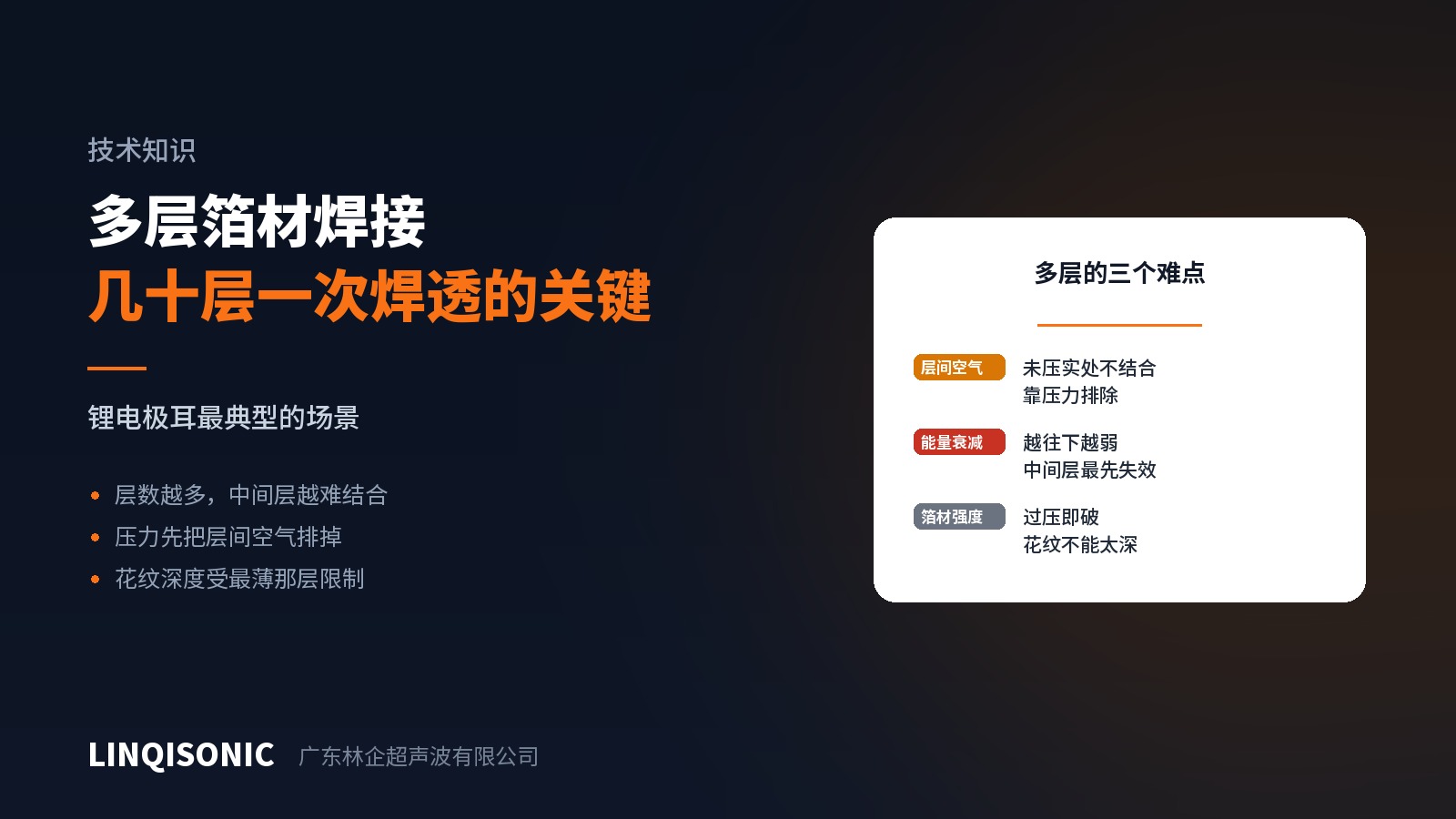
Battery tabs and capacitor leads require dozens of foil layers joined in one operation. Energy attenuates downward, trapped air prevents bonding, and foil cannot take overload.
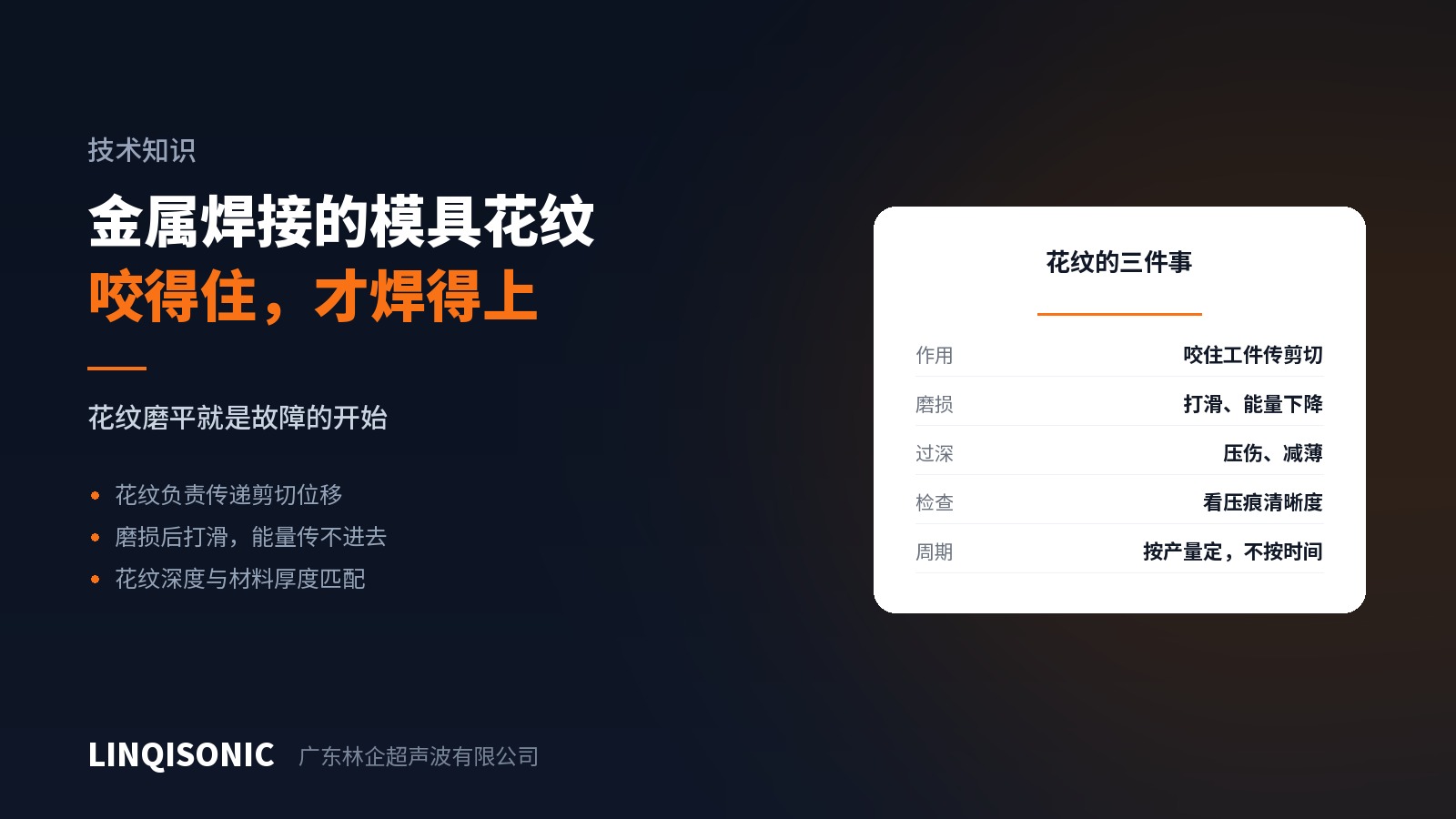
Metal ultrasonic welding relies on lateral shear to break up oxide and form a solid-state bond — and that shear only reaches the work if the knurl grips. Wear is the usual culprit.
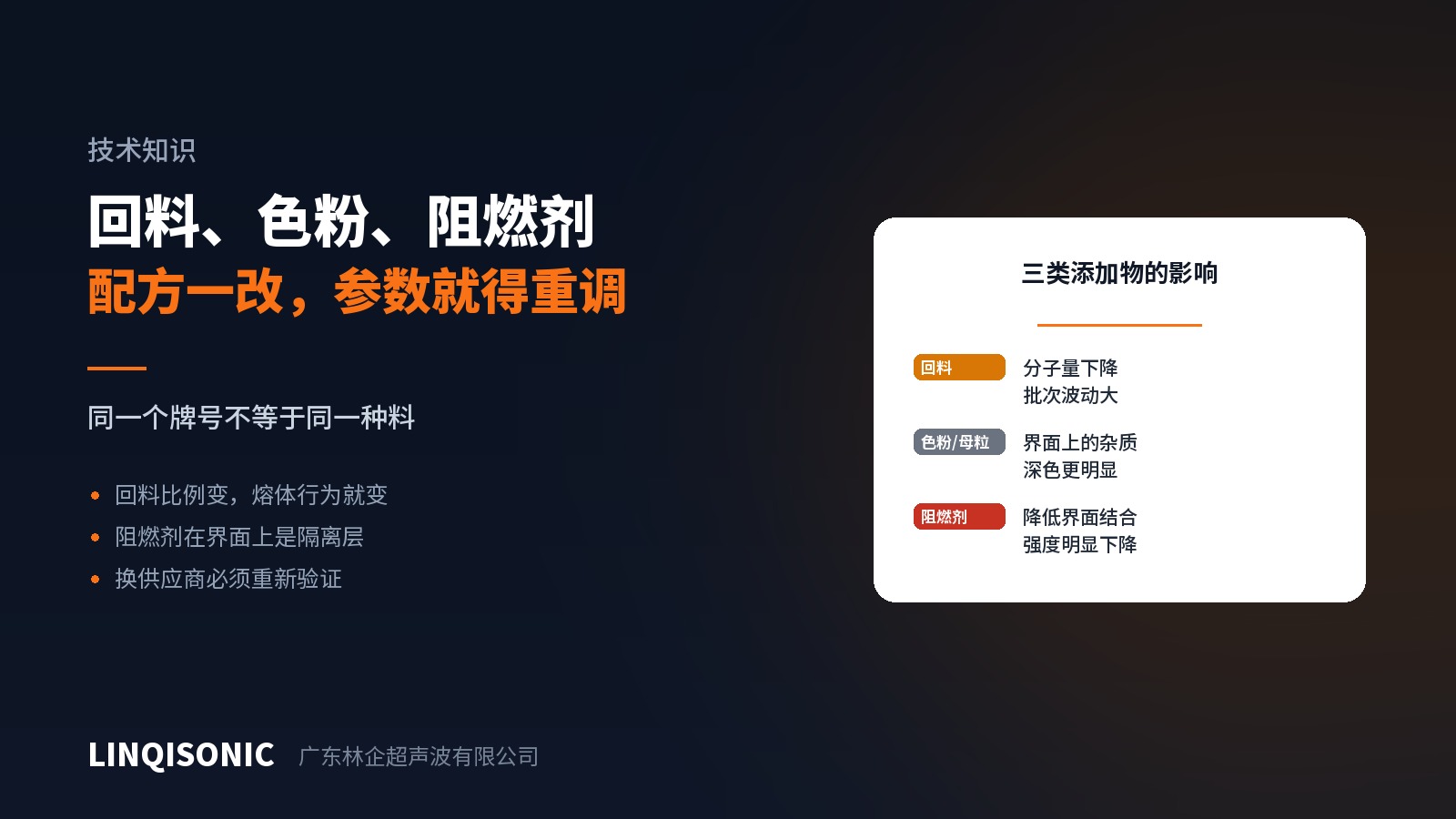
Within the same grade, regrind ratio, pigment and flame retardant all change how a material welds. What each does, and what to verify when material or supplier changes.
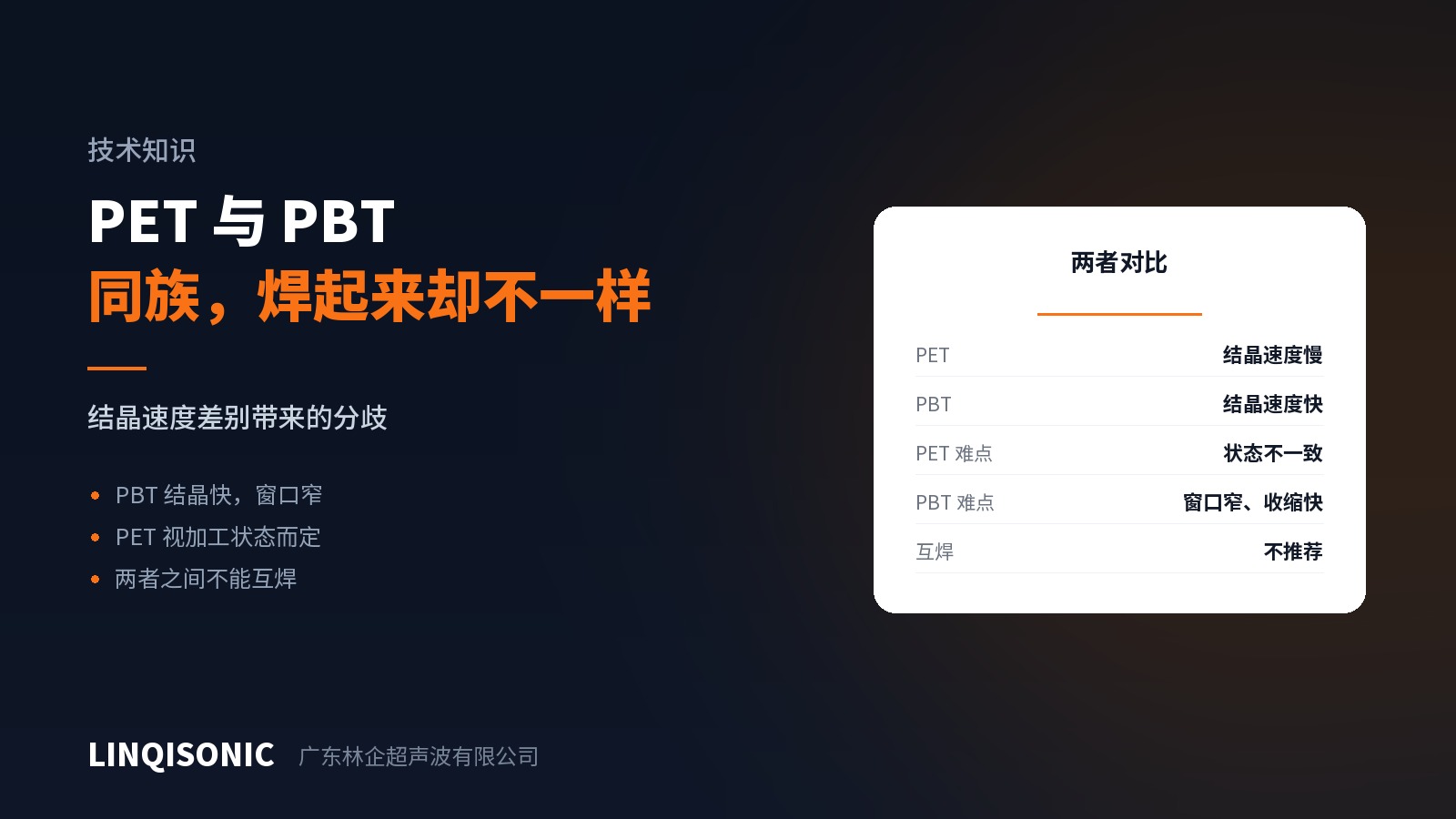
PET and PBT are both polyesters but crystallise at very different rates, so they behave differently under ultrasonic welding. Welding one to the other is not recommended.
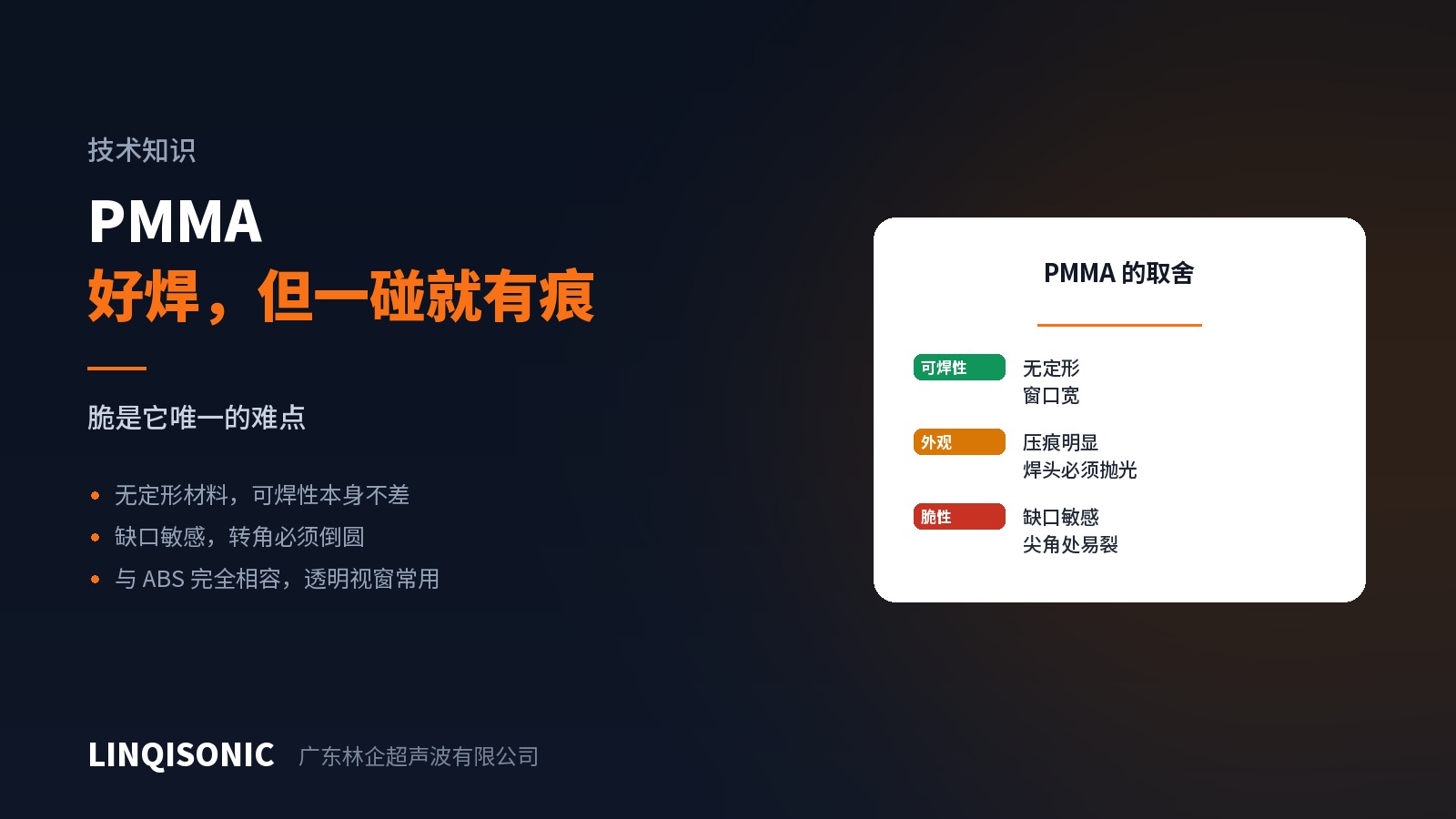
PMMA is amorphous and fuses readily. The difficulty is brittleness and appearance — notch sensitivity at corners, and a clear surface that magnifies every mark.