Kövesse a Linqi Ultrasonic híreit, iparági trendeket és műszaki ismereteket
100 articles
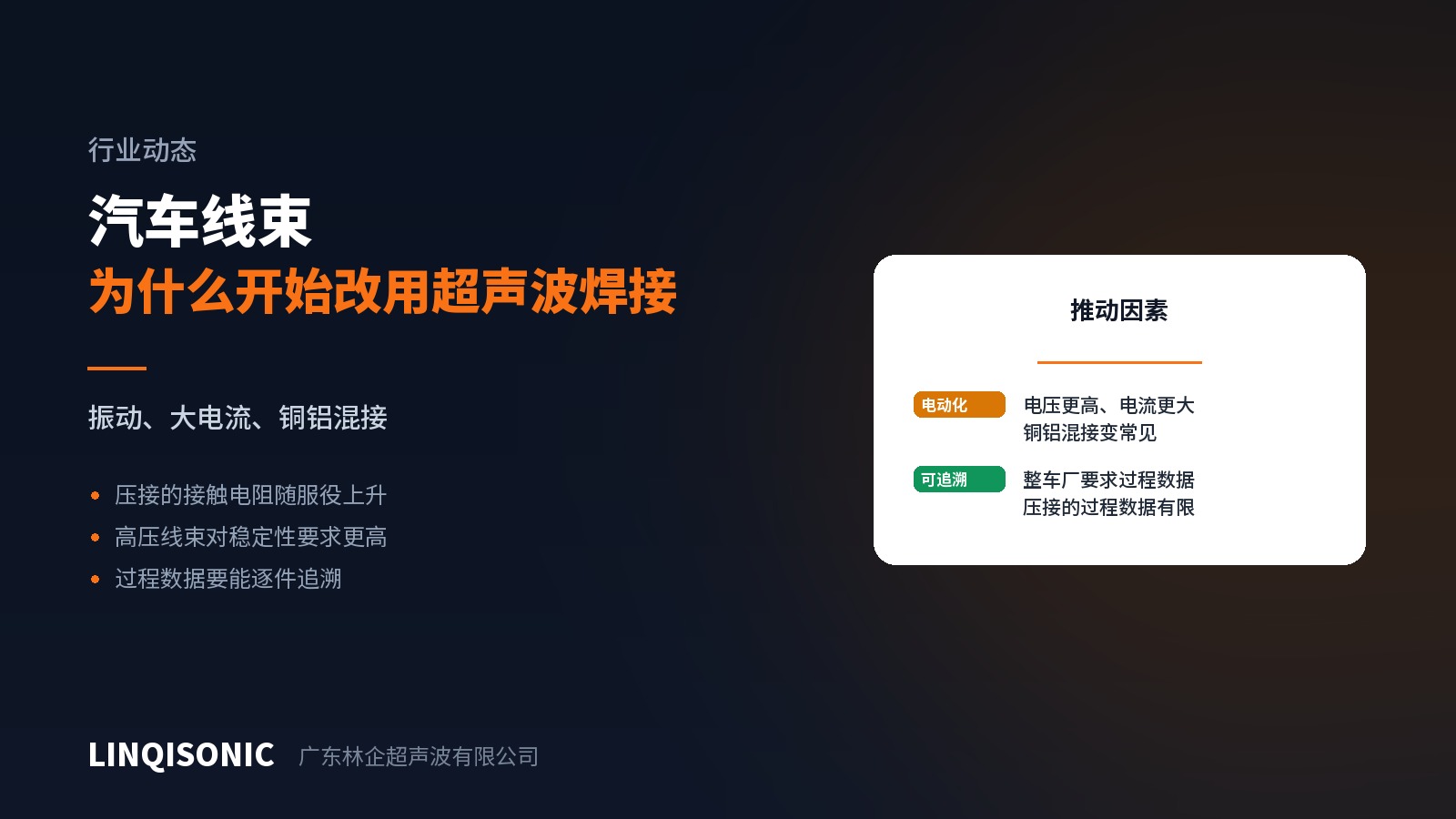
Electrification pushes harnesses to higher voltage, higher current and more copper-to-aluminium joints, while OEMs demand per-part process data. Both favour welding.
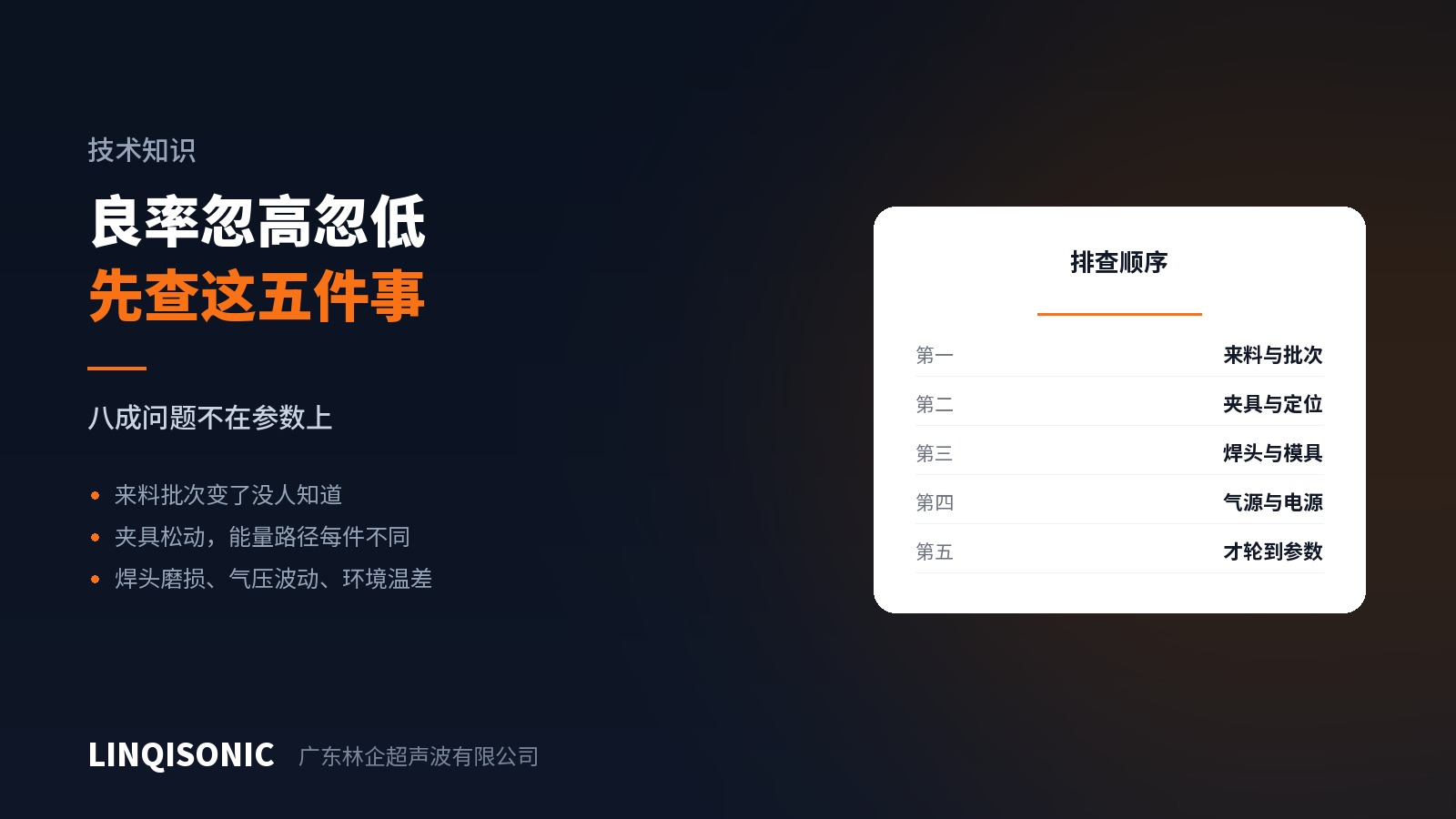
When yield swings, the first instinct is to adjust parameters — and most of the time the cause lies elsewhere. A checking order that saves time.
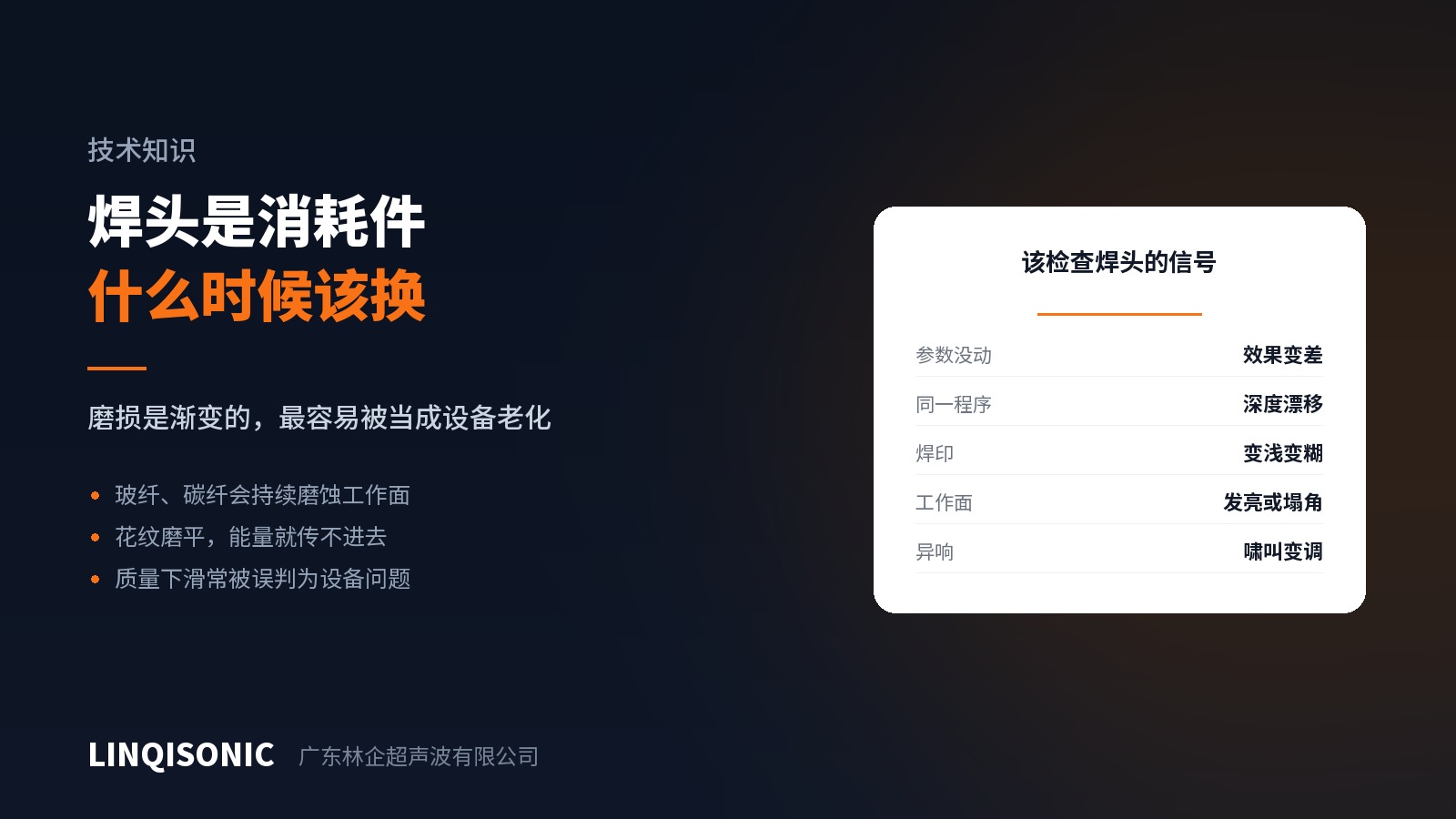
Horns are consumables, not permanent parts. Wear is gradual, and the resulting drift in quality is routinely mistaken for machine ageing. The signals worth watching.
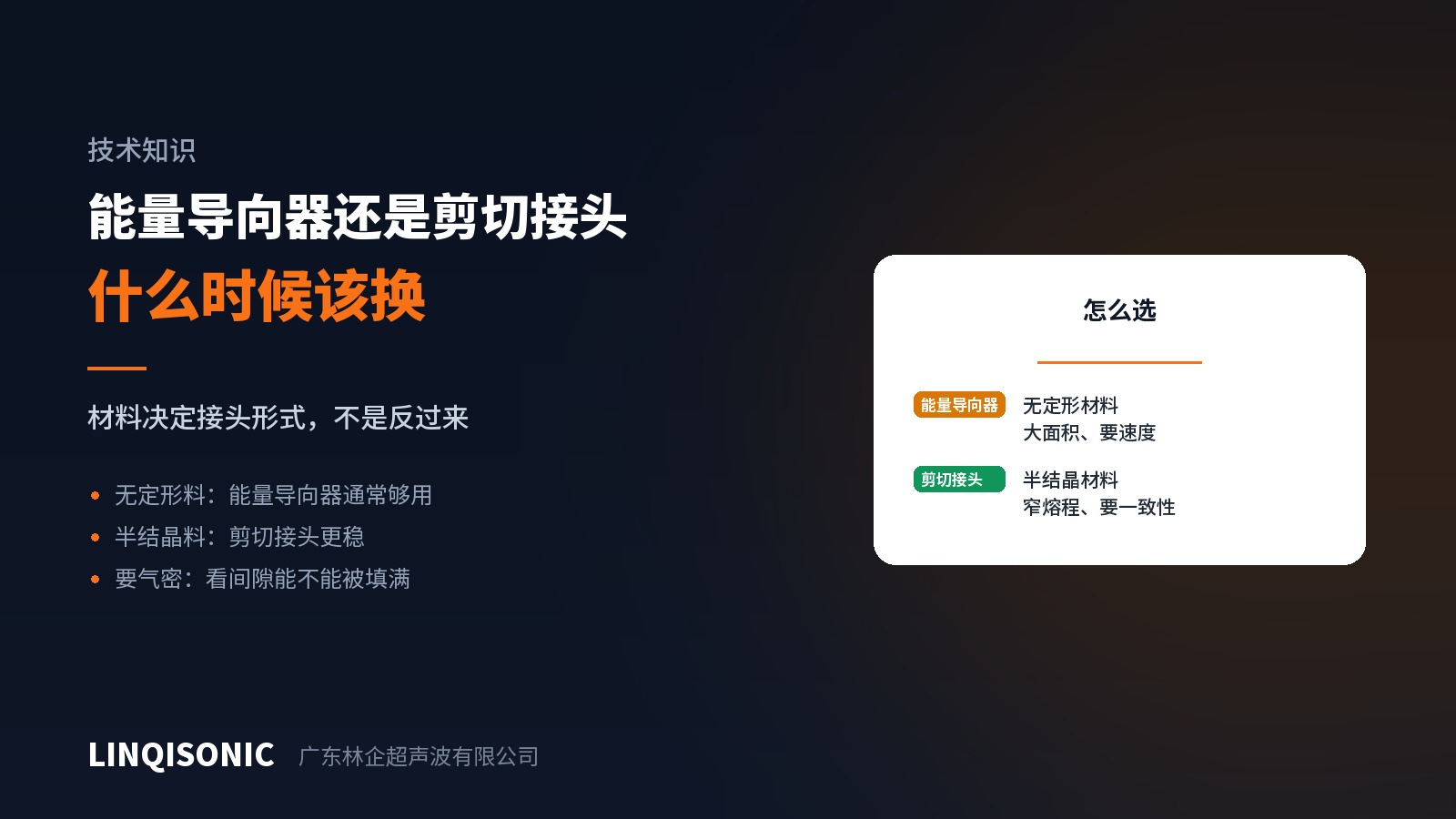
An energy director melts instantaneously at a tip and flows; a shear joint generates heat along an interference fit. Where each belongs, and why changing the joint often beats tuning.
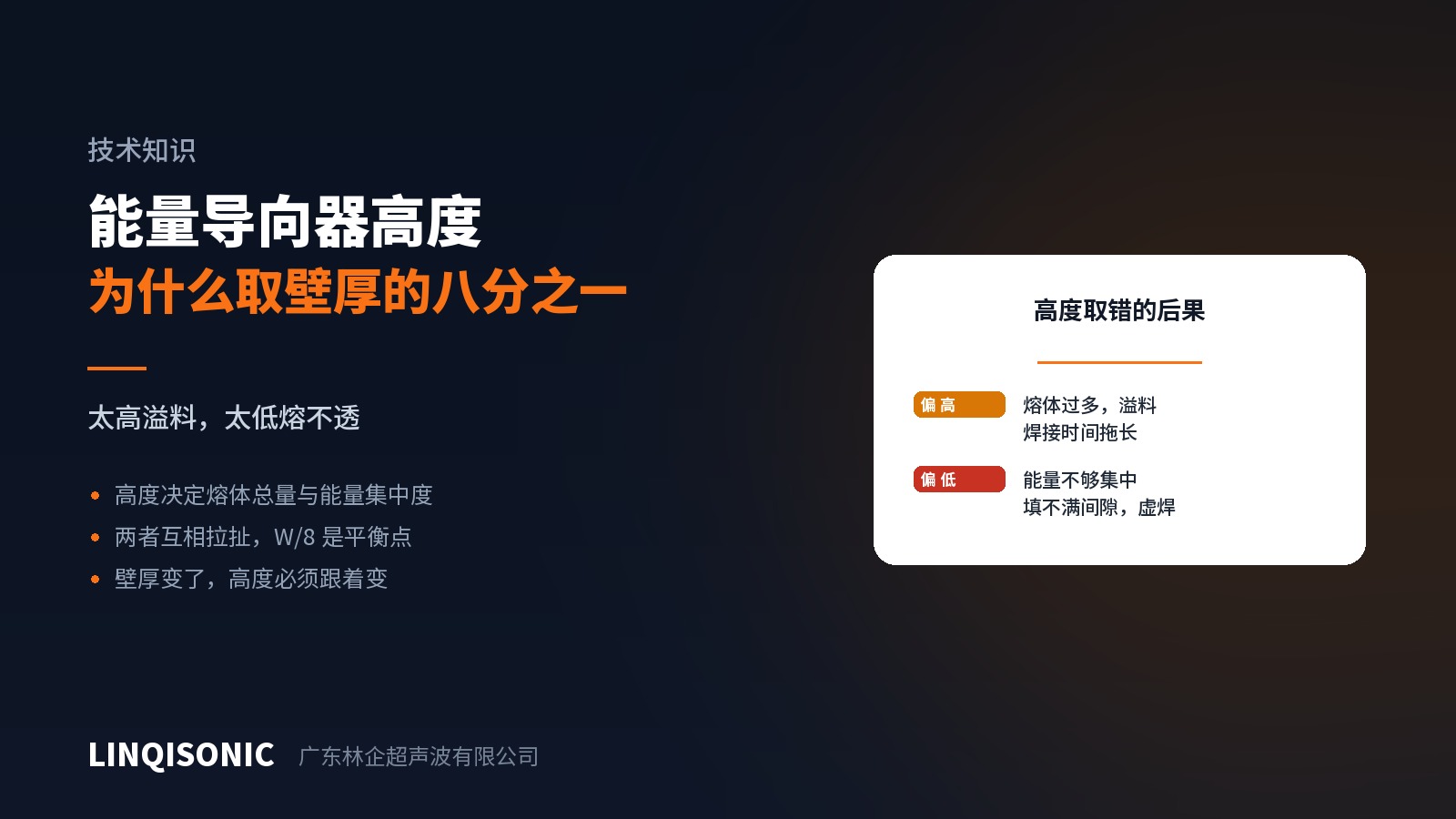
Director height sets both the volume of resin available to melt and how concentrated the initial energy is. Those pull in opposite directions, and W/8 is where they balance.
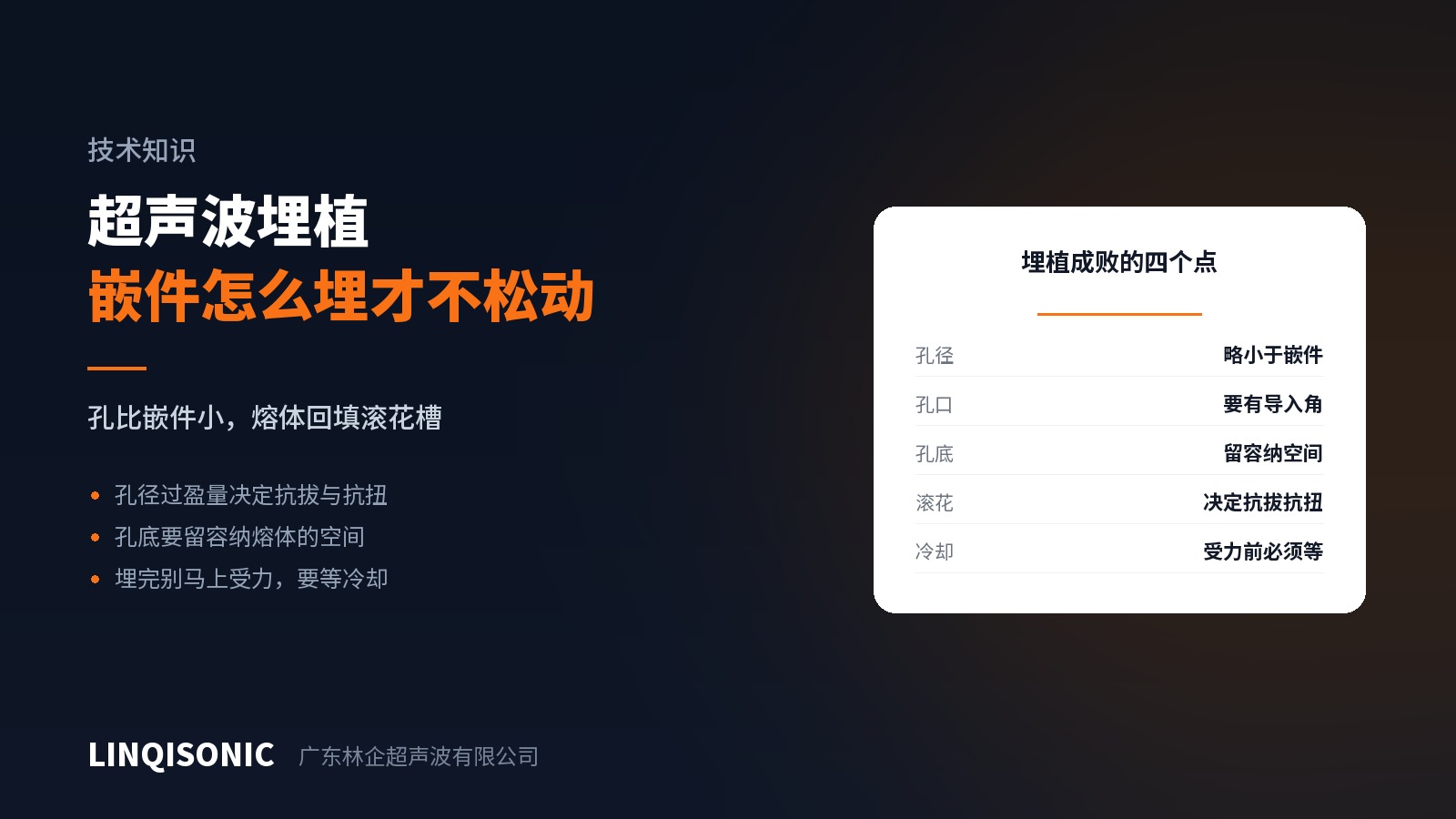
Ultrasonic insertion melts the bore wall locally so resin flows into the knurl and locks the insert mechanically. The four features that decide pull-out and torque resistance.
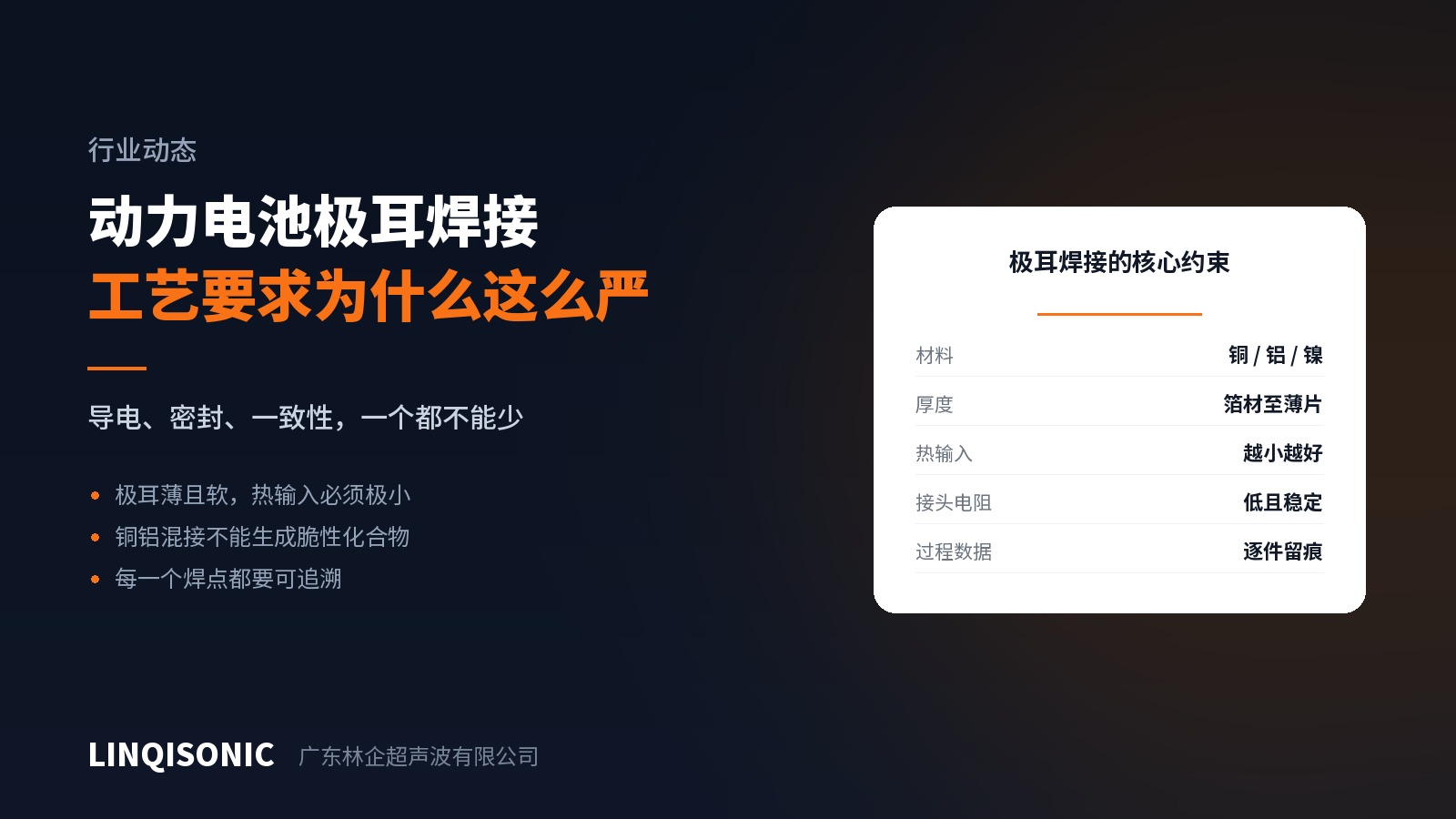
Battery tabs are thin, soft and conductive; the process must add almost no heat, keep joint resistance low, and record every weld. Why solid-state joining fits.
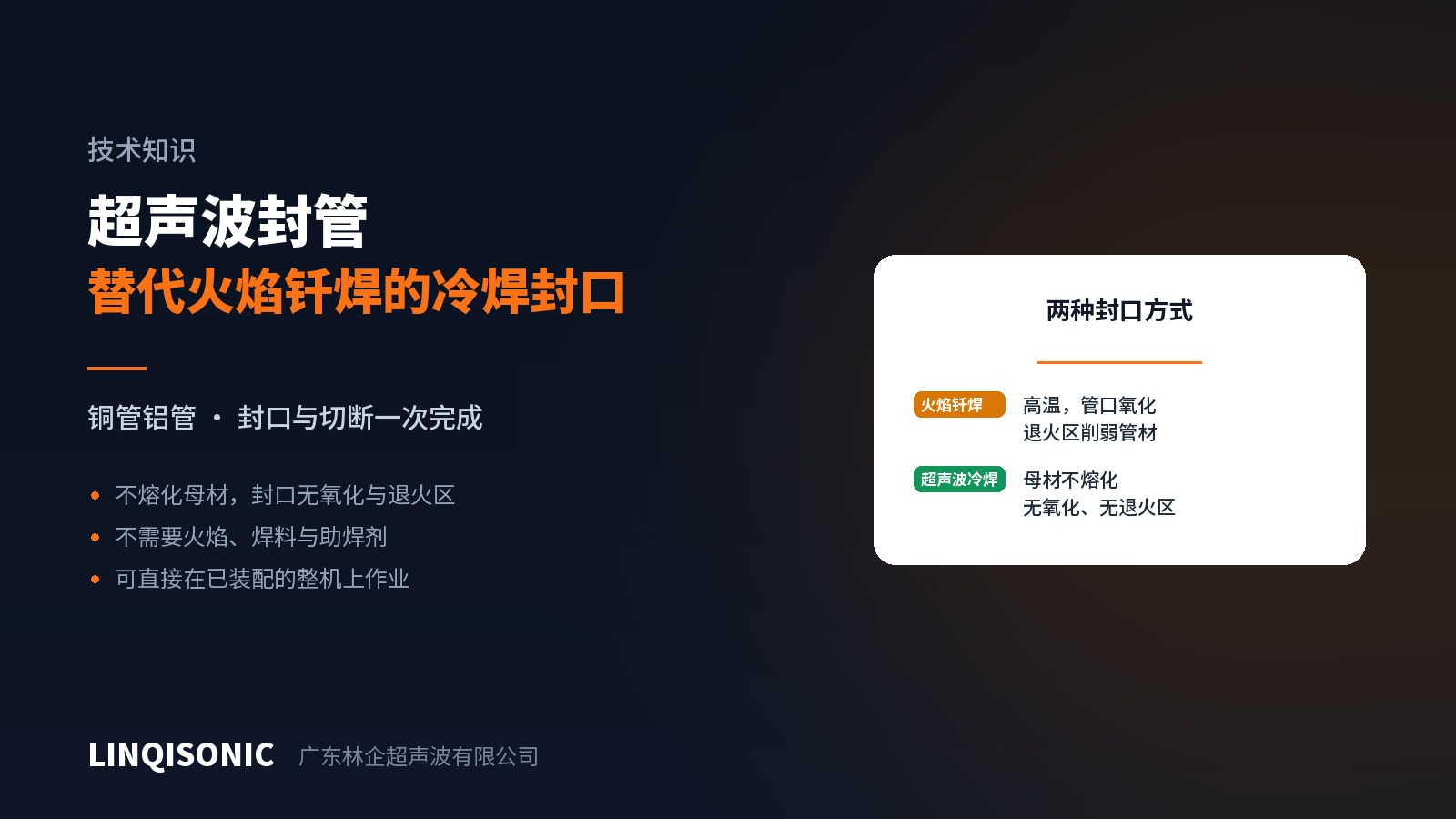
Ultrasonic tube sealing is a solid-state cold weld: vibration bonds the two tube walls directly, sealing and cutting in one action, with no flame, filler or flux.
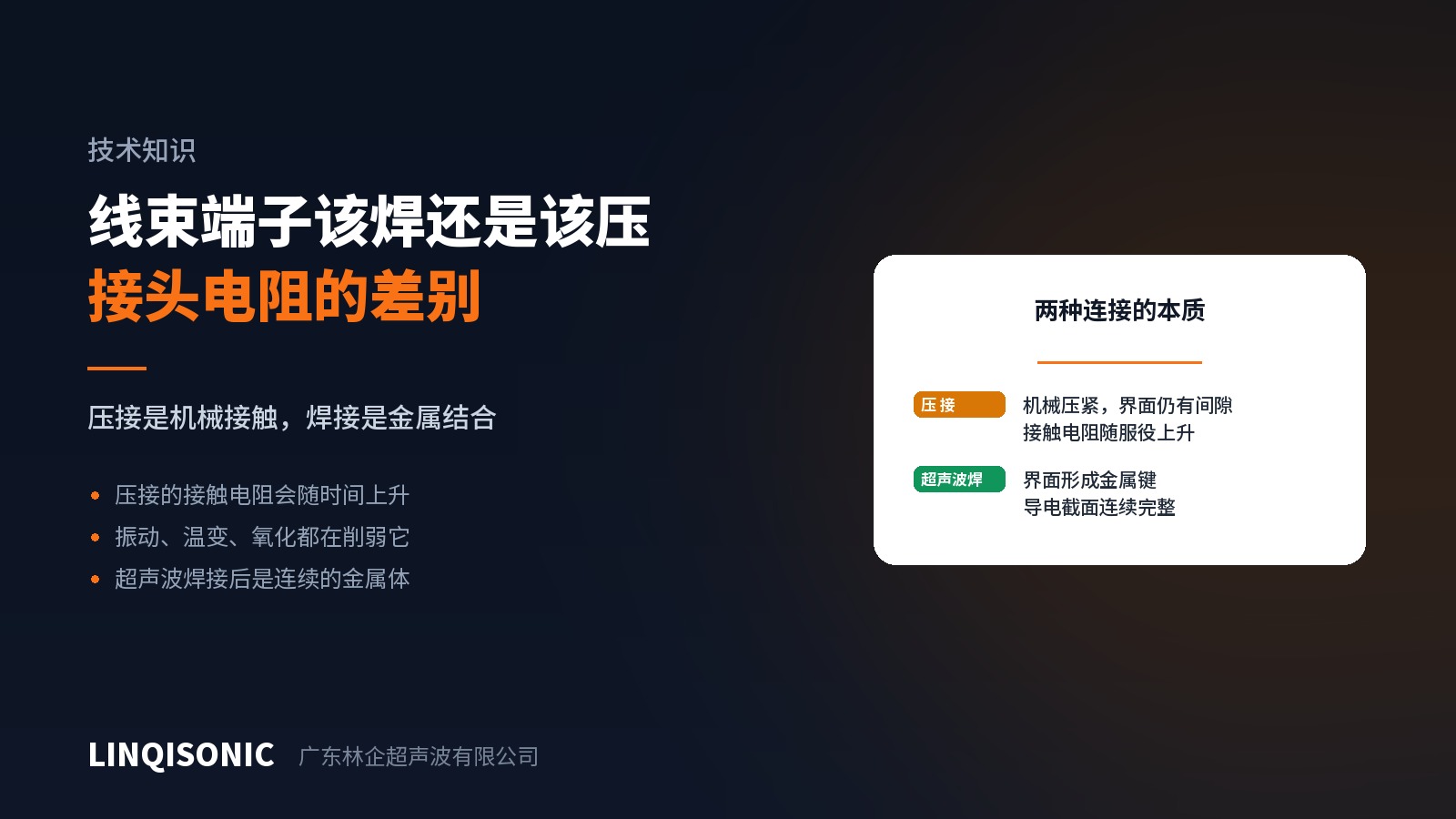
Crimping presses metal together mechanically and the interface keeps microscopic gaps; ultrasonic welding forms a continuous metallic bond. What changes, and when it matters.