Fique atualizado com as novidades da Linqi Ultrasonic, tendências da indústria e insights técnicos
100 articles
PS welds easily with a wide window but is brittle; HIPS adds a rubber phase, gaining toughness while demanding more amplitude. The traps are not fusion but stress cracking and surface marking.
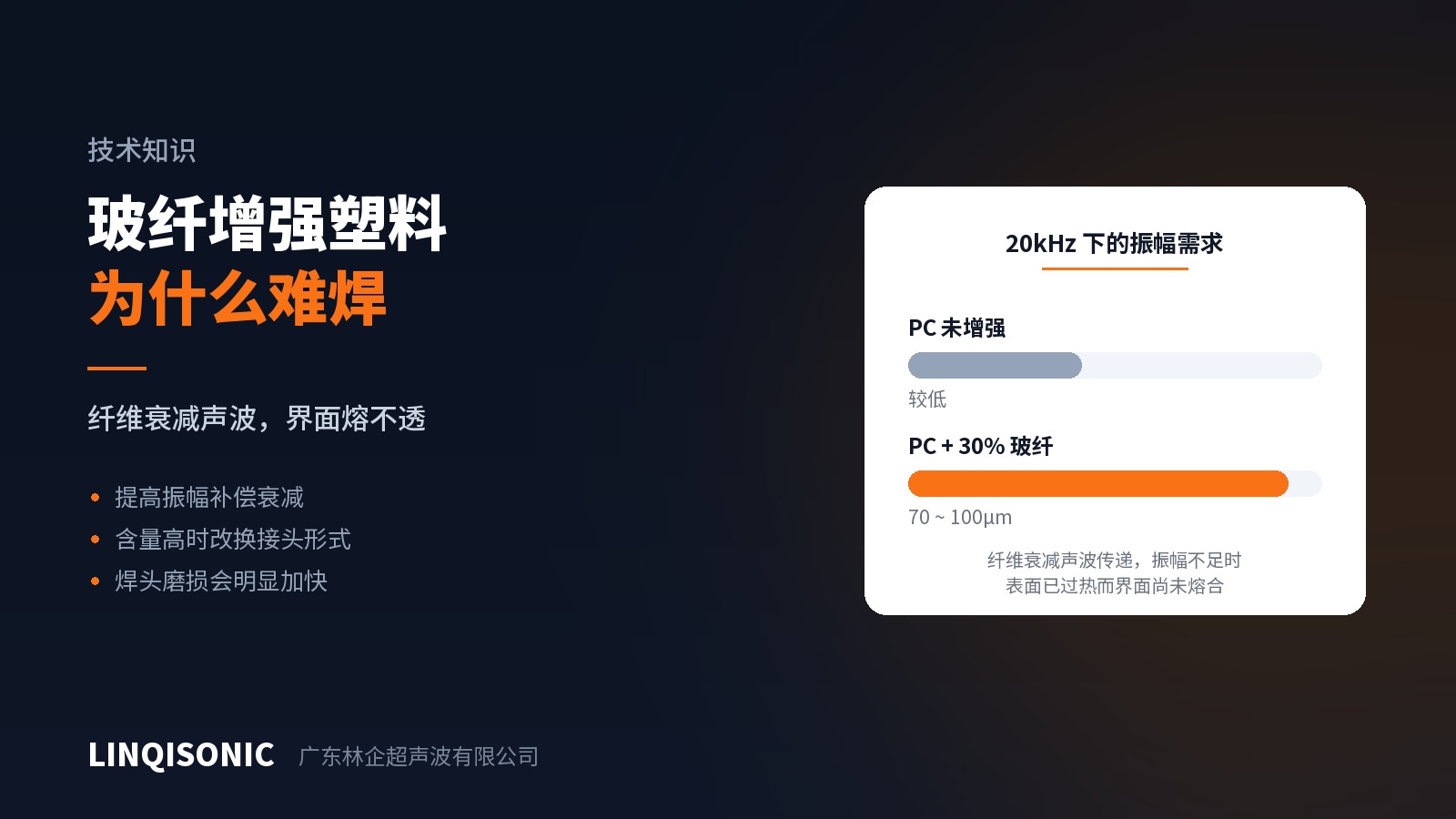
Same loading, different fibre length, and the resin available at the interface, the attenuation and the horn wear all change. A purchasing spec that gives only a percentage is not enough.
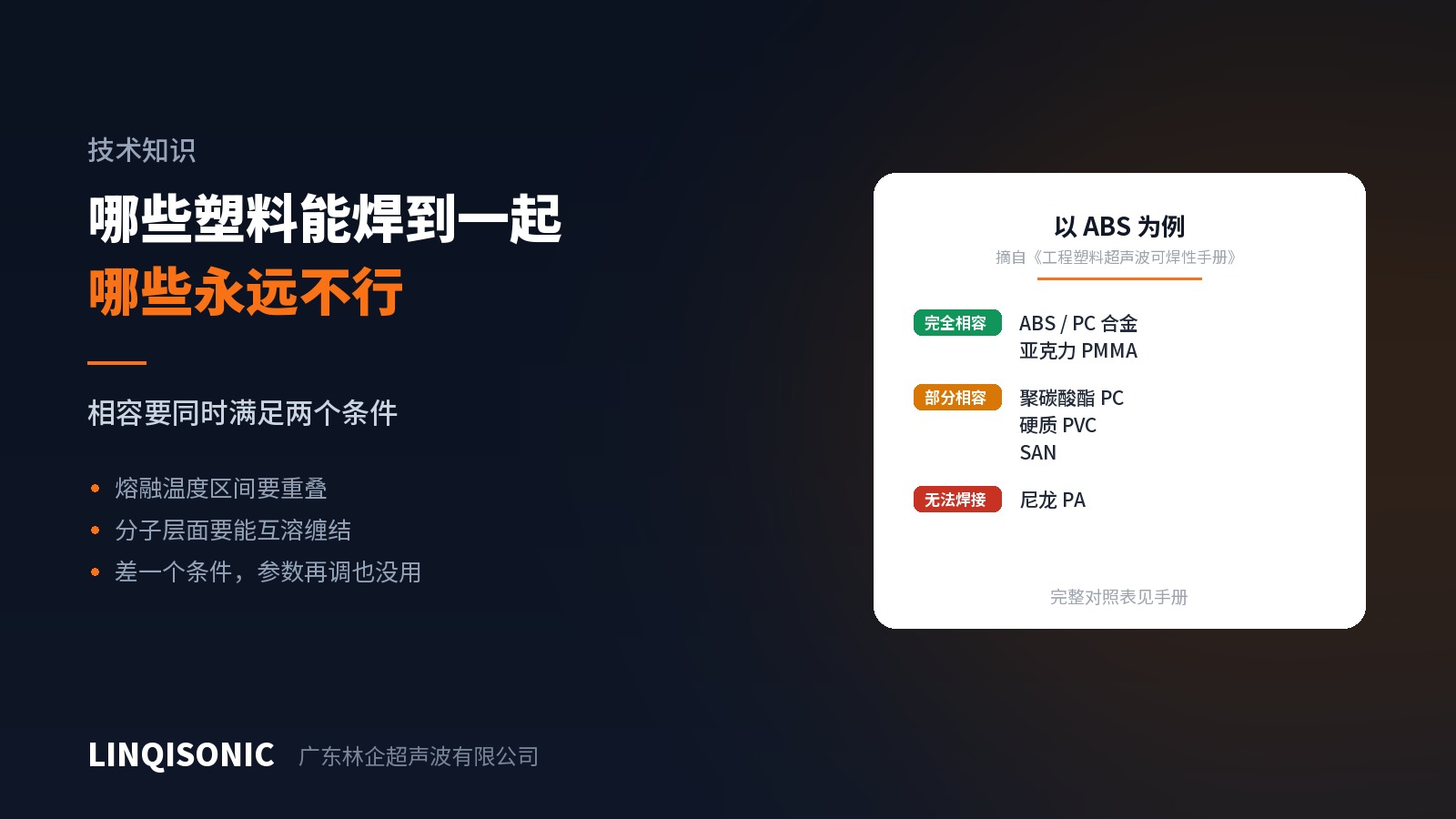
Both are nylon, but PA66 melts higher, over a narrower range and crystallises faster, so its process window is tighter than PA6. The two also do not weld to each other, so unify the grade at the design stage.
PPS melts high, over a narrow range, and is brittle; it is almost always glass filled. The question is not whether it welds but how narrow the window gets, and how joint design and process monitoring hold it steady.
Soft materials absorb the vibration. TPU has high internal damping and a low modulus, so the wave attenuates fast and the part deforms under force. The answers are near field, a larger contact area, and a fixture that supports it.
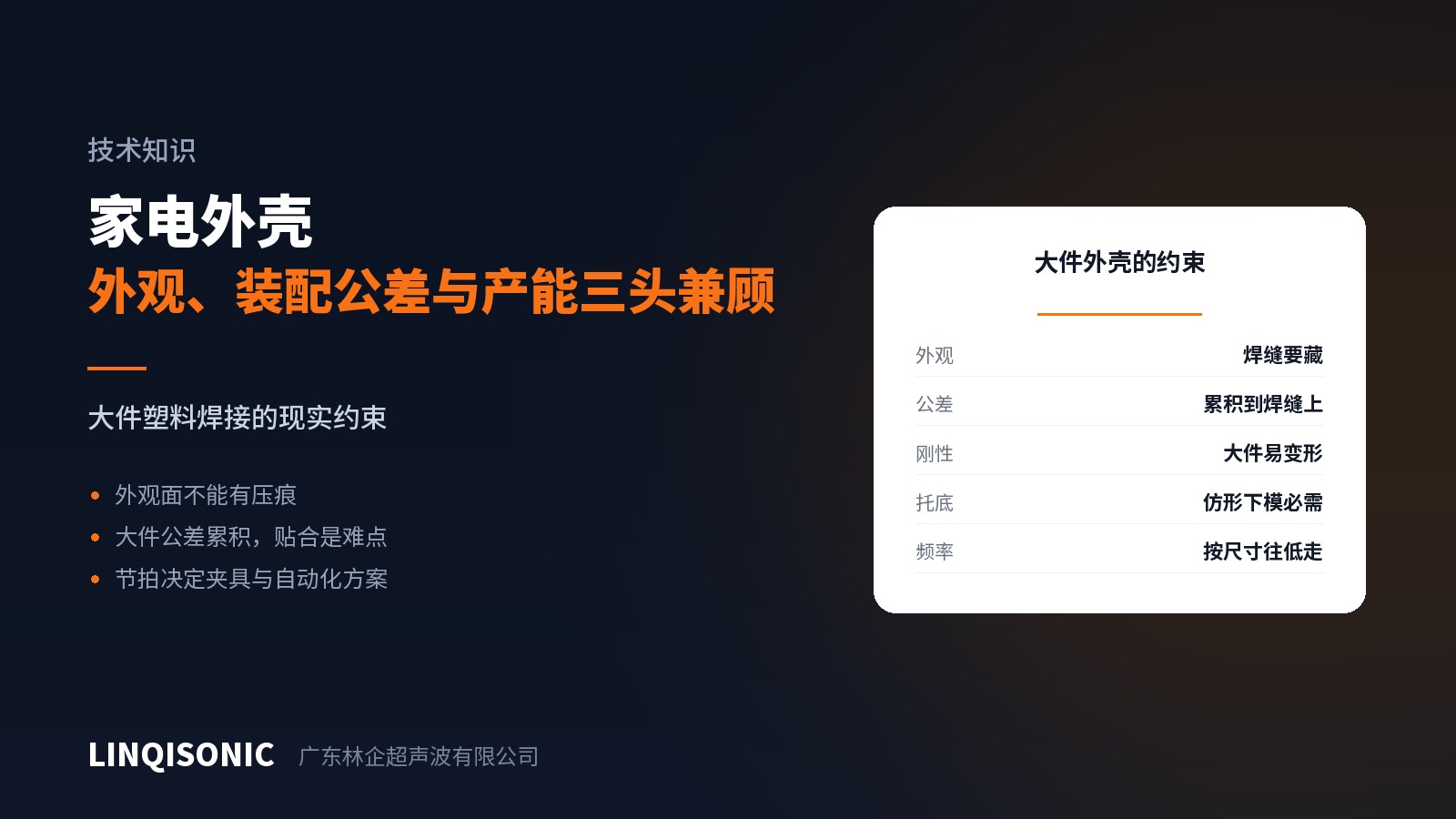
Appliance housings are large plastic parts with high appearance standards, accumulated tolerance and output pressure. What each constraint costs, and where the trade-offs are.
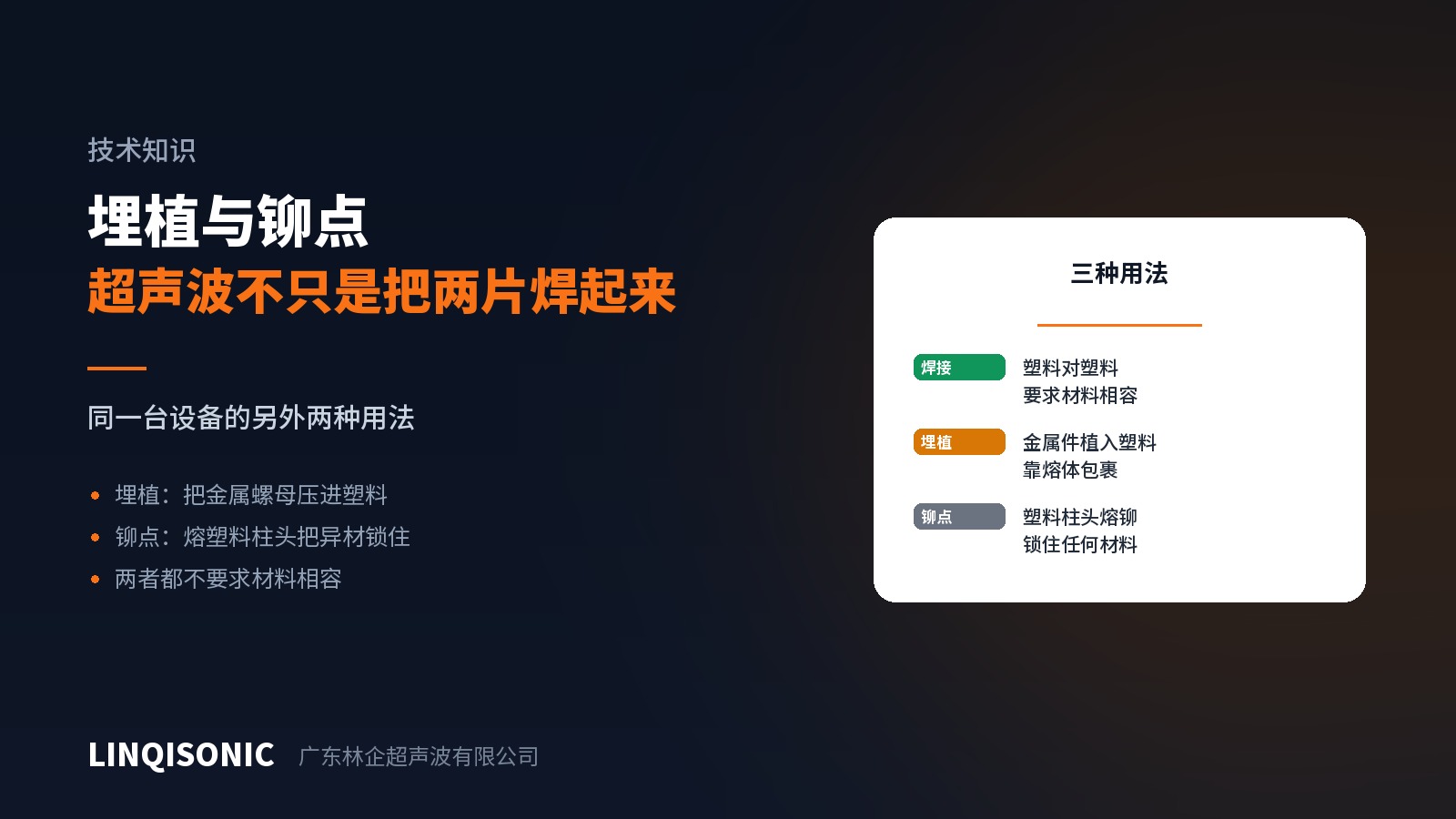
Beyond welding, the same equipment performs insertion, pressing metal inserts into plastic, and staking, melting a plastic boss to capture another part. Neither needs compatibility.
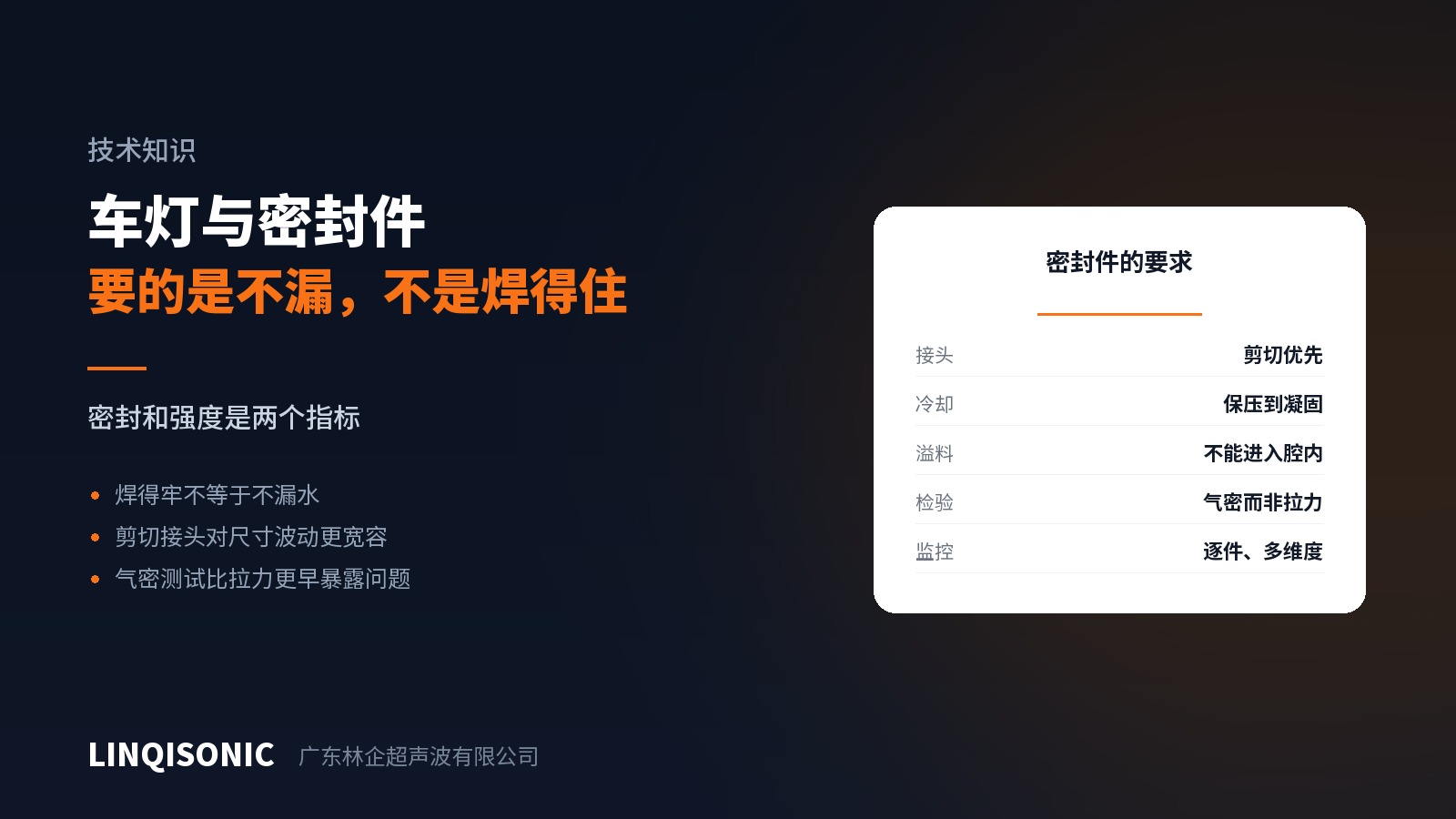
Sealed parts are judged on leakage, and a joint strong enough to pass a pull test may still leak. How sealing work differs from structural welding.
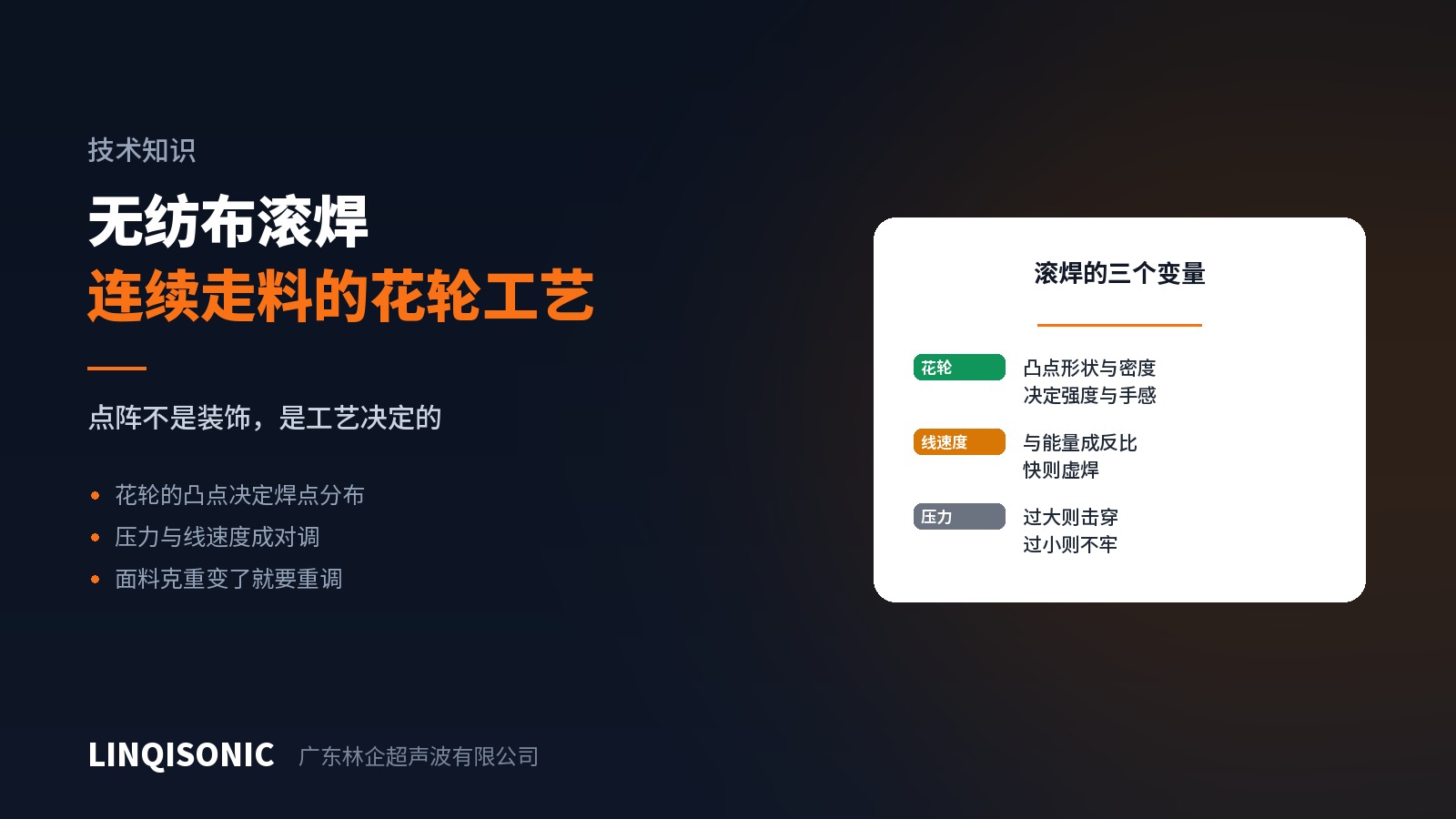
Masks, wipes, hygiene products and filter bags run continuous rotary ultrasonic welding. Pattern wheel, line speed and force constrain each other.