Fique atualizado com as novidades da Linqi Ultrasonic, tendências da indústria e insights técnicos
91 articles
Flash means more melt than the joint can contain. Usually a joint design problem rather than a parameter one — director too tall, weld too deep, or no flash trap.
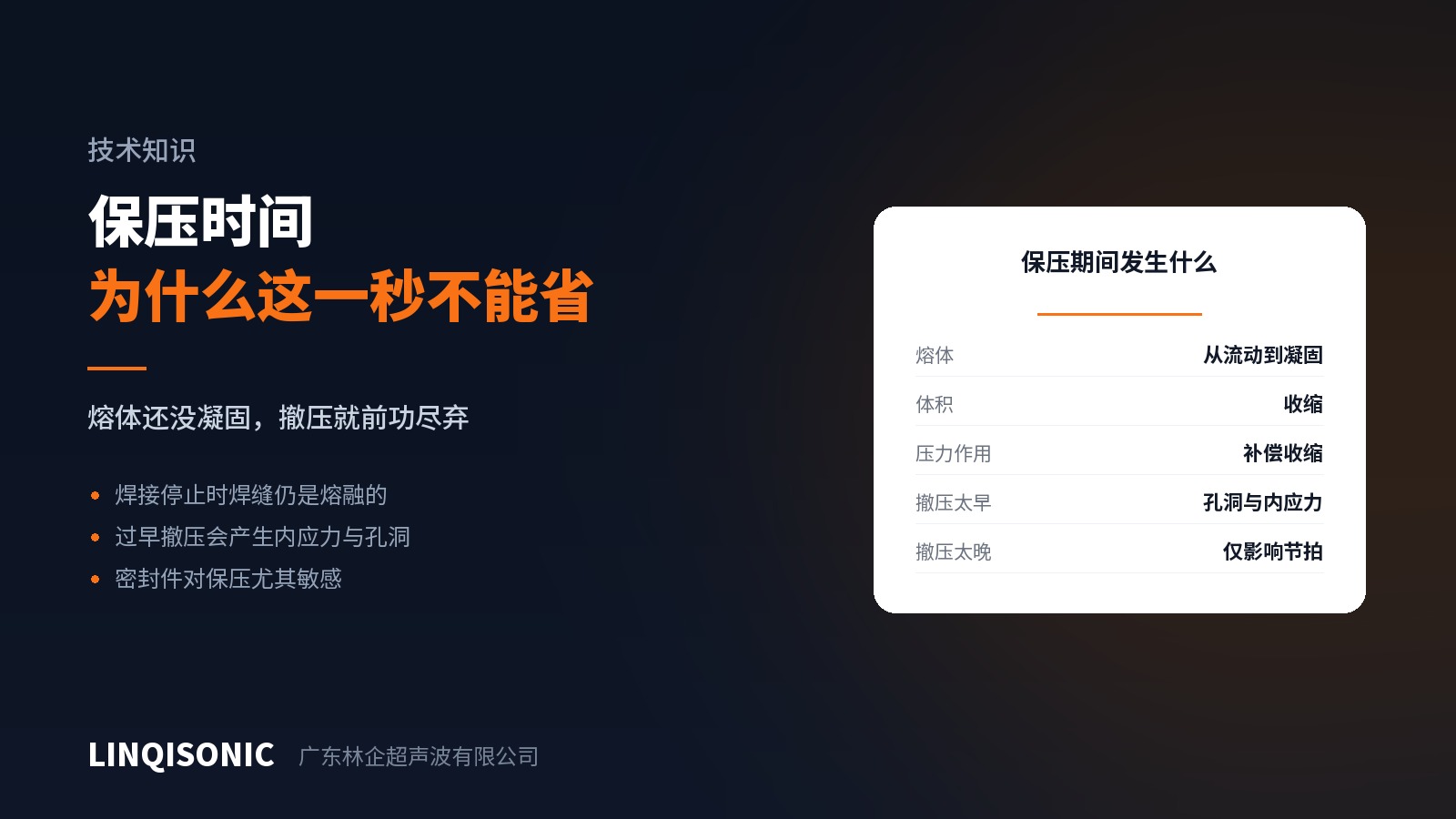
When ultrasound stops the joint is still molten. Force during hold compensates for shrinkage as it solidifies. Releasing early leaves voids and locked-in stress.
Force keeps the faces in contact; amplitude generates the friction that melts them. Too much force suppresses the vibration itself. Set amplitude first, then find the force.
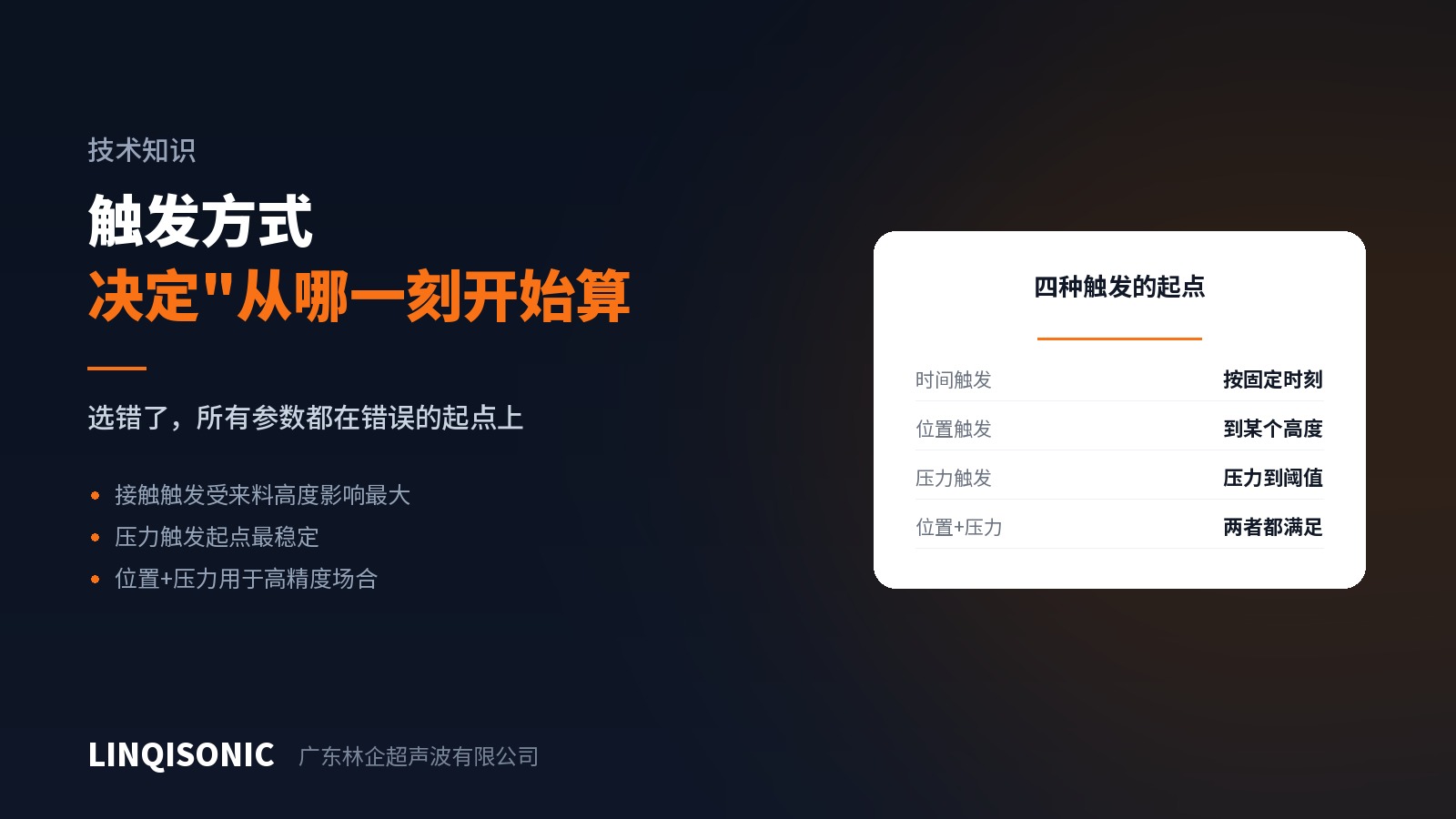
The trigger decides when ultrasound starts. An unstable start point puts every parameter on a drifting datum. Time, position, force and combined triggers compared.
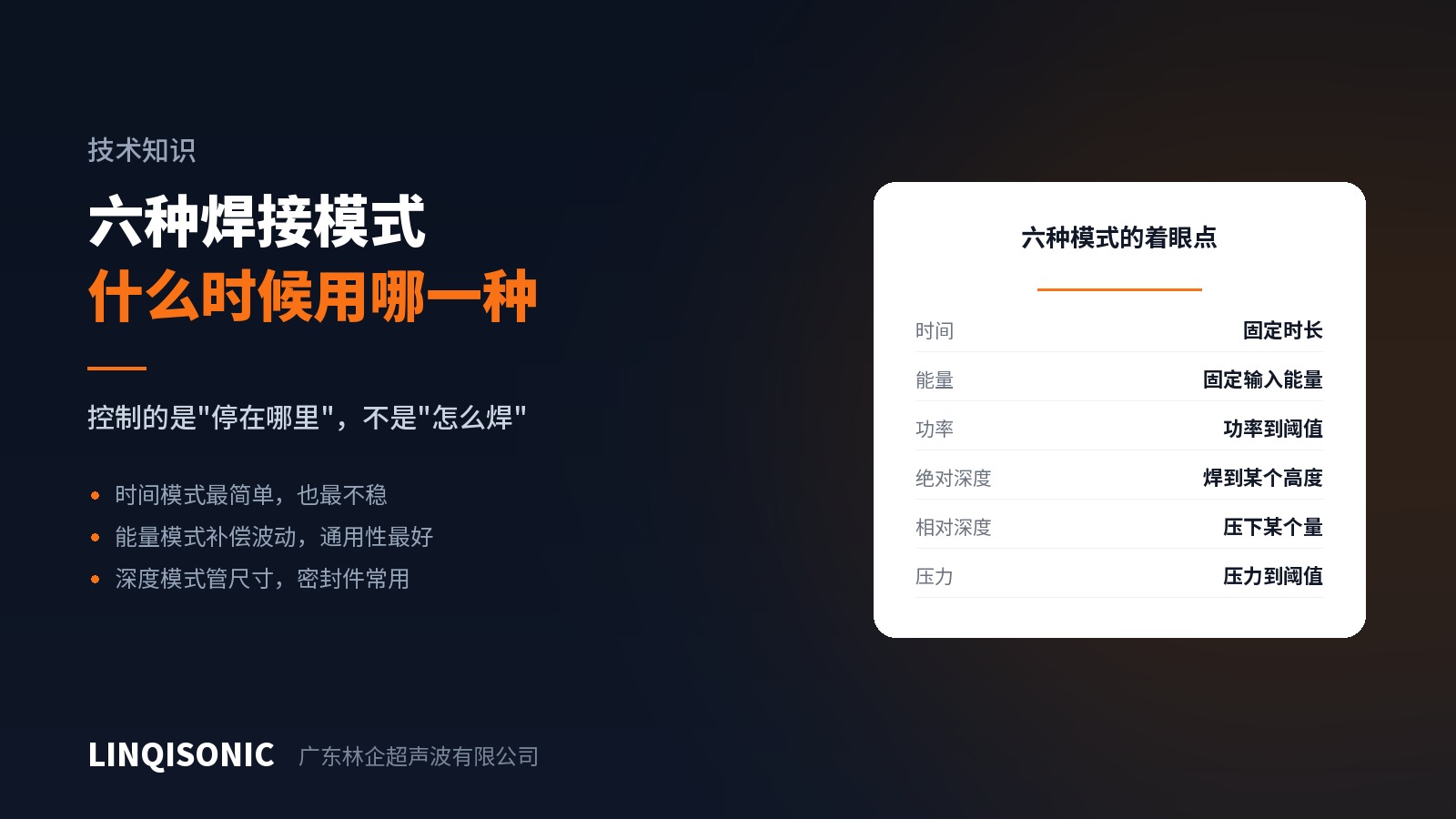
The weld mode decides what stops the weld. Time is simplest but compensates for nothing; energy is the general-purpose choice; depth modes control the finished dimension.
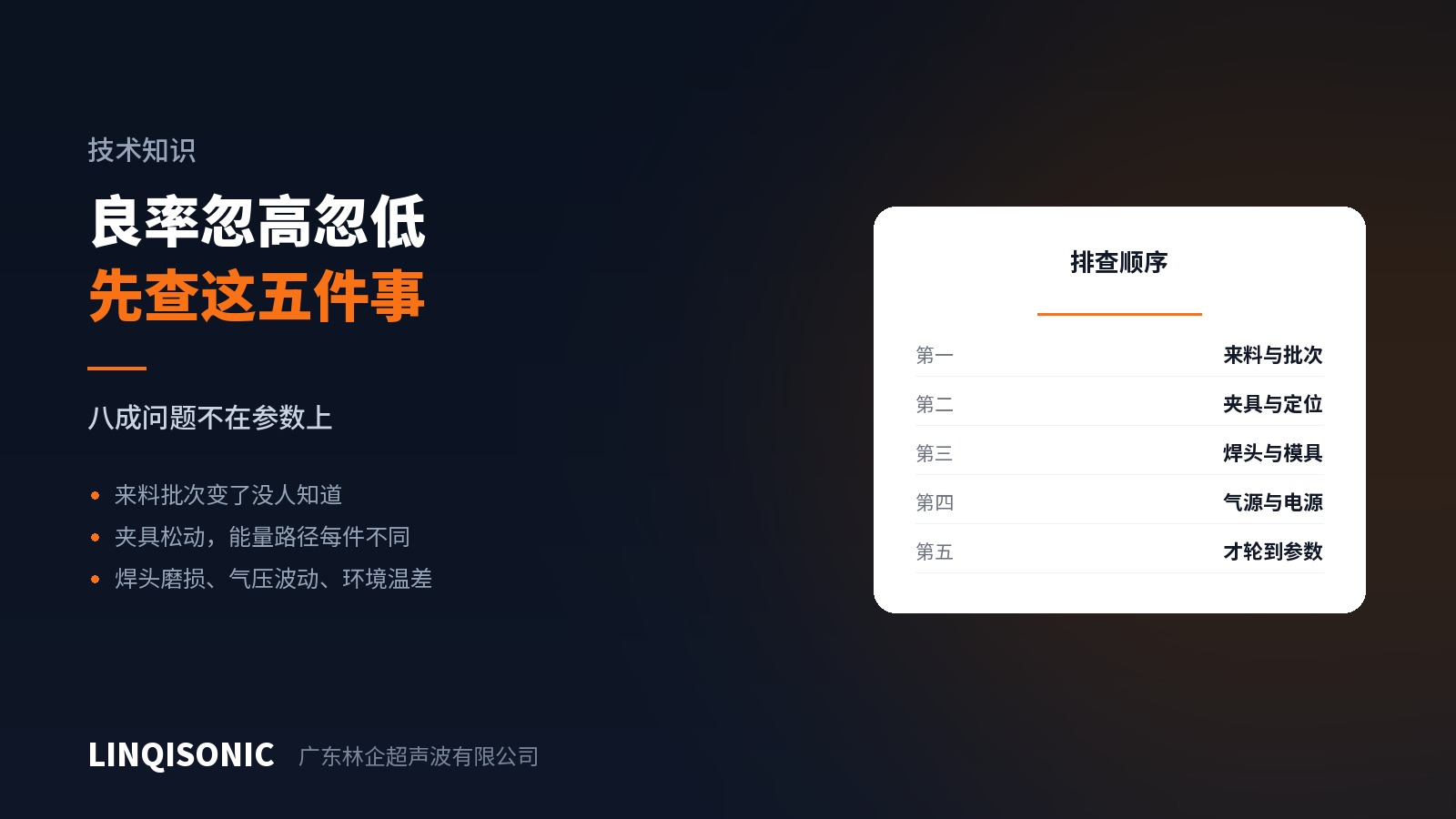
When yield swings, the first instinct is to adjust parameters — and most of the time the cause lies elsewhere. A checking order that saves time.
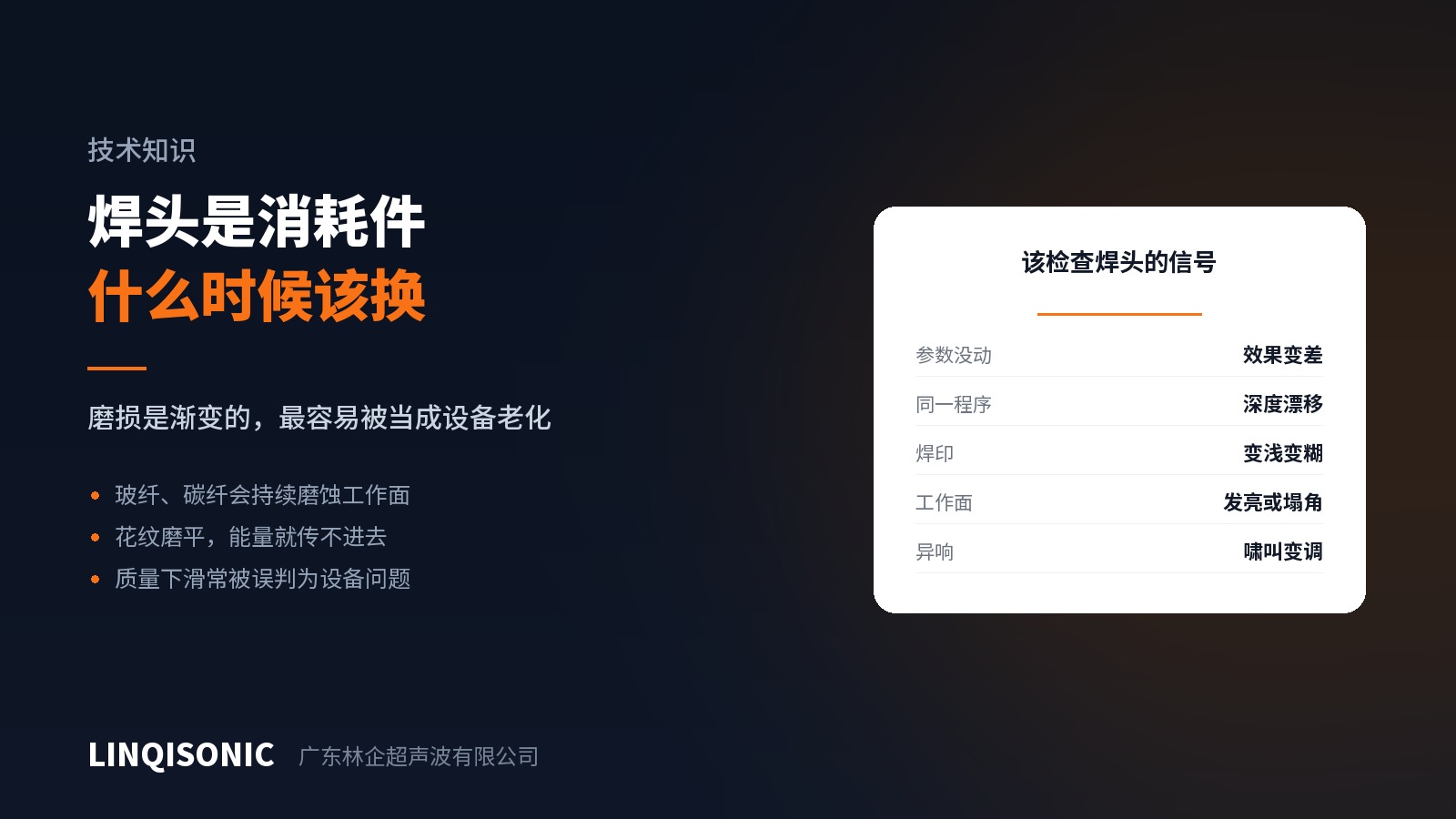
Horns are consumables, not permanent parts. Wear is gradual, and the resulting drift in quality is routinely mistaken for machine ageing. The signals worth watching.
An energy director melts instantaneously at a tip and flows; a shear joint generates heat along an interference fit. Where each belongs, and why changing the joint often beats tuning.
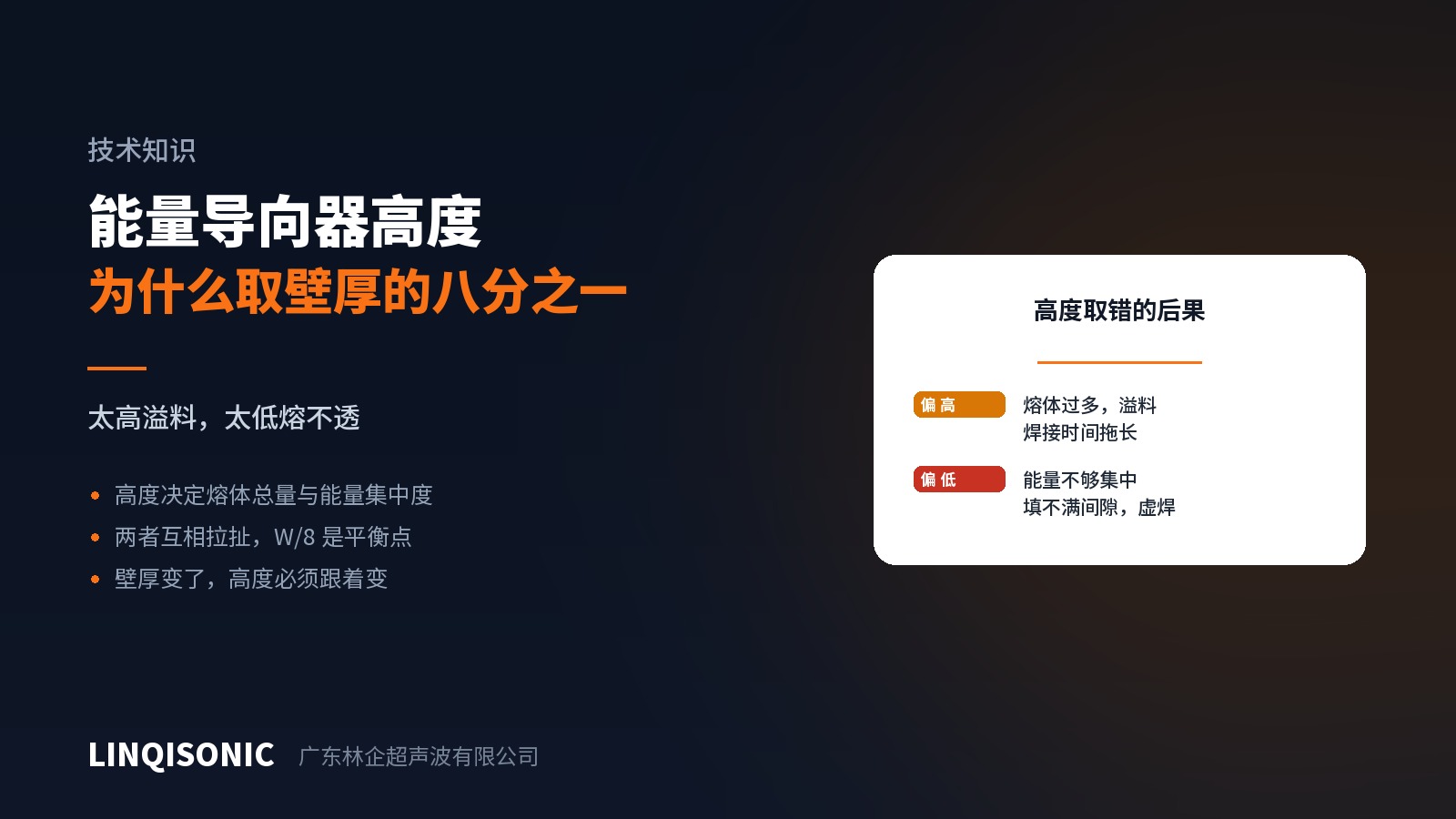
Director height sets both the volume of resin available to melt and how concentrated the initial energy is. Those pull in opposite directions, and W/8 is where they balance.