Stay updated with Linqi Ultrasonic news, industry trends and technical insights
91 articles
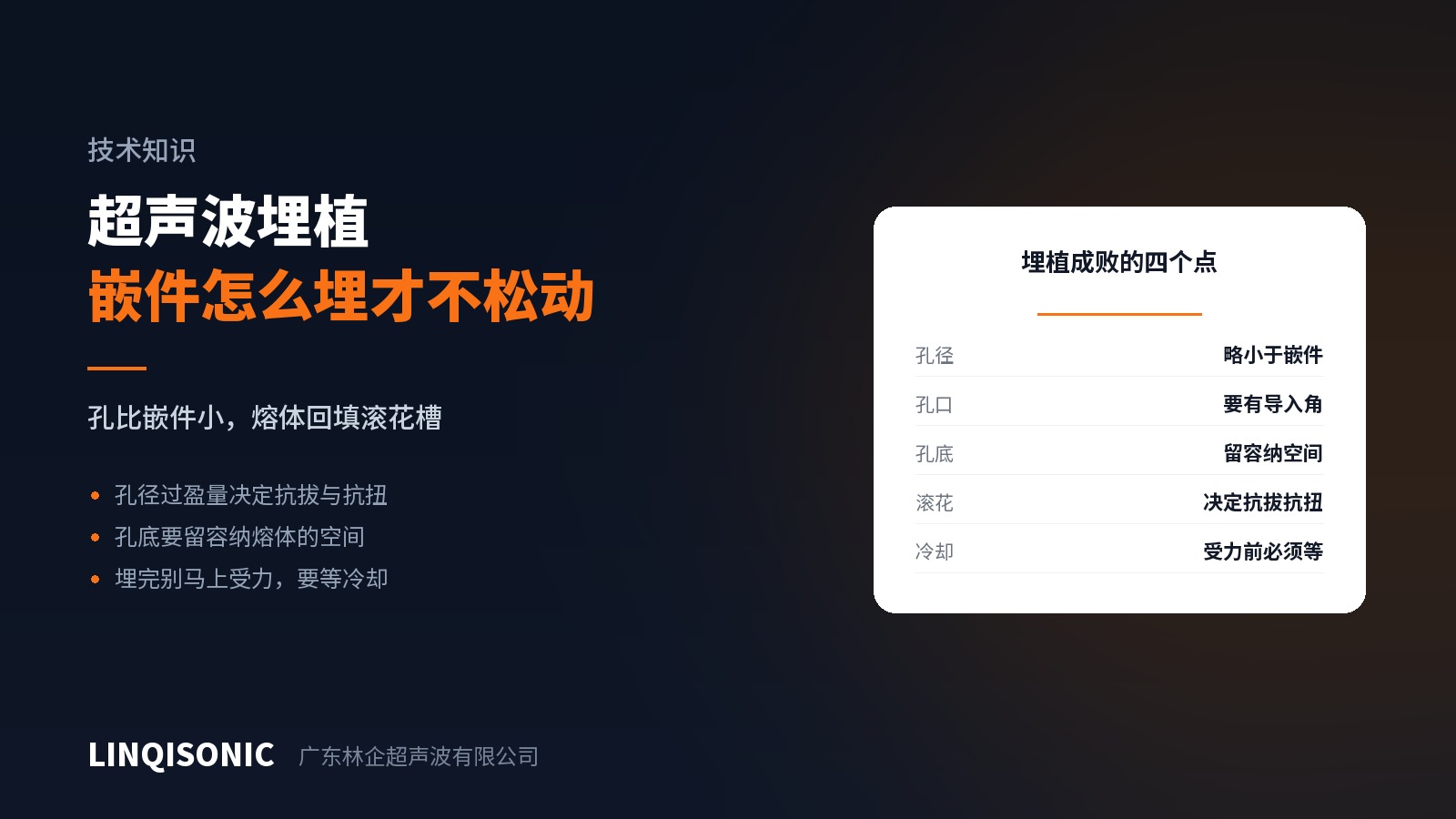
Ultrasonic insertion melts the bore wall locally so resin flows into the knurl and locks the insert mechanically. The four features that decide pull-out and torque resistance.
Ultrasonic tube sealing is a solid-state cold weld: vibration bonds the two tube walls directly, sealing and cutting in one action, with no flame, filler or flux.
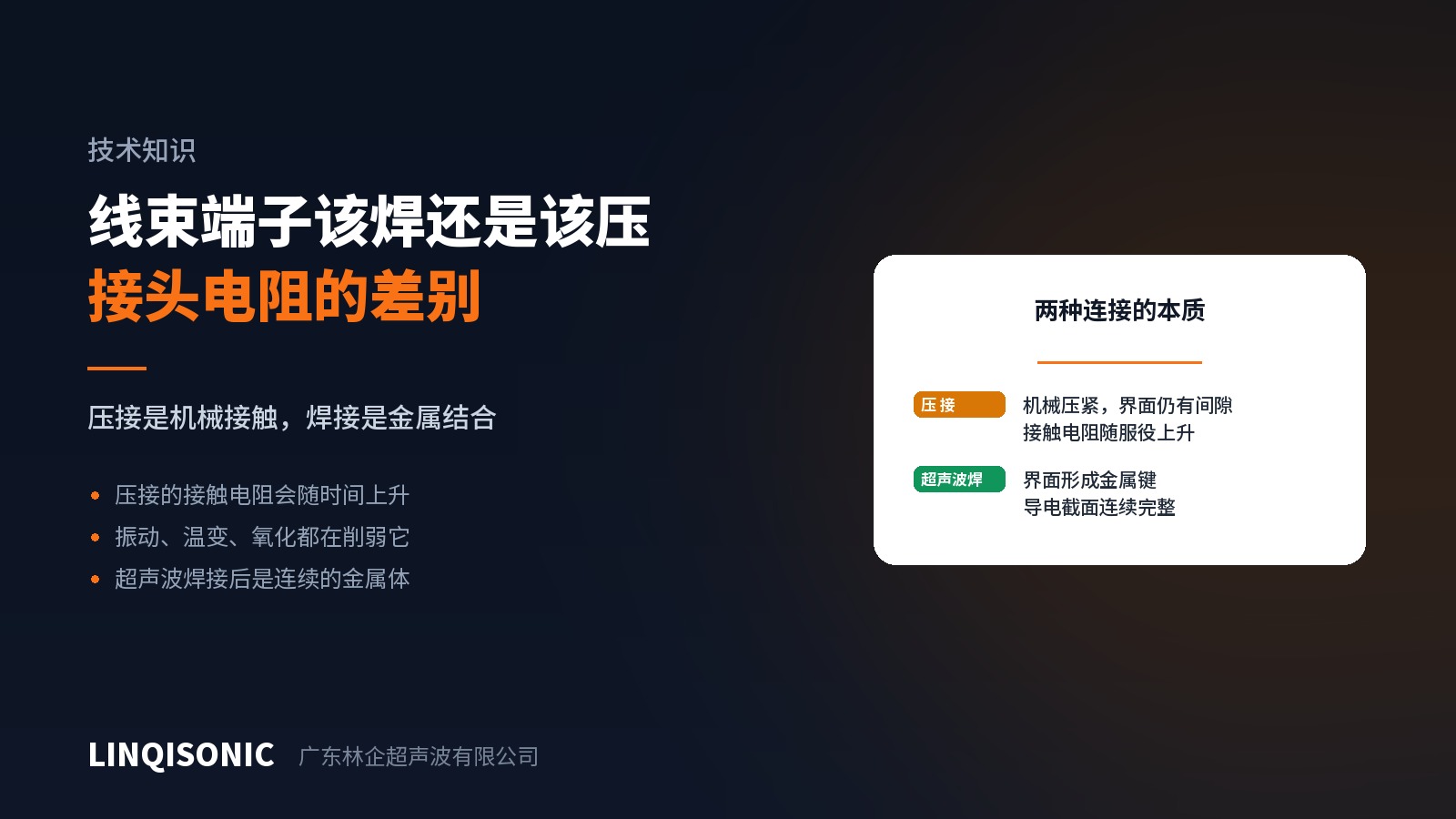
Crimping presses metal together mechanically and the interface keeps microscopic gaps; ultrasonic welding forms a continuous metallic bond. What changes, and when it matters.
Melt copper and aluminium together and cooling produces brittle intermetallics. Ultrasonic welding is solid-state, avoids the melt pool, and keeps them to a minimum.
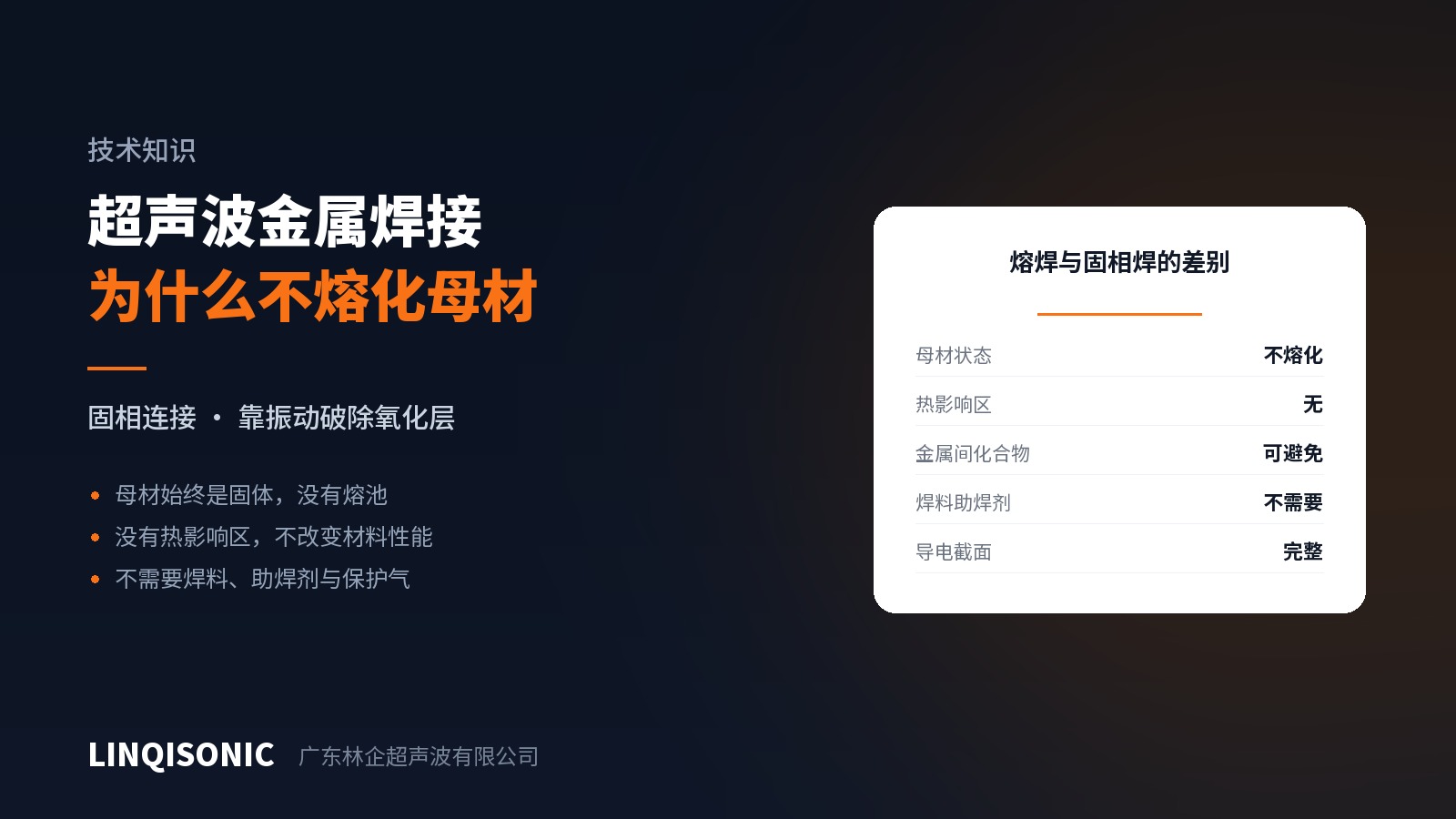
Ultrasonic metal welding is a solid-state process: vibration and static force disperse the surface oxide so clean metal bonds directly, with the base metal never melting.
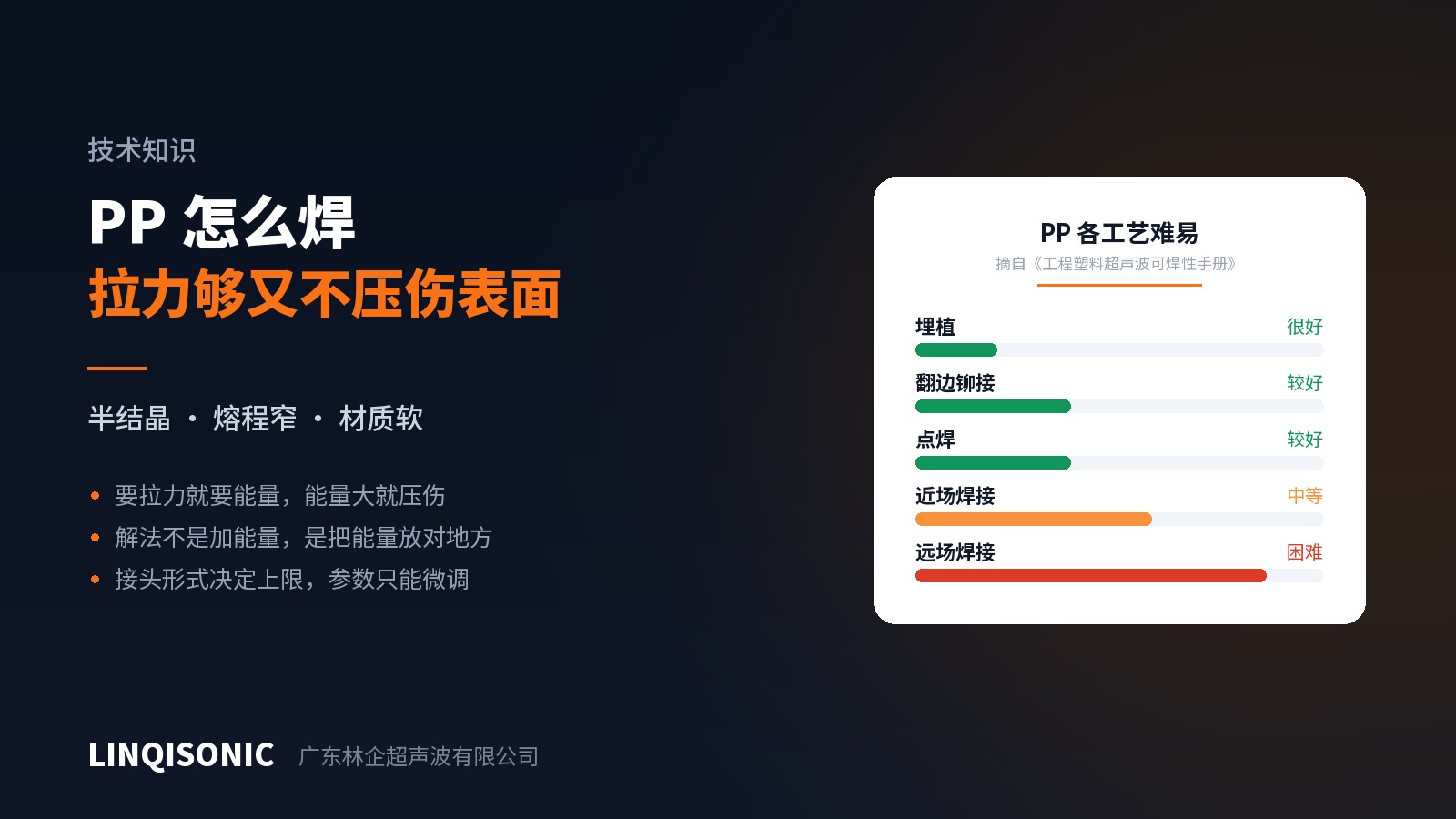
PP is semi-crystalline, with a narrow melting range and a soft surface, so joint strength and appearance pull against each other. Why the answer is not more energy but energy placed at the interface.
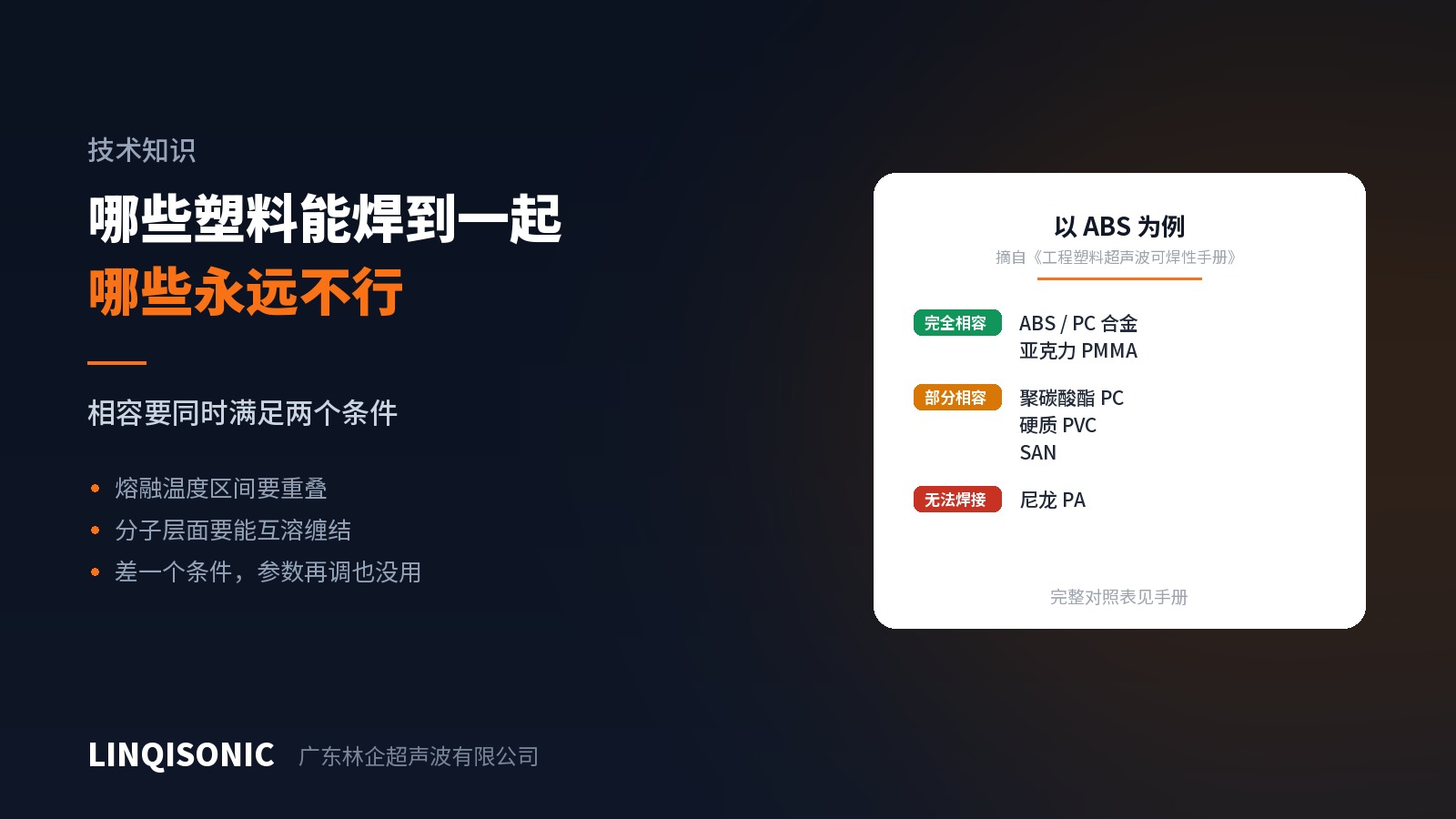
Whether two dissimilar plastics can be ultrasonically welded depends on two conditions: overlapping melt ranges and molecular miscibility. ABS and nylon as worked examples.
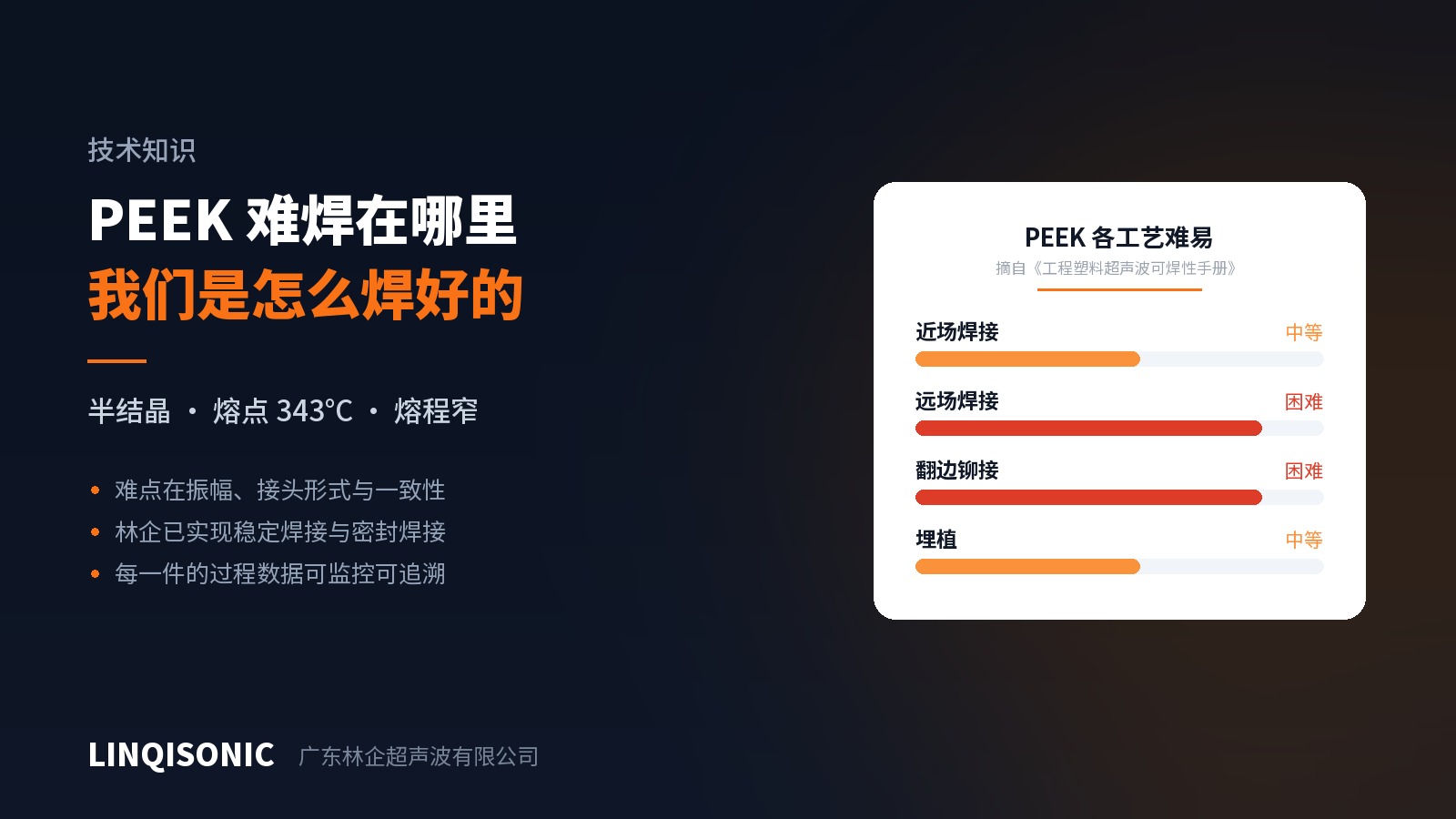
PEEK is semi-crystalline, melts at 343°C and has a narrow process window. Where the difficulty lies, and the three things that make reliable welding and sealing achievable.
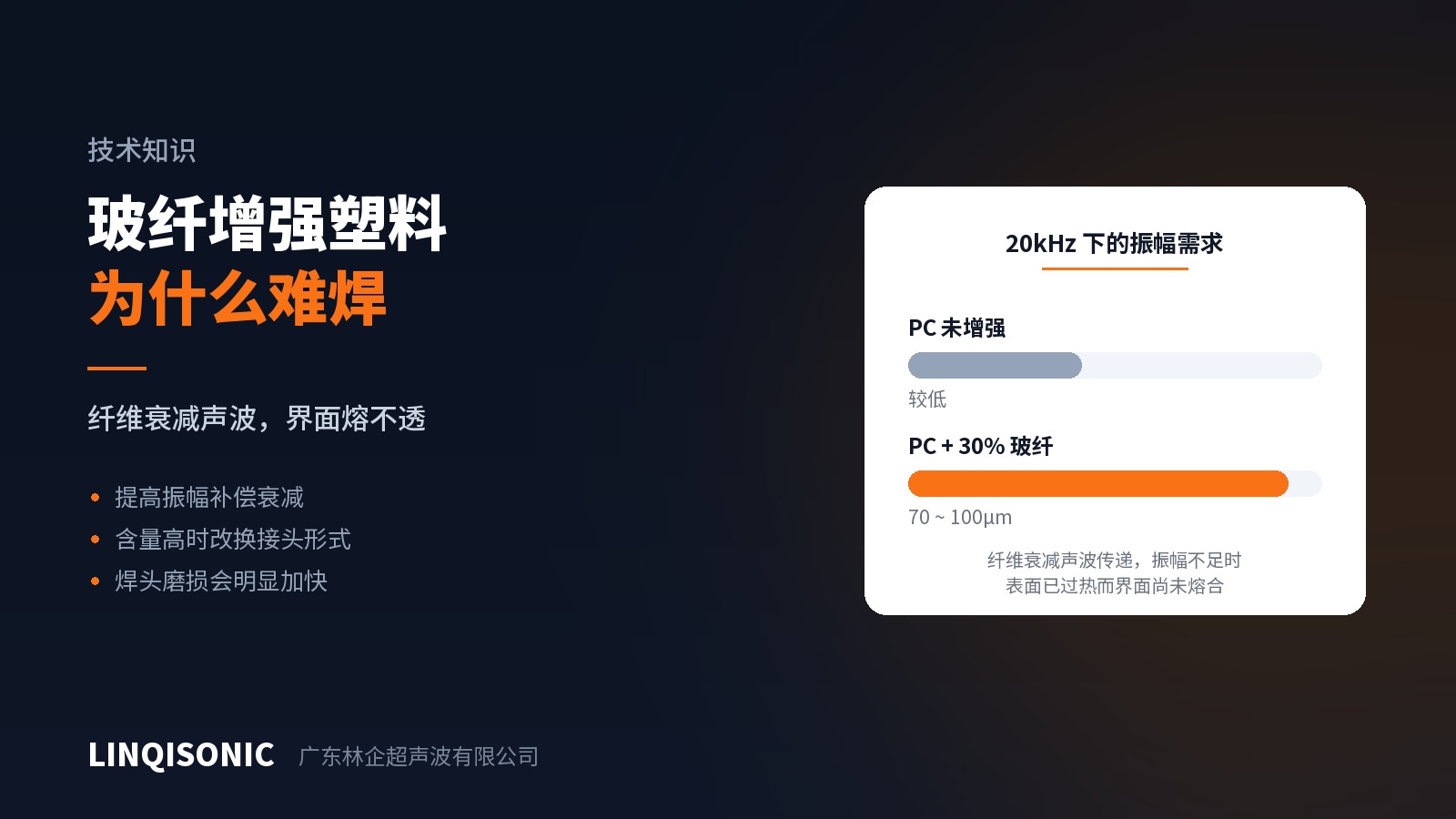
Glass fibre attenuates the acoustic wave and reduces the resin available to fuse, so the surface scorches before the interface melts. The correct order of remedies.