Bądź na bieżąco z wiadomościami Linqi Ultrasonic, trendami branżowymi i wiedzą techniczną
91 articles
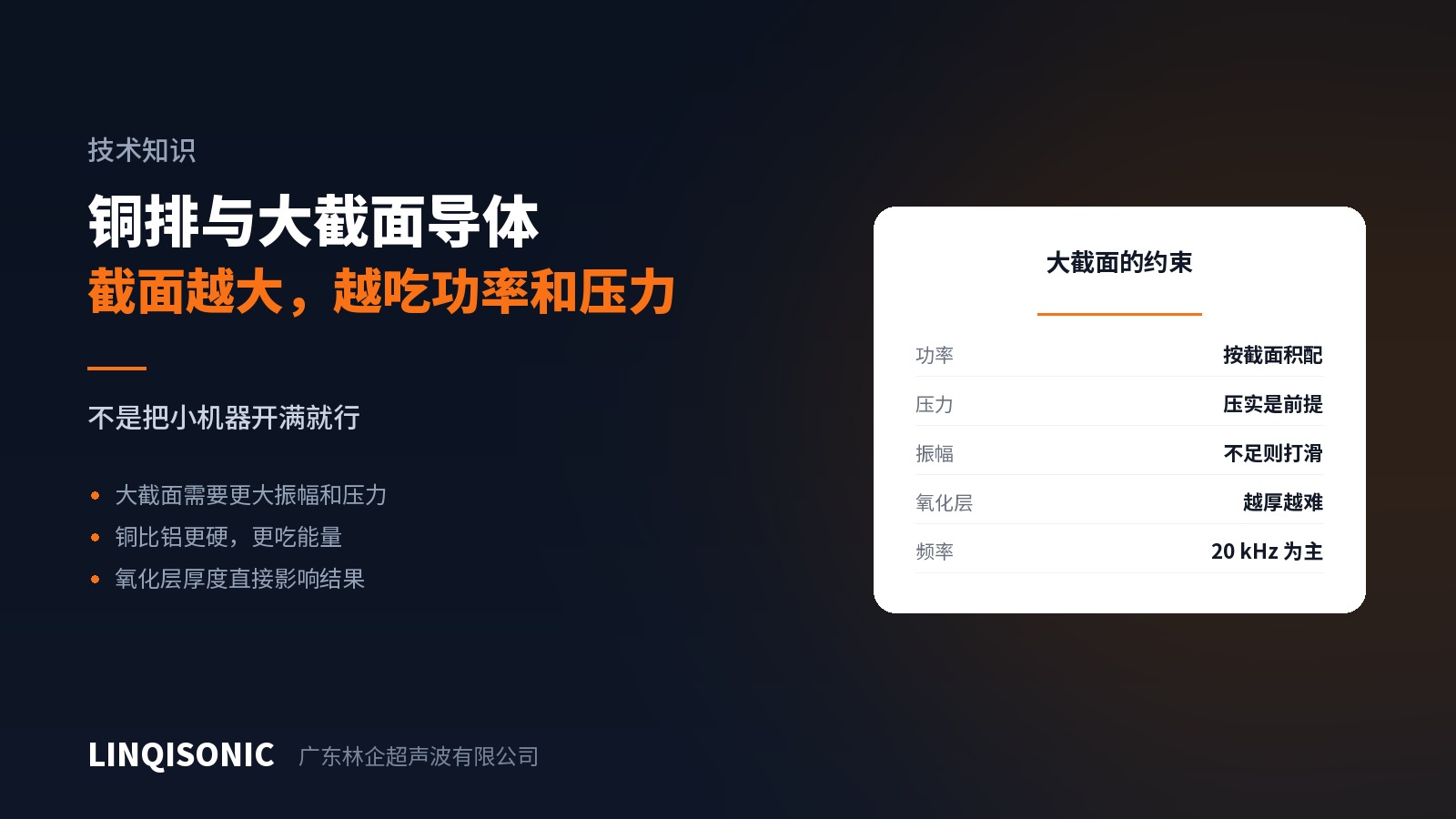
Busbars and heavy cable in new energy and storage demand far more power, force and amplitude than ordinary harness work. Selection constraints, copper versus aluminium, oxide.
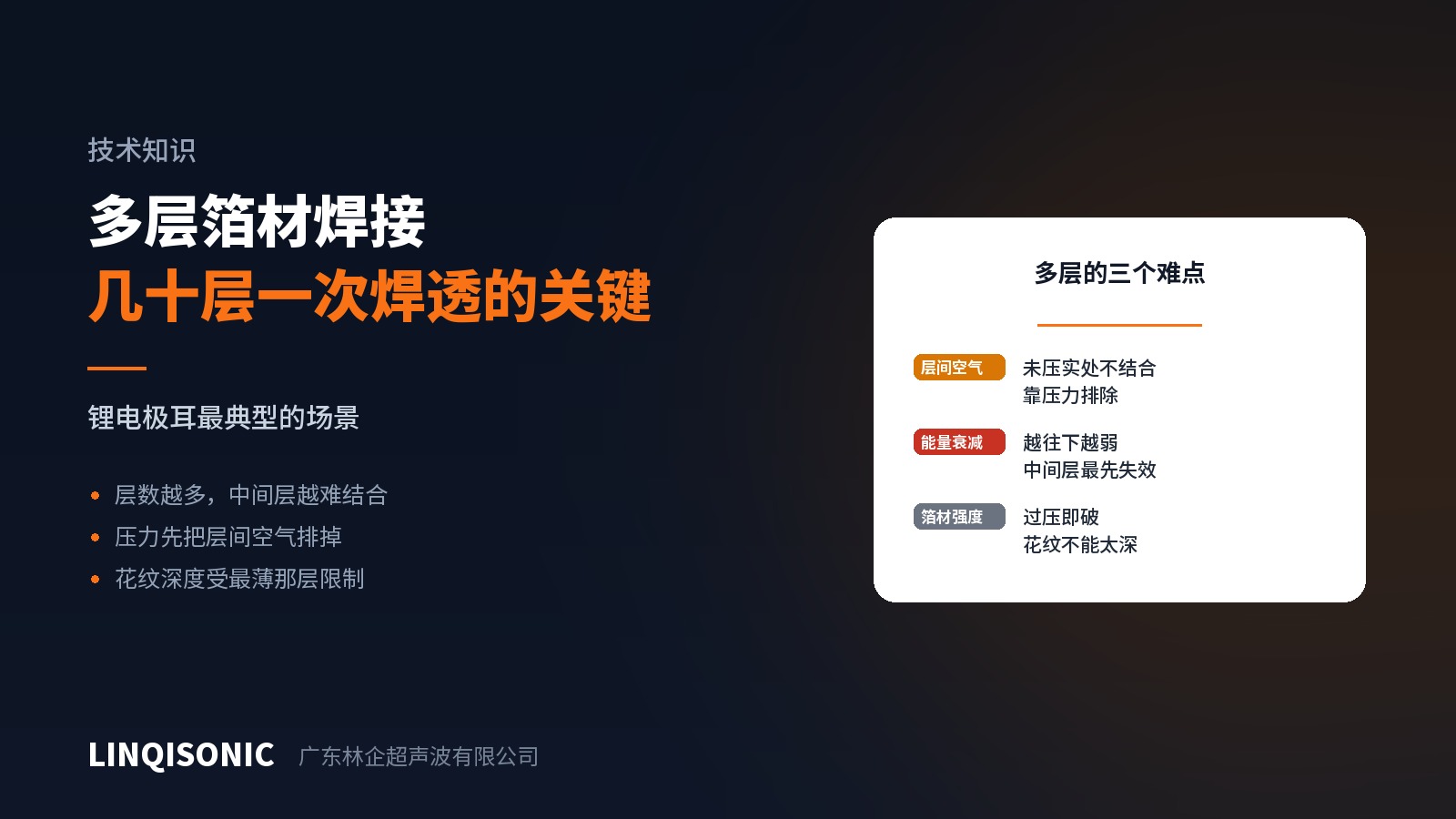
Battery tabs and capacitor leads require dozens of foil layers joined in one operation. Energy attenuates downward, trapped air prevents bonding, and foil cannot take overload.
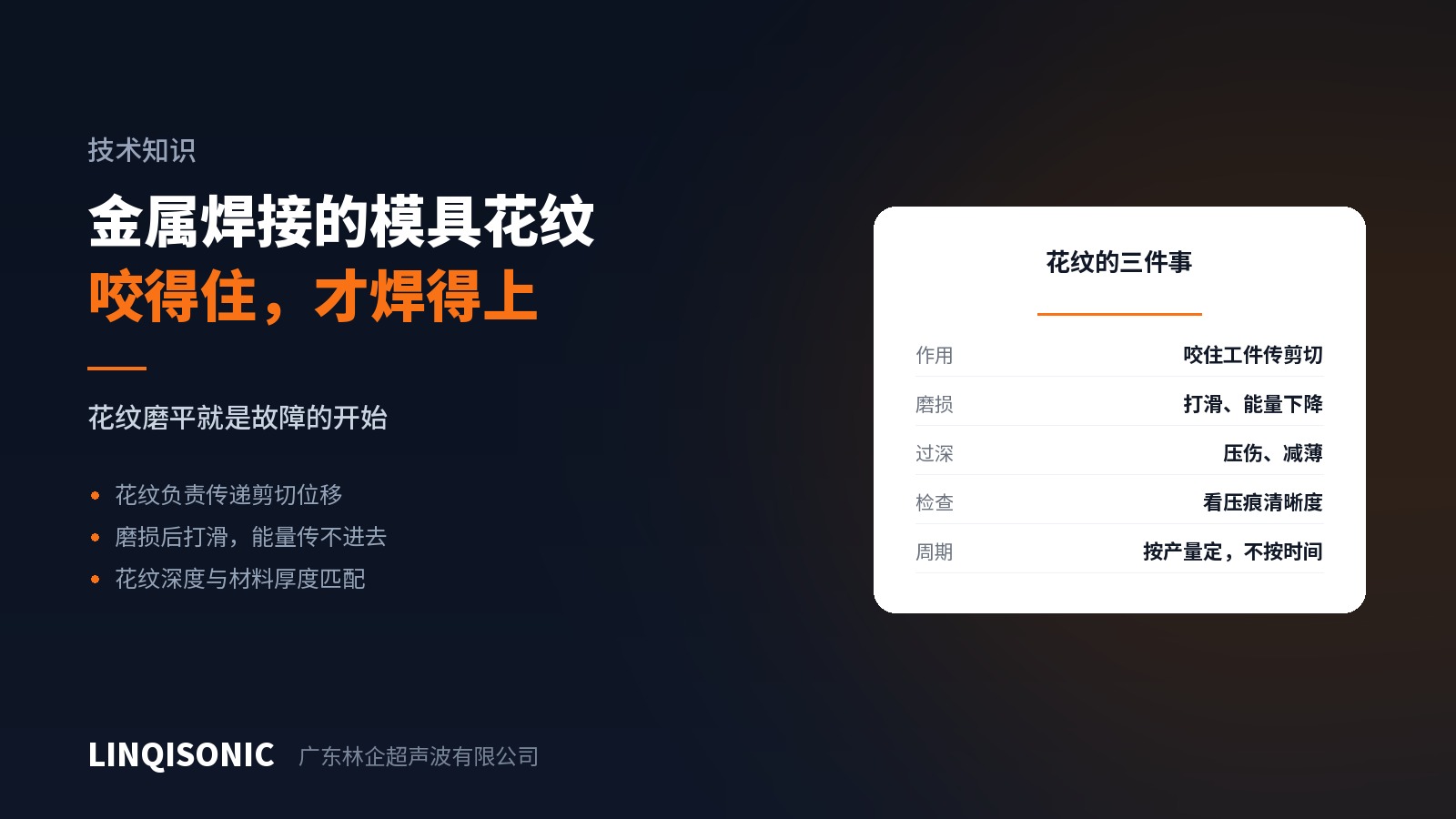
Metal ultrasonic welding relies on lateral shear to break up oxide and form a solid-state bond — and that shear only reaches the work if the knurl grips. Wear is the usual culprit.
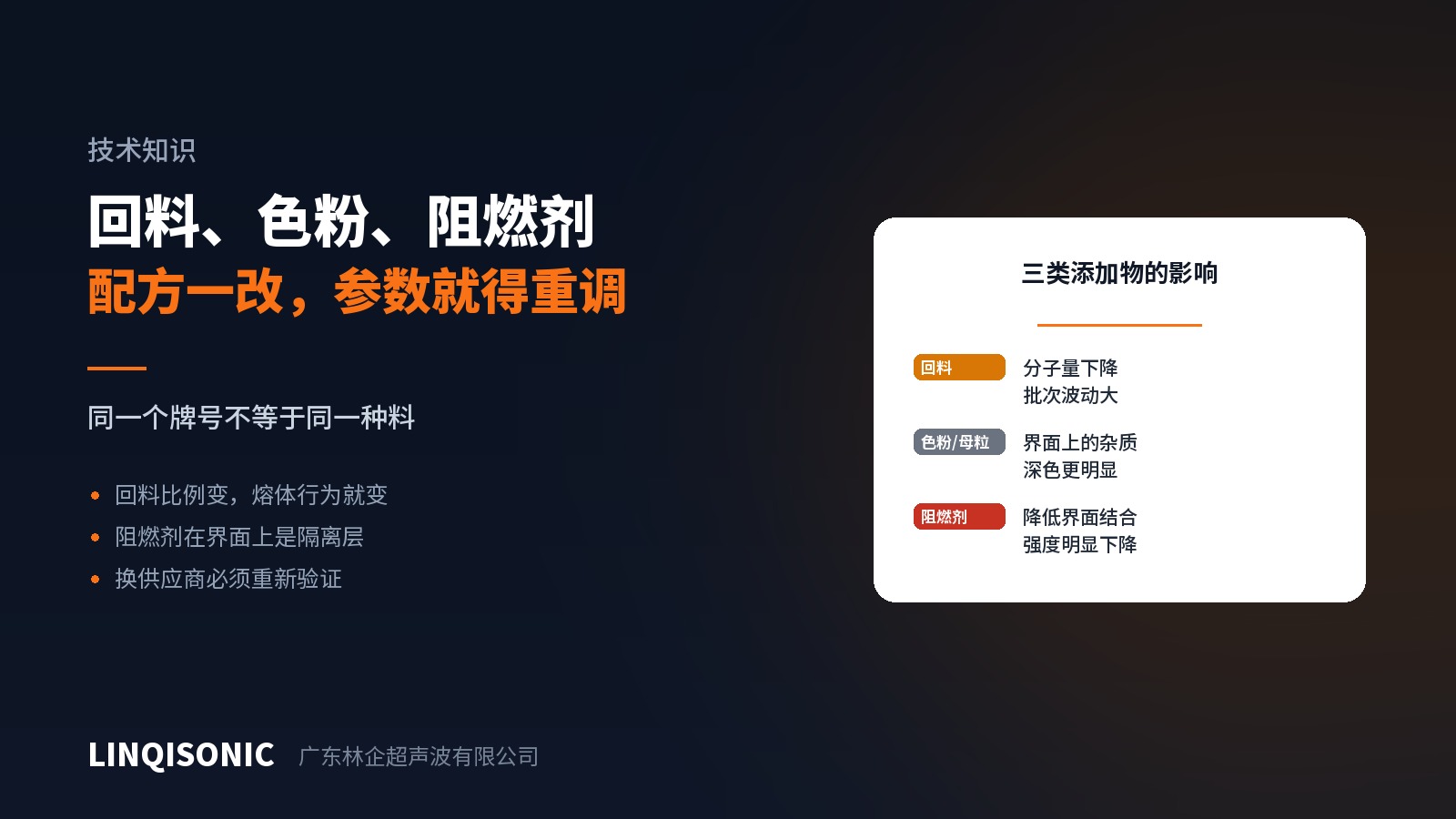
Within the same grade, regrind ratio, pigment and flame retardant all change how a material welds. What each does, and what to verify when material or supplier changes.
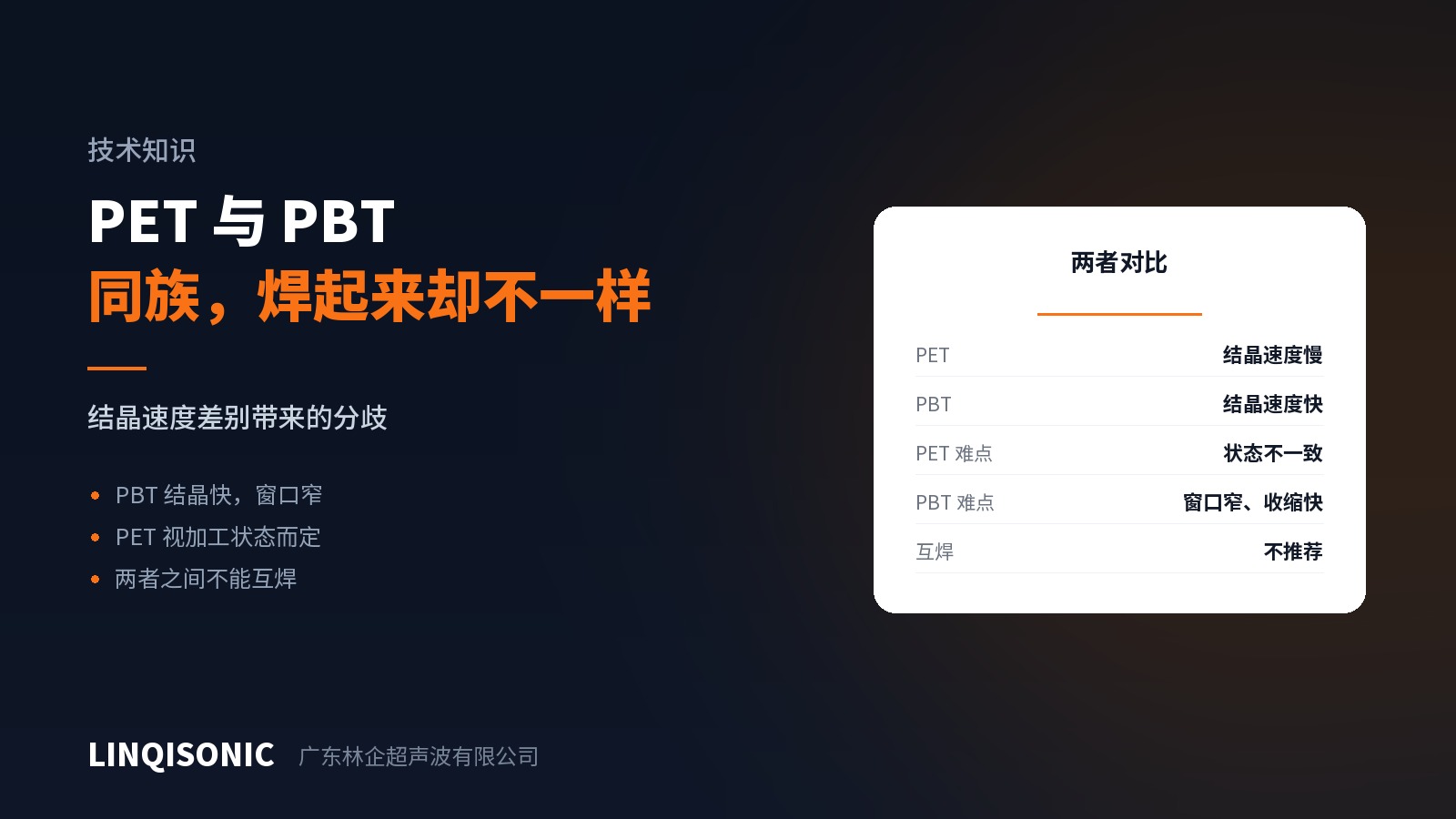
PET and PBT are both polyesters but crystallise at very different rates, so they behave differently under ultrasonic welding. Welding one to the other is not recommended.
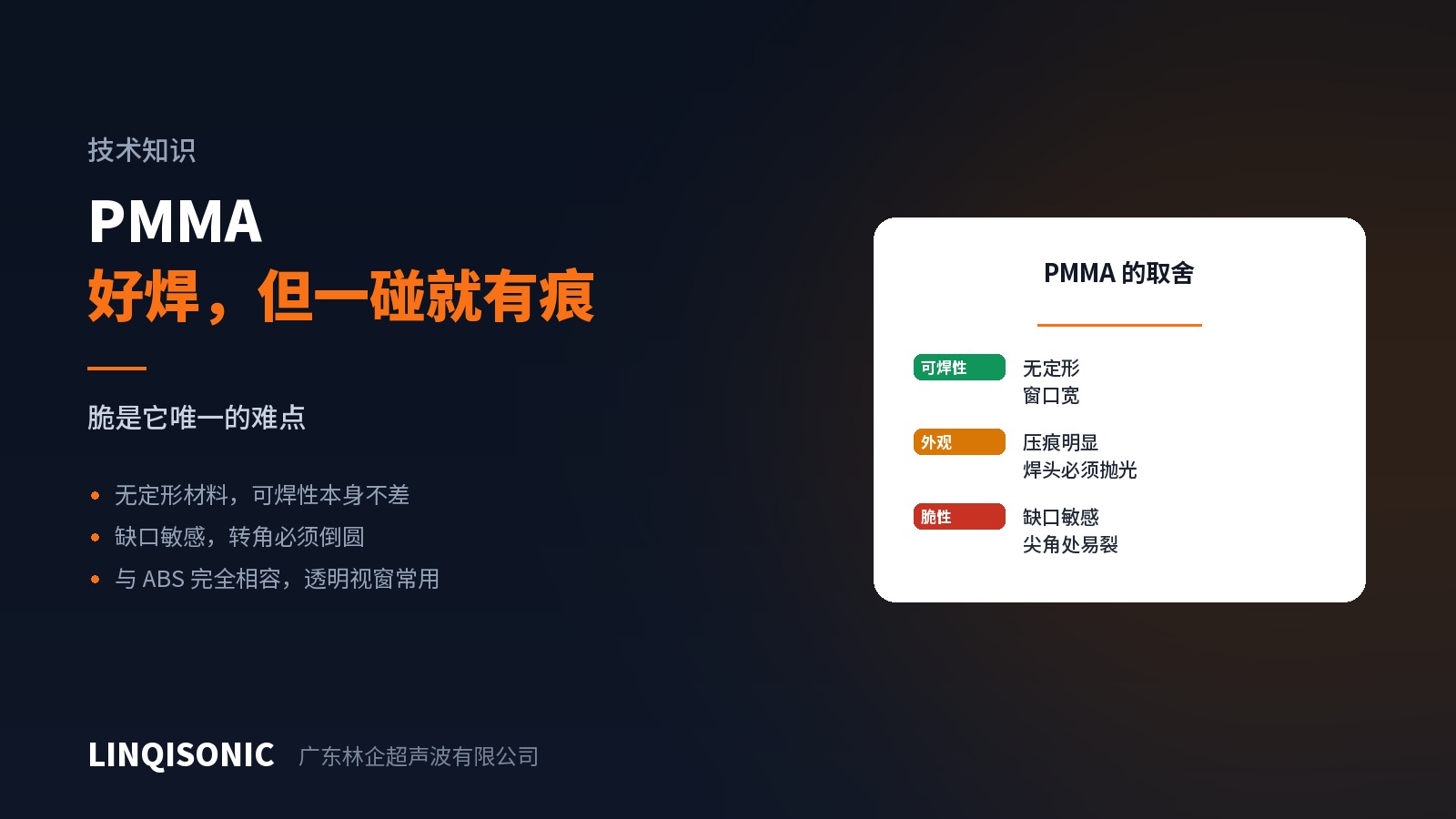
PMMA is amorphous and fuses readily. The difficulty is brittleness and appearance — notch sensitivity at corners, and a clear surface that magnifies every mark.
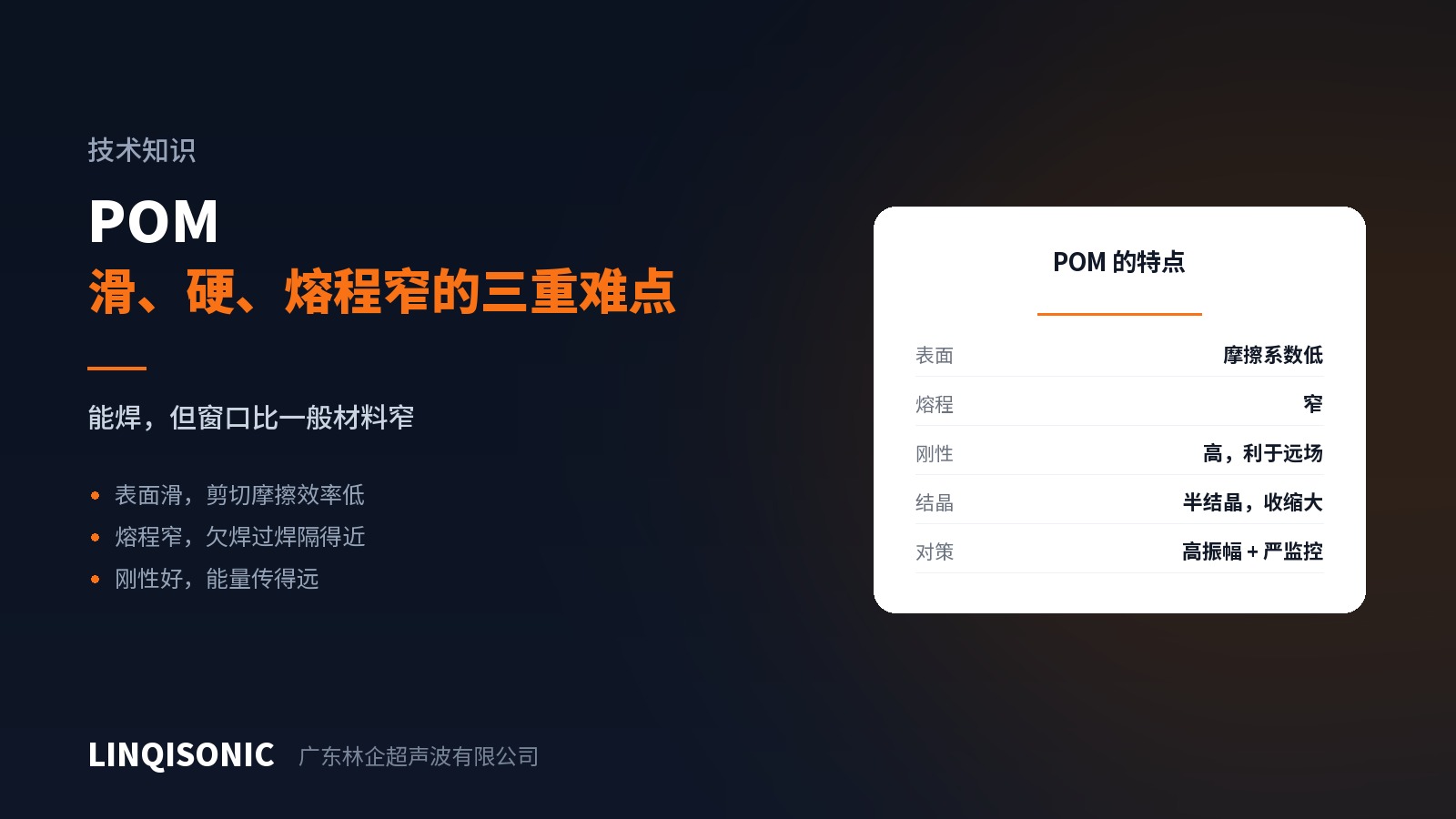
POM has a low surface friction coefficient, a narrow melting range and high crystallinity, giving a narrower process window than most engineering plastics.
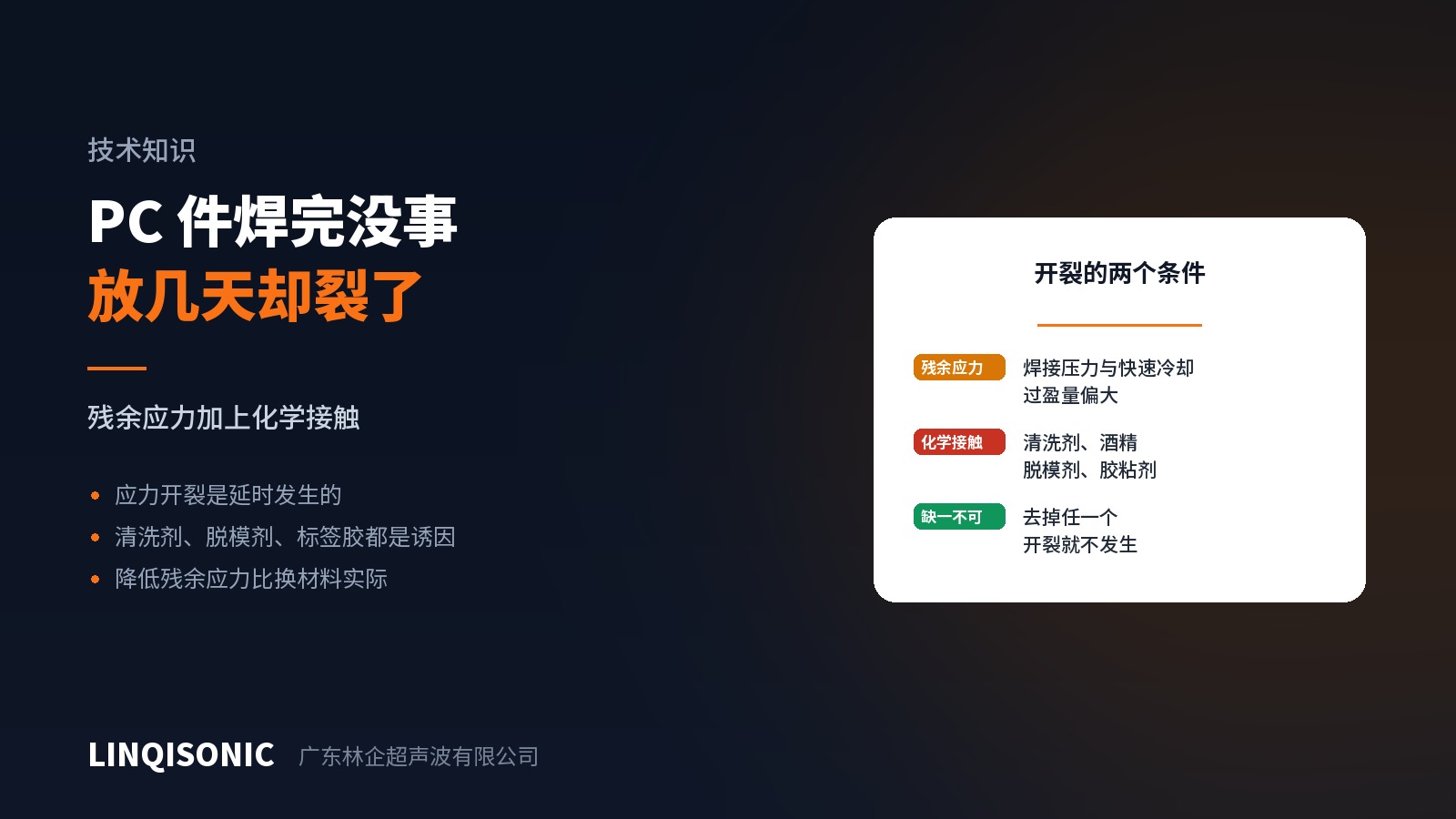
Environmental stress cracking in PC needs residual stress and chemical contact together, so it always shows up late — good at inspection, cracked days later.
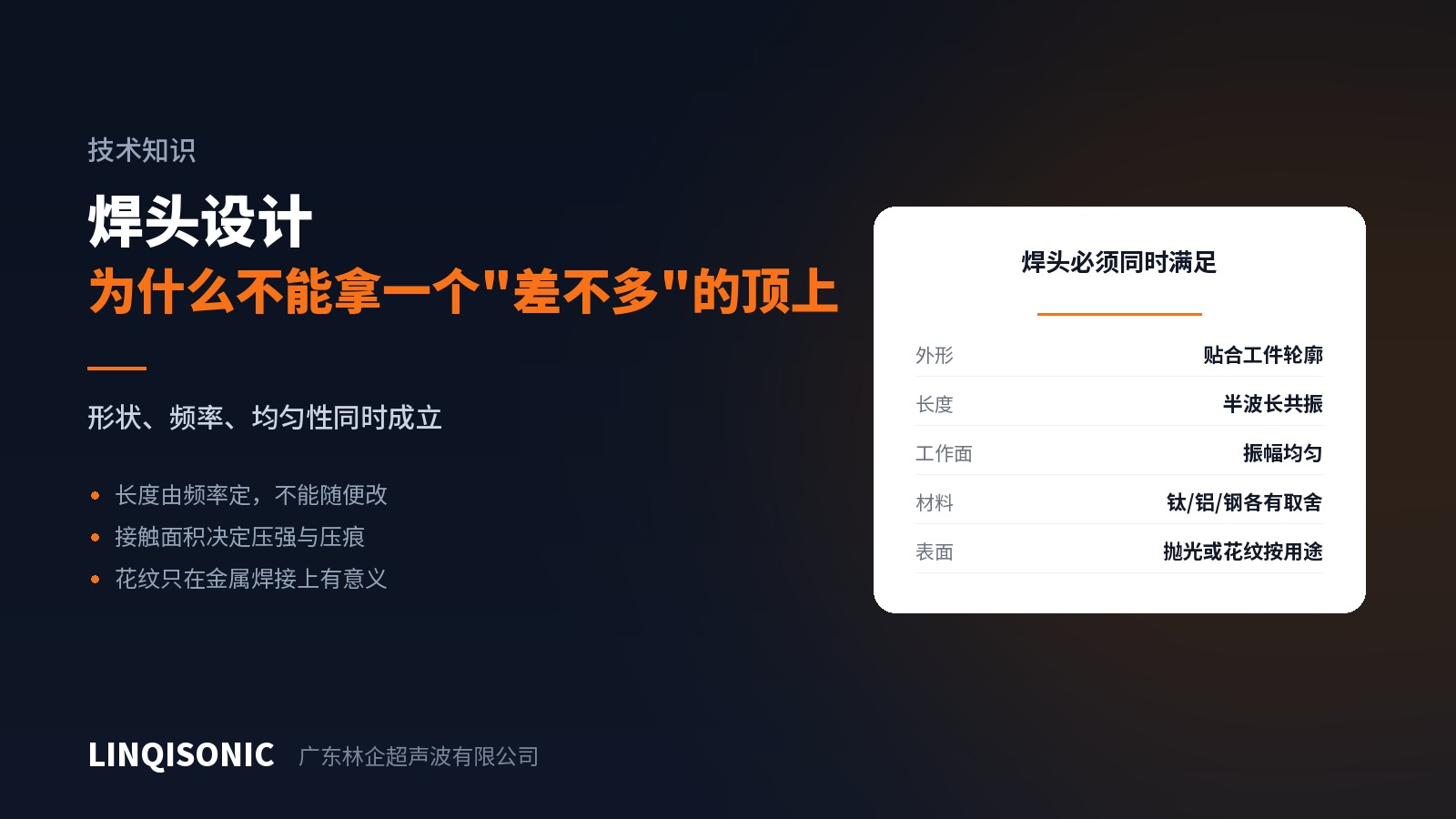
A horn must match the part, resonate at the working frequency and keep amplitude uniform all at once. The trade-offs, including length, material and surface treatment.