林企超音波の最新情報、業界動向、技術インサイトをお届けします
100 articles
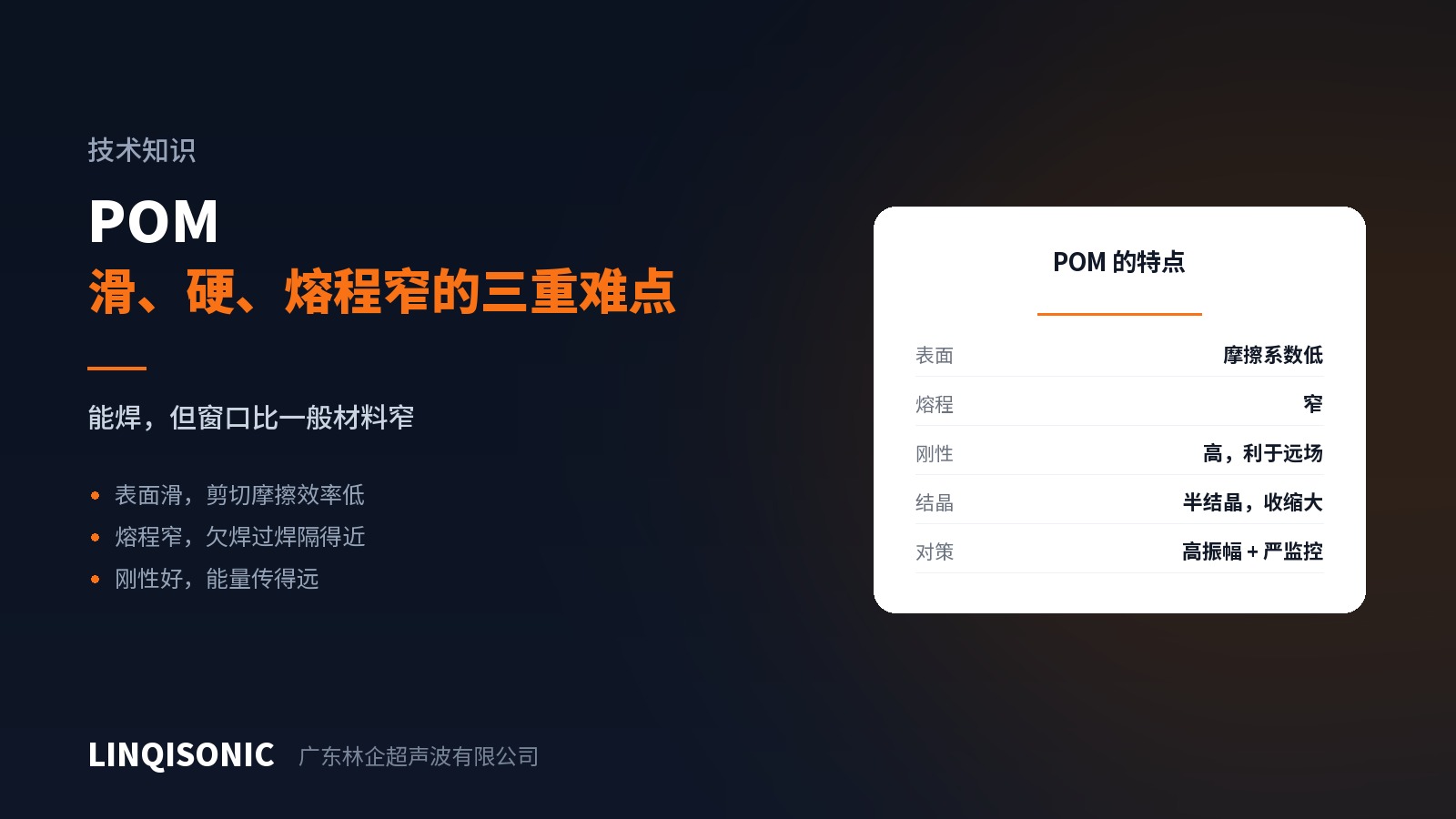
POM has a low surface friction coefficient, a narrow melting range and high crystallinity, giving a narrower process window than most engineering plastics.
Environmental stress cracking in PC needs residual stress and chemical contact together, so it always shows up late — good at inspection, cracked days later.
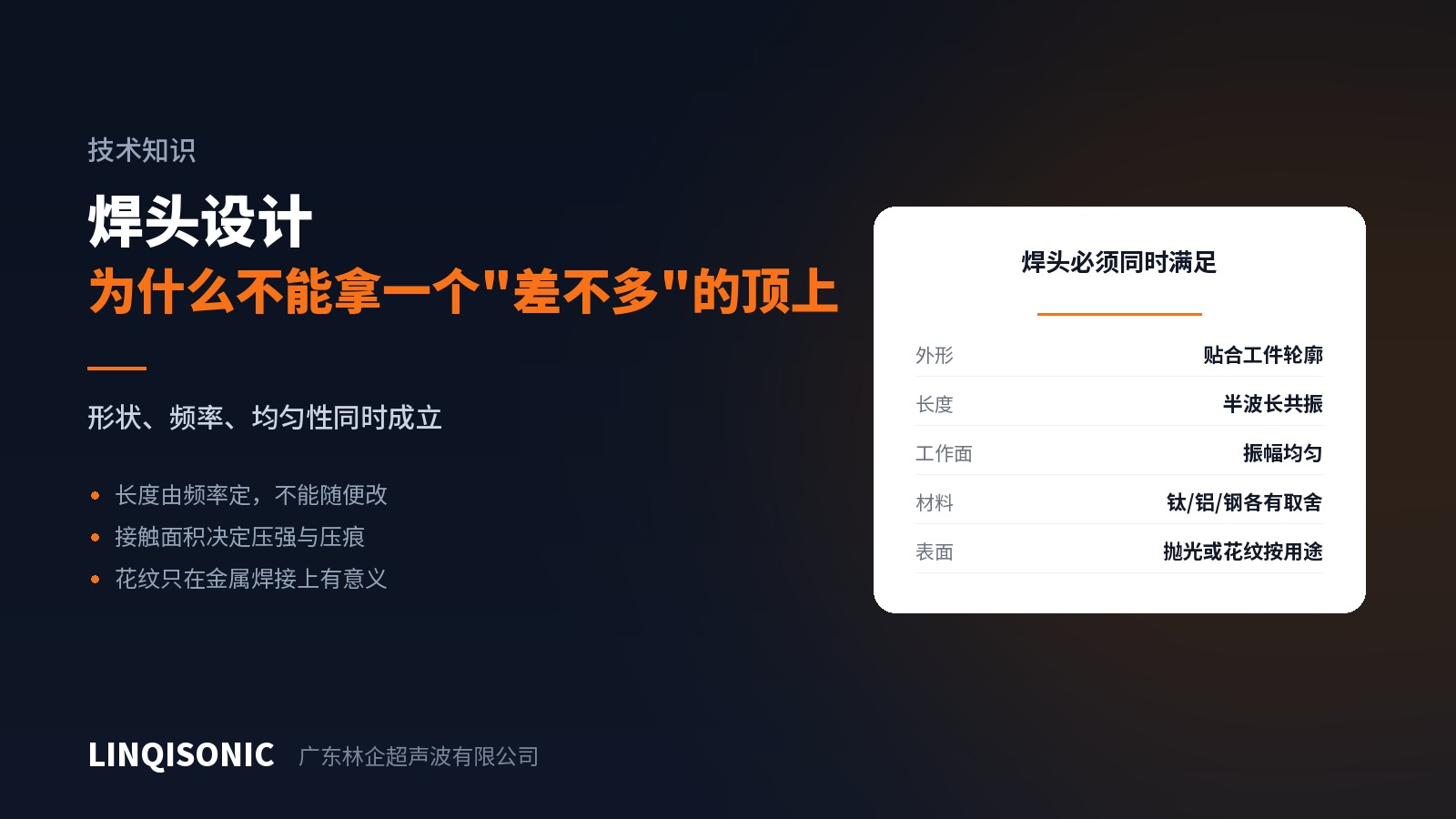
A horn must match the part, resonate at the working frequency and keep amplitude uniform all at once. The trade-offs, including length, material and surface treatment.
Most unplanned stoppages trace back to small things in the stack: unclean joints, loose torque, a hairline crack. A per-shift, weekly and periodic checklist.
The wider the horn, the harder it is to keep amplitude uniform across the face. Causes, why slots are cut into wide horns, and how very wide parts are split into zones.
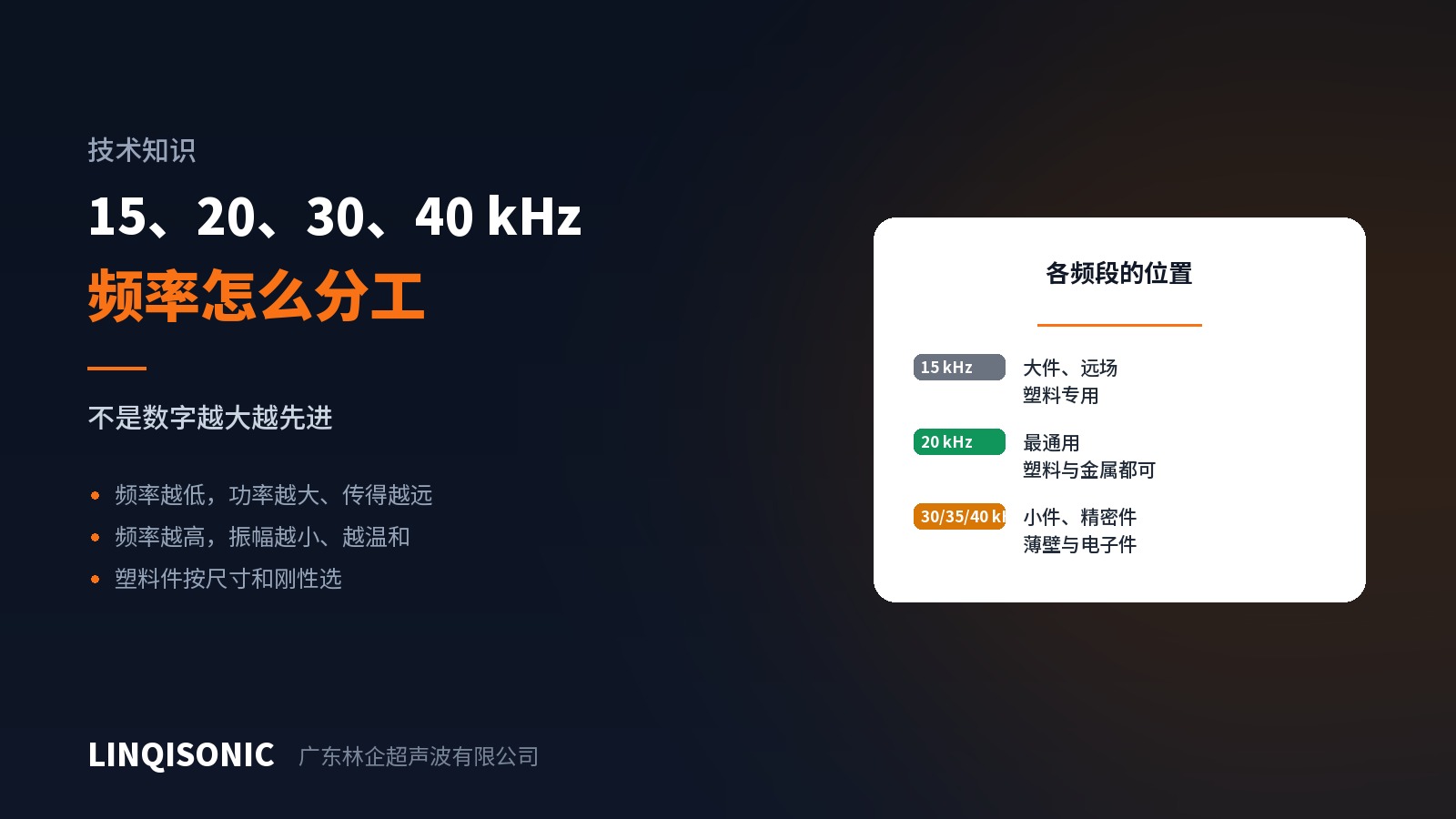
Common frequencies run 15, 20, 30, 35 and 40 kHz. Lower means more power and longer reach; higher means smaller amplitude and gentler action. Where each fits.
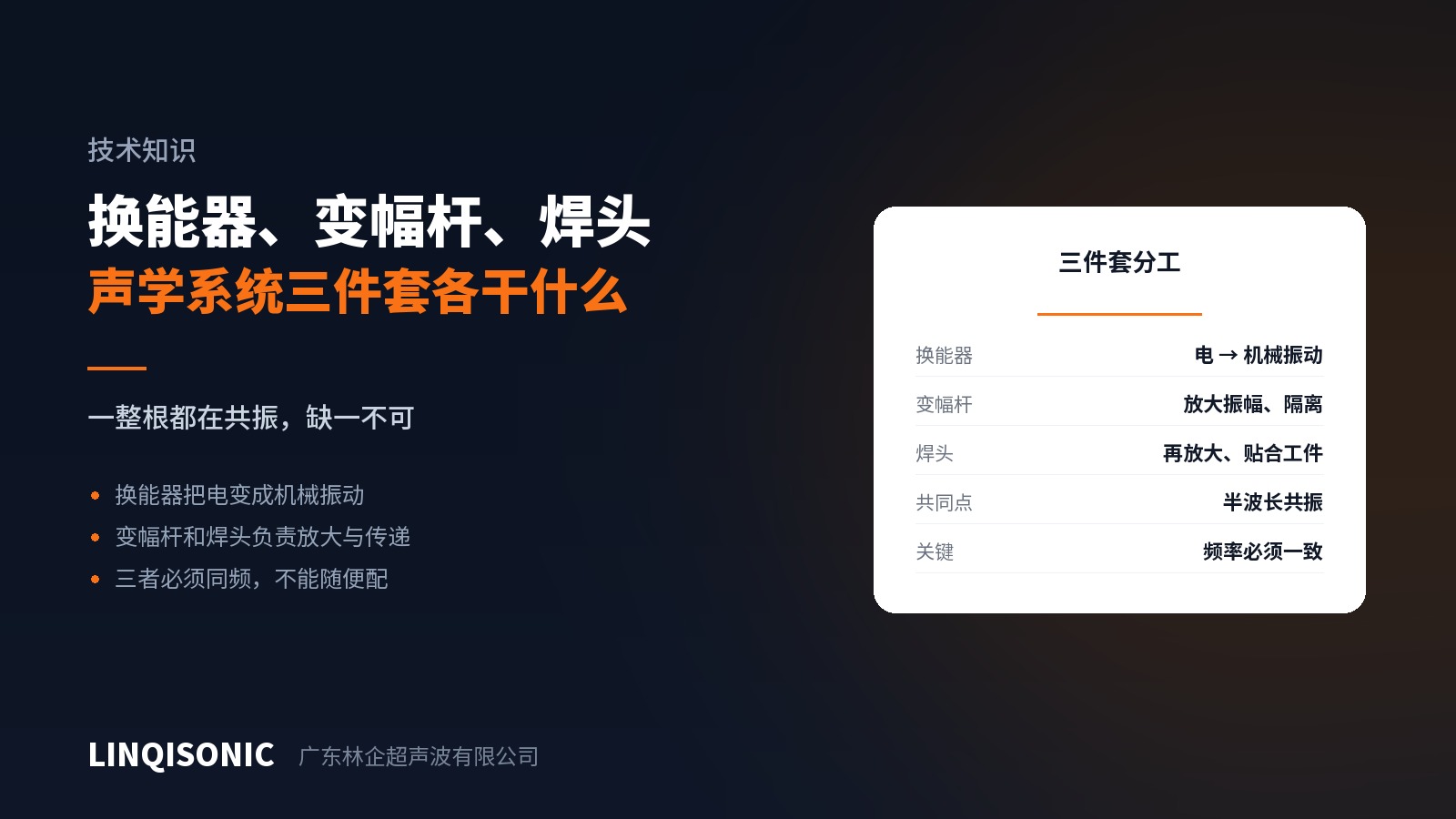
The stack is a converter, booster and horn in series, all resonating at the same frequency. What each does, and why they cannot be swapped freely.
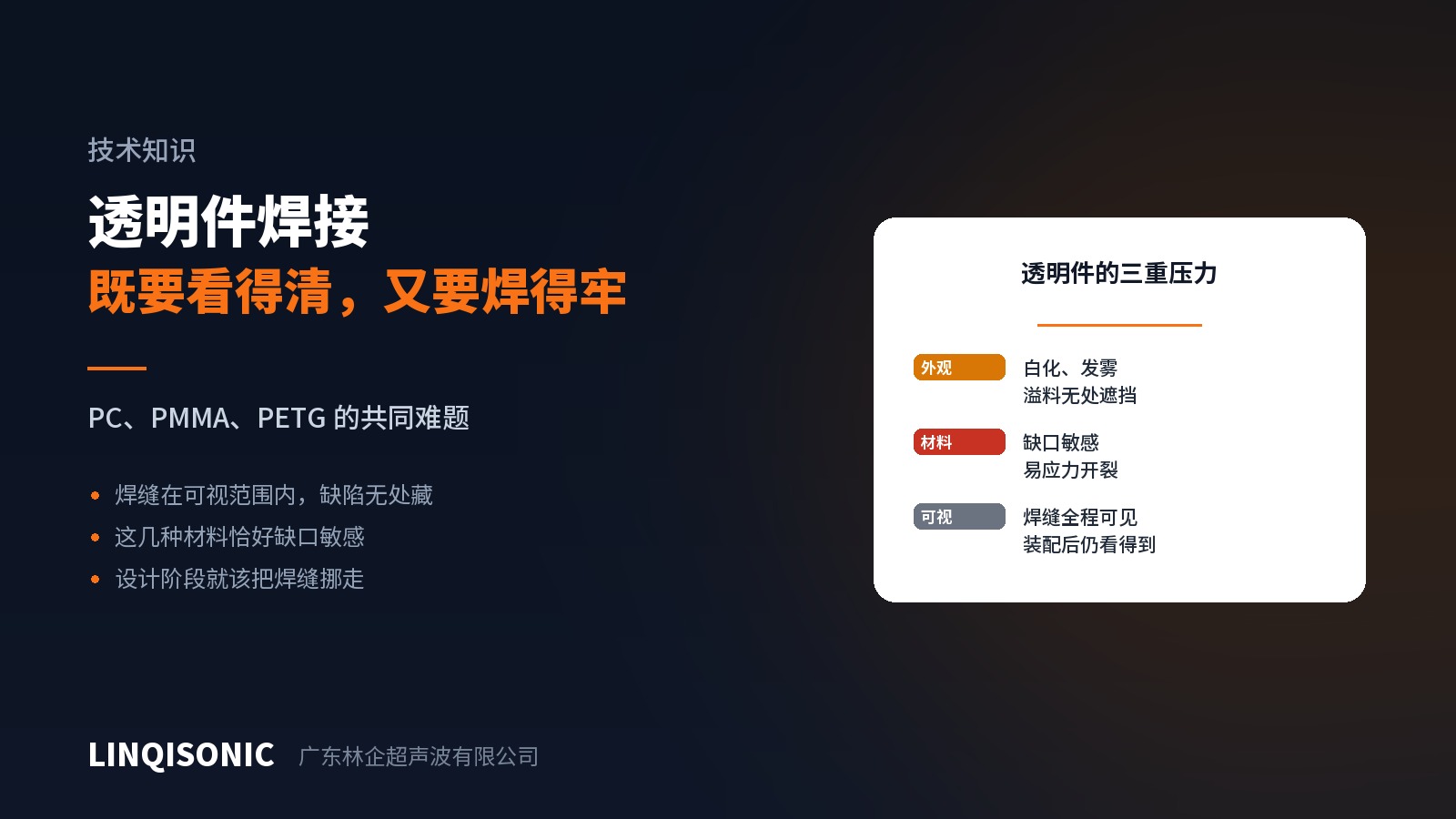
Clear parts in PC, PMMA and PETG combine three pressures: a fully visible joint, notch-sensitive material, and nowhere to hide cosmetic defects.
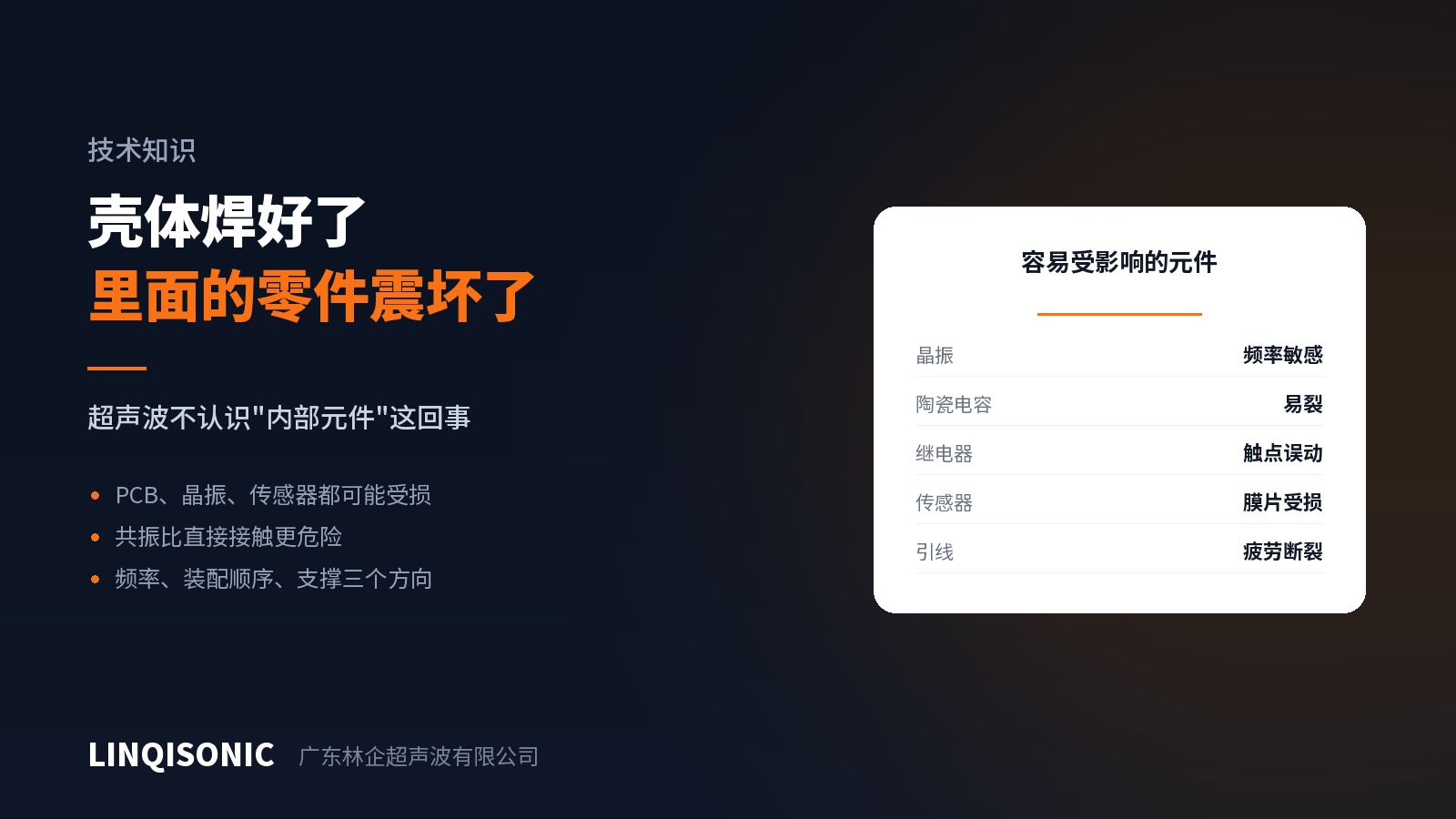
Vibration travels through the housing into the components inside. Crystals, ceramic capacitors, relays and sensor diaphragms are all at risk — resonance more than contact.