লিনকি আল্ট্রাসনিকের সংবাদ, শিল্প প্রবণতা এবং প্রযুক্তিগত অন্তর্দৃষ্টি সম্পর্কে আপডেট থাকুন
100 articles
A location that is off but off by the same amount every time can be compensated. One that is off differently each time is the yield killer, and that is what ultrasonic welding suffers from.
A weld takes seconds and a changeover takes half an hour. On a high-mix line what eats capacity is changeover, not cycle time.
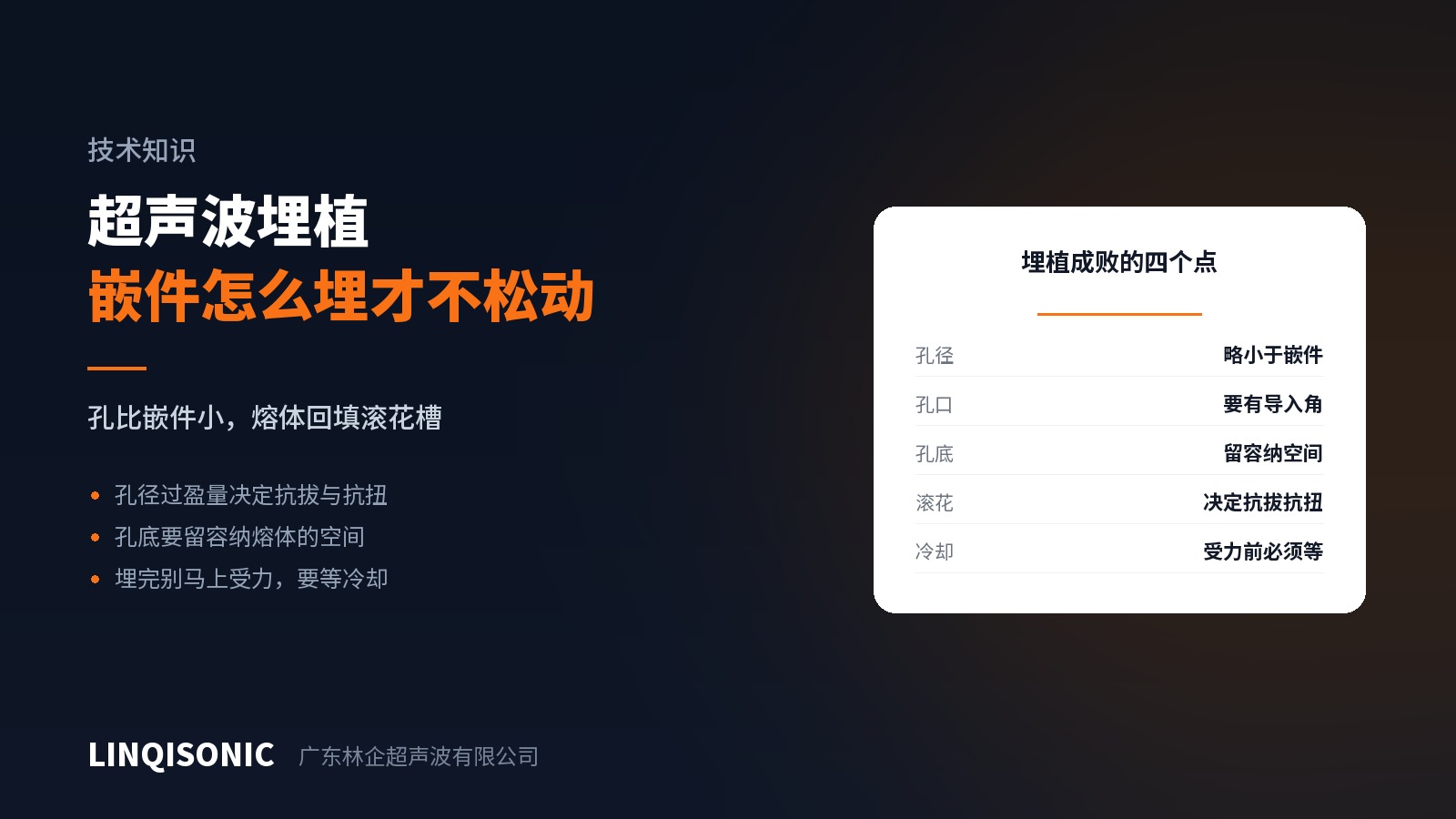
A metal insert is a step change in stiffness and a heat sink. Too close to the joint, it diverts energy, concentrates stress, and can be shaken loose during welding.
Using both is usually not redundancy but interference. Snap fits that close first hold the weld faces apart, and the collapse during welding then pulls the snaps past their intended position.
A fixture has to support the part, avoid marking it and avoid absorbing the energy. Each of the three common materials covers two of the three, so the choice is a trade-off.
If cavity-to-cavity variation is the same order as the interference, the joint dimension on the drawing does not exist in production. Measure the spread first, then fix the joint.
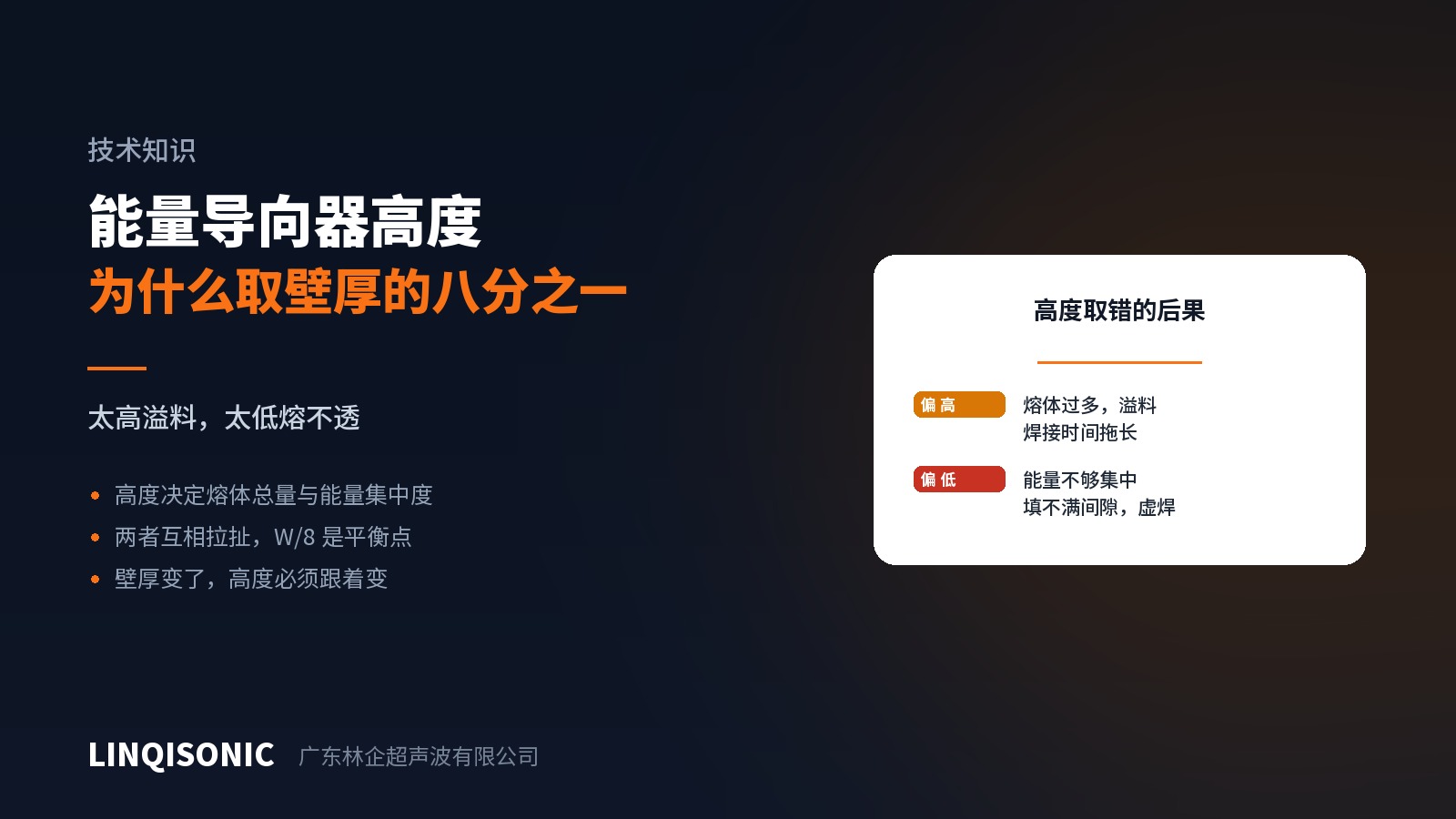
Director height follows wall thickness, so where the wall varies along the joint a single height cannot run all the way round. Leaving it produces flash in one section and no fusion in another.
The gap between two halves cannot be identical all round. The joint has to absorb that variation and the fixture has to bring the part to shape before welding; beyond those two it is a moulding problem.
A rib provides stiffness and also a bypass for the energy. A rib landing behind the weld line diverts the vibration, spreads the force, and leaves a sink mark and stress at its root.